








News
FabricAir ESG Targets and How They Impact Your Projects
Building a More Sustainable Future for Air Dispersion
For many HVAC engineers and contractors, sustainability has moved beyond “nice to have”. It’s now essential for growing a business into the future. At FabricAir, sustainability sits at the core of our business strategy. Environmental, Social, and Governance (ESG) plays a key role in staying competitive in the marketplace.
Real progress means balancing innovation with responsibility. We work to reduce our environmental impact while supporting the people and communities we serve. This involves designing energy-efficient air distribution systems, minimising material waste, and improving every stage of our product lifecycle. Globally, our initiatives take guidance from frameworks such as the European Sustainability Reporting Standards (ESRS), which keeps our approach transparent, accountable and consistent with international best practice.
Some treat ESG and sustainability as separate initiatives. FabricAir takes a different view, defining sustainability as ESG and applying a structured framework for assessing, measuring and reporting it. By embedding Sustainability and Circularity into our strategy, we pursue ESG as the framework we work and report against, building sustainability in its fullest, most accountable form, one solution at a time.
Why ESG Matters
ESG initiatives and reporting no longer sit only within corporate responsibility goals and annual reports. As the value of sustainability becomes clearer, it now shapes project requirements, procurement evaluations and investor expectations. Businesses and suppliers need to show real progress on reducing carbon emissions, improving supply chain ethics, introducing circular products and business models, and ensuring transparency.
By aligning our operations with verified ESG principles, FabricAir gives customers more than compliant systems. We provide the tools and documentation needed to meet increasingly complex project demands.
Our Key ESG Targets
We have set measurable targets for each pillar of ESG. These targets reflect our own operational accountability and the practical support we offer customers.
Environmental Commitments
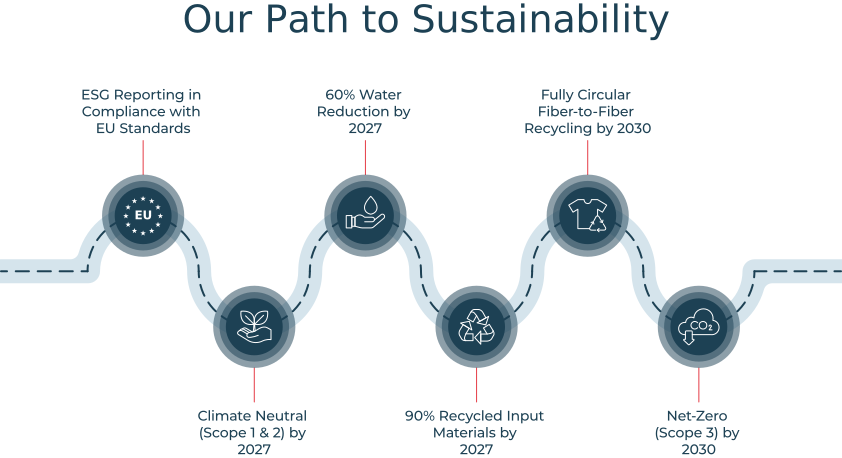
- Climate Neutral (Scope 1 & 2) by 2027
- Net-Zero (Scope 3) by 2030
- 90% Recycled Input Materials by 2027
- 60% Water Use Reduction by 2027
- Full Circularity by 2030
Social Responsibility
- Human Rights and Fair Labour Practices Across the Supply Chain
- Diversity and Inclusion Commitments
- Community Engagement Initiatives
Governance and Transparency
- Compliance with International Corporate Sustainability Reporting Standards
- Anti-Bribery, Anti-Corruption, and Responsible Payment Practices
- FabricAir ESG Targets Roadmap
How These Goals Help You Meet Your Objectives
Each FabricAir ESG target comes with verified data and documentation. Customers can use this in their own reporting and certification efforts.
Sustainability Certification Support
FabricAir systems can be designed to contribute credits under LEED, BREEAM and DGNB, including credits for energy efficiency, material transparency and indoor air quality (IAQ).
Procurement and Supply Chain Standards
As ESG becomes a bigger factor in public and private procurement, working with a supplier like FabricAir supports Scope 3 disclosures and responsible sourcing requirements.
Verified Documentation
Our Environmental Product Declaration (EPD), carbon footprint data, ISO certifications, and product compliance with OEKO-TEX®, REACH and RoHS give you and your customers documentation you can trust.
Looking Ahead: A Smarter Approach to Sustainable HVAC
Sustainability in the HVAC industry keeps evolving, moving from energy efficiency toward full lifecycle accountability. Our goals are ambitious, but our roadmap is actionable. As we work toward net-zero and circular material use, we stay committed to continuous improvement and collaboration with our customers. By aligning with international frameworks, reducing our footprint and providing verified data, we help designers, engineers and contractors build smarter, more sustainable systems.
Receive valuable content first
Enter your email and be among the first to get tips and articles from our experts about HVAC industry topics.