








 Food processing
 Manufacturing
 Pharmacy
 Distribution centers
 Greenhouses
 Electrical and control rooms
With over 50 years of innovation in air dispersion technology and a dedicated team of HVAC experts, FabricAir delivers industrial air duct solutions that meet the toughest performance demands. Explore the resources below to help incorporate fabric ducting into your industrial project. Need help? Our team is just a click away.

Industrial Air Duct Systems

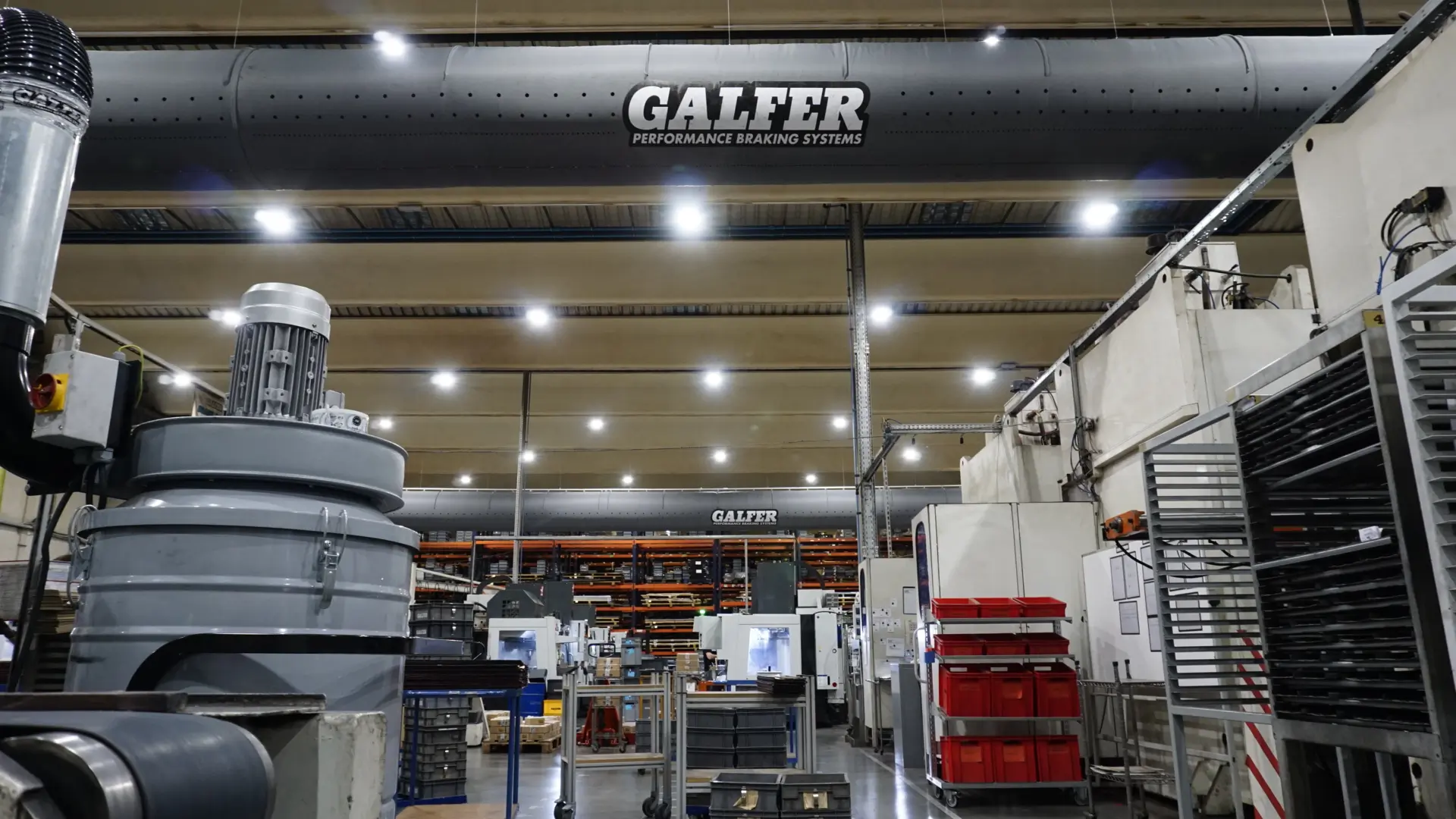
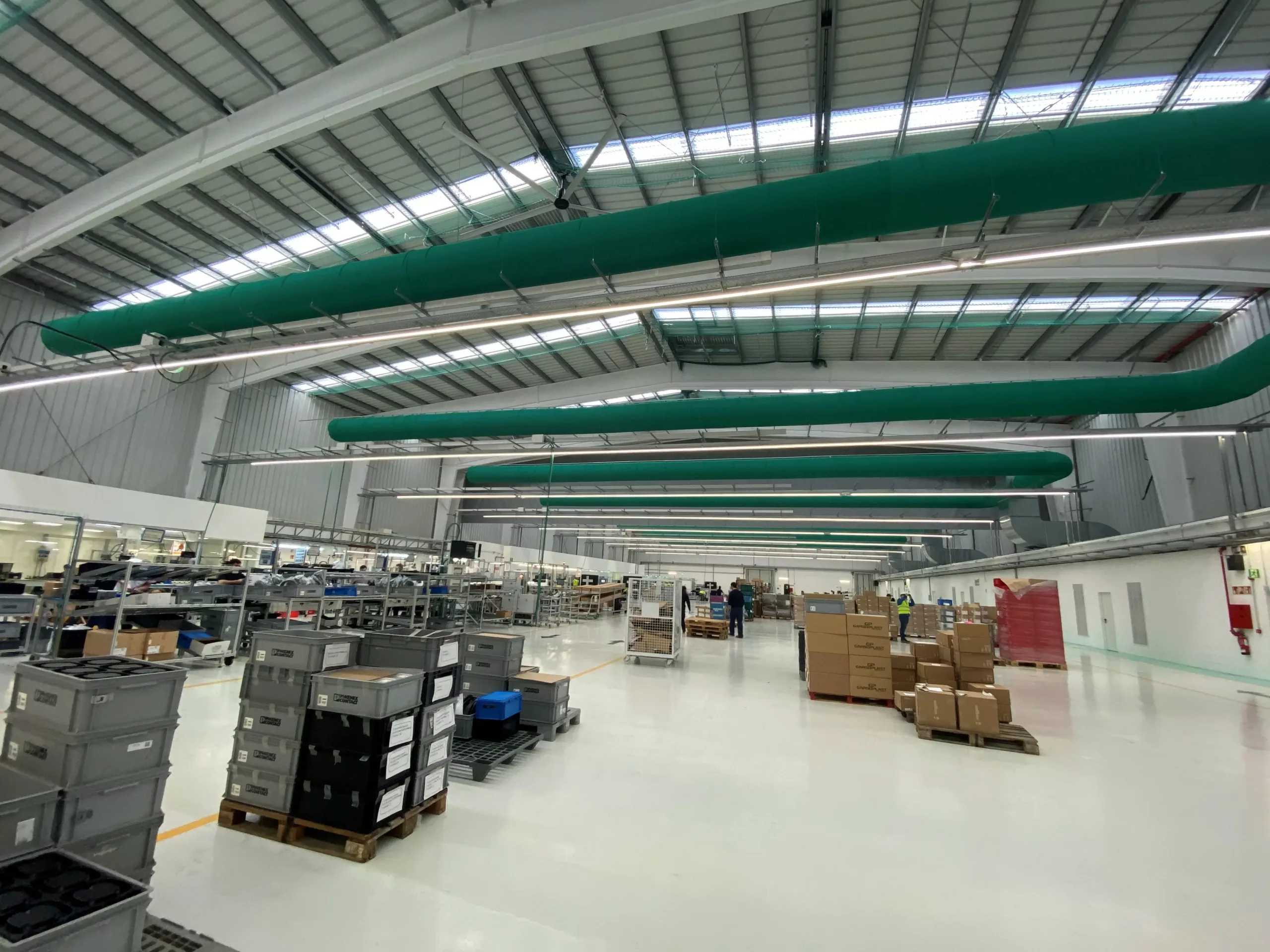

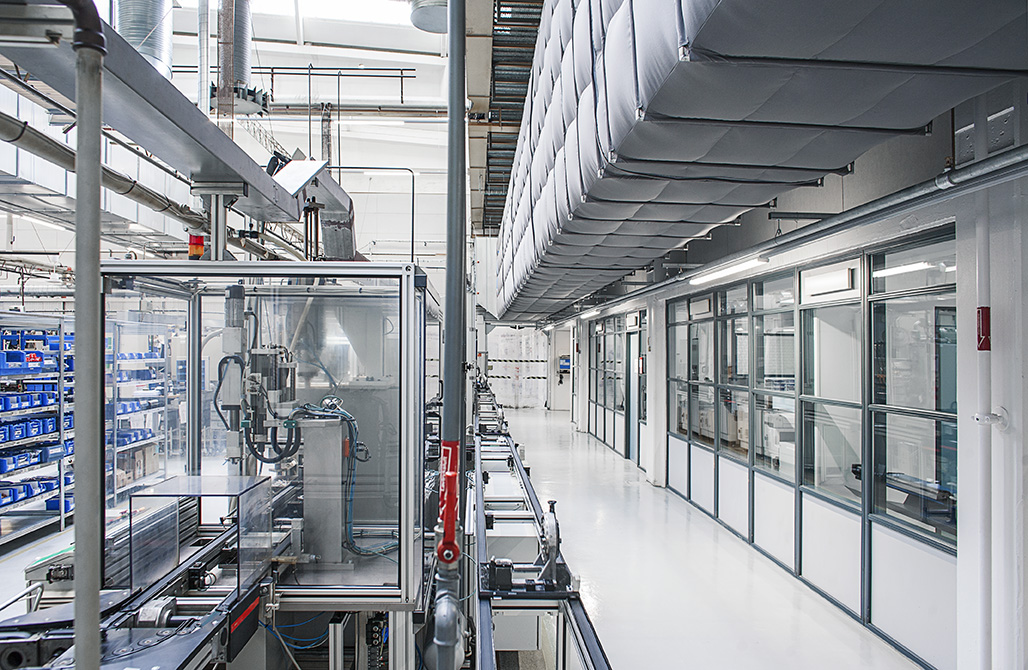
Industrial Ductwork for Manufacturing, Warehouses and Production Facilities
Industrial air duct systems are designed to distribute conditioned air efficiently across large-scale facilities such as manufacturing plants, warehouses, production facilities and cleanrooms. Industrial environments often present demanding HVAC conditions, including high ceilings, large open spaces, dust, moisture, heat and changing production layouts.
FabricAir industrial ductwork provides a lightweight, corrosion-resistant alternative to traditional sheet metal duct systems. Each system is engineered for the specific facility, allowing air to be distributed precisely where it is needed through customized airflow patterns. This helps maintain uniform temperatures, improve employee comfort and indoor air quality, while simplifying installation and maintenance.
FabricAir systems can be designed for new industrial HVAC installations as well as retrofit projects.
Industrial Air Duct Solutions by Facility Type
Select your industry to discover specific features, benefits, and case studies.
Have questions about how to integrate fabric duct systems into your industrial facility? Our engineers are ready to help.
Why Use Fabric Ductwork in Industrial Facilities?

Reduced Maintenance
Washable, corrosion-resistant materials simplify routine maintenance
Faster Installation
Lightweight duct sections simplify transportation, handling and installation compared with conventional metal ductwork.
Condensation-Free
Air-permeable fabrics help prevent condensation from forming on the duct surface.
Custom Airflow
Air dispersion is engineered around ceiling height, equipment layout, occupancy and heating or cooling requirements.
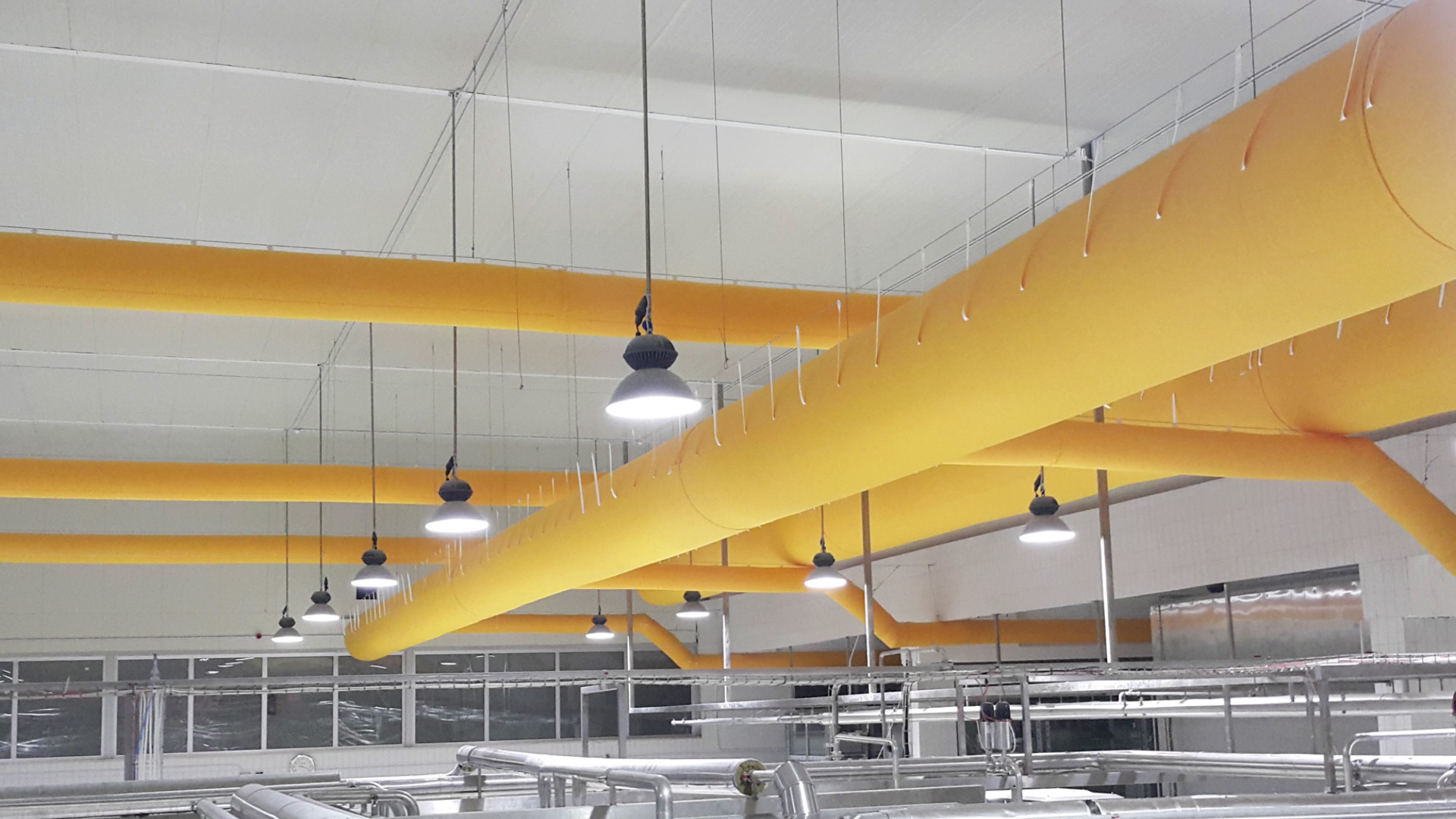
Industrial Air Distribution Designed for Large Spaces
Industrial air distribution presents different challenges from conventional commercial HVAC. Manufacturing plants and warehouses often combine high ceilings, large open areas, heat-generating equipment and work zones with different temperature and airflow requirements.
FabricAir industrial duct systems are engineered around the conditions of each facility. Duct dimensions, suspension systems and airflow models can be customized according to air volume, mounting height, equipment layout and required air velocity. Air can be distributed along the length of the duct rather than through a limited number of conventional diffusers, helping achieve more uniform air distribution across large spaces.
Depending on the application, airflow can be designed for low-velocity distribution in occupied areas or directional, longer-throw air delivery in large industrial spaces.
Industrial Fabric Ductwork vs. Metal Ductwork
| Feature | Fabric ductwork | Metal ductwork |
|---|---|---|
| Air distribution | Engineered along duct length | Typically uses separate diffusers |
| Weight | Lightweight | Heavier |
| Installation | Faster and easier to handle | More labor-intensive |
| Corrosion | Does not rust | Depends on material/coating |
| Cleaning | Removable and washable | Typically cleaned in place |
| Condensation | Can reduce surface condensation | May require insulation |
| Airflow | Highly customizable | Controlled through diffusers/grilles |
FAQ
An industrial air duct is part of an HVAC system designed to distribute conditioned air throughout large or demanding environments such as manufacturing plants, warehouses, production facilities, and processing areas. Industrial air ducts are engineered to handle high air volumes and provide effective air distribution across large spaces, often with high ceilings, heat-generating equipment, or specific airflow requirements.
Industrial air ducts can be made from traditional metal or engineered fabric. Fabric industrial air ducts distribute air through precisely designed perforations, nozzles, or permeable fabric, allowing airflow to be customized to the layout and operating requirements of each facility.
Related terms: industrial ductwork, air distribution system, engineered fabric duct, high-ceiling facilities, permeable fabric
Fabric-based industrial air ducts offer a wide range of advantages compared to conventional metal ducting. One of the most common issues in HVAC ductwork is condensation. Unlike metal ducts, fabric industrial air ducts are designed with permeable textiles that prevent condensation from forming on the surface. This eliminates the need for additional insulation, a key benefit that reduces both costs and installation time.
Related terms: condensation prevention, permeable textile, corrosion resistance, installation cost, metal ductwork comparison
Industrial air duct systems are custom-engineered to perform reliably in the most challenging environments. Specialized fabric types, – such as Combi 60, Combi 70, and Combi 80 – are ideal for facilities exposed to high levels of dust, humidity, heat, or corrosive materials. These fabrics are highly durable, flame-retardant, and resistant to mold and mildew, ensuring long-term performance and hygiene. In dusty or particulate-heavy conditions, fabric industrial air ducts deliver cleaner air distribution because dust does not settle on permeable exteriors or accumulate inside, unlike traditional metal ducts. Their lightweight construction also resists vibration and impact, making them exceptionally well-suited for dynamic industrial settings such as manufacturing plants, warehouses, and processing facilities.
Related terms: Combi fabric series, particulate-heavy environment, flame-retardant fabric, vibration resistance, dust accumulation
Yes. FabricAir provides solutions that are flame-retardant and antistatic, important features for industrial facilities with stringent safety requirements. Fabrics are available in flame-retardant and are certified to relevant international standards, including EN 13501-1 and UL 723. For environments where electrostatic discharge (ESD) could pose a hazard – such as battery plants, electronics production, or explosive environments – antistatic fabrics with conductive yarns help dissipate static charges and support compliance with safety protocols.
Related terms: EN 13501-1 certification, UL 723 certification, antistatic fabric, electrostatic discharge (ESD), conductive yarn
Read more: Understanding Electrostatic Discharge in HVAC Systems
Fabric-based industrial air ducts are custom engineered to deliver uniform air distribution across their entire surface, using advanced flow models tailored to each application. Unlike traditional metal duct systems that rely on grilles or diffusers—often creating hotspots, drafts, or dead zones—fabric ducts ensure consistent and balanced airflow throughout the space.
In large-scale industrial environments, specialized directional airflow models such as OriFlow or SonicFlow provide long-throw coverage ideal for open workspaces or equipment zones. Meanwhile, solutions like MicroFlow deliver low-velocity mixing in sensitive areas where gentle air movement is required. These optimized airflow patterns enhance overall comfort, improve indoor air quality, and support process stability in demanding industrial operations.
Related terms: OriFlow, SonicFlow, MicroFlow, airflow uniformity, dead zone elimination
Maintaining industrial fabric air ducts is simple, efficient, and cost-effective. Unlike traditional metal ducts that require specialized tools and can trap dust and debris inside, fabric ducts are designed for easy care. They can be unzipped, removed, and machine-washed at regular intervals to ensure consistent cleanliness and hygiene.
This straightforward maintenance process is especially valuable in industrial environments with heavy particulate matter, where buildup can negatively impact air quality and system performance. To further minimize downtime, many facilities keep spare duct sections on hand, allowing quick rotation during wash cycles and ensuring uninterrupted operations.
Related terms: washable duct maintenance, spare duct sections, downtime reduction, duct cleaning cycle, hygienic maintenance
Industrial fabric air ducts enhance energy efficiency in several key ways:
-
Lightweight construction
Fabric ducts require fewer materials and are easier to install than metal ductwork, reducing both labor and material costs. -
Lower static pressure
Their smooth internal surfaces minimize resistance, allowing fans to operate more efficiently and consume less energy. -
Targeted airflow distribution
Air is delivered precisely where it’s needed, preventing unnecessary heating or cooling of unused spaces. -
Even temperature control
By eliminating drafts, hot spots, and dead zones, fabric air ducts reduce the demand for additional heating or cooling equipment.Related terms: static pressure, energy efficiency, targeted airflow distribution, industrial duct fan efficiency, HVAC energy savings
Read about energy-saving airflow strategies here: https://www.fabricair.com/blogs/achieving-40-energy-savings-with-fabric-ducts-instead-of-metal/


