








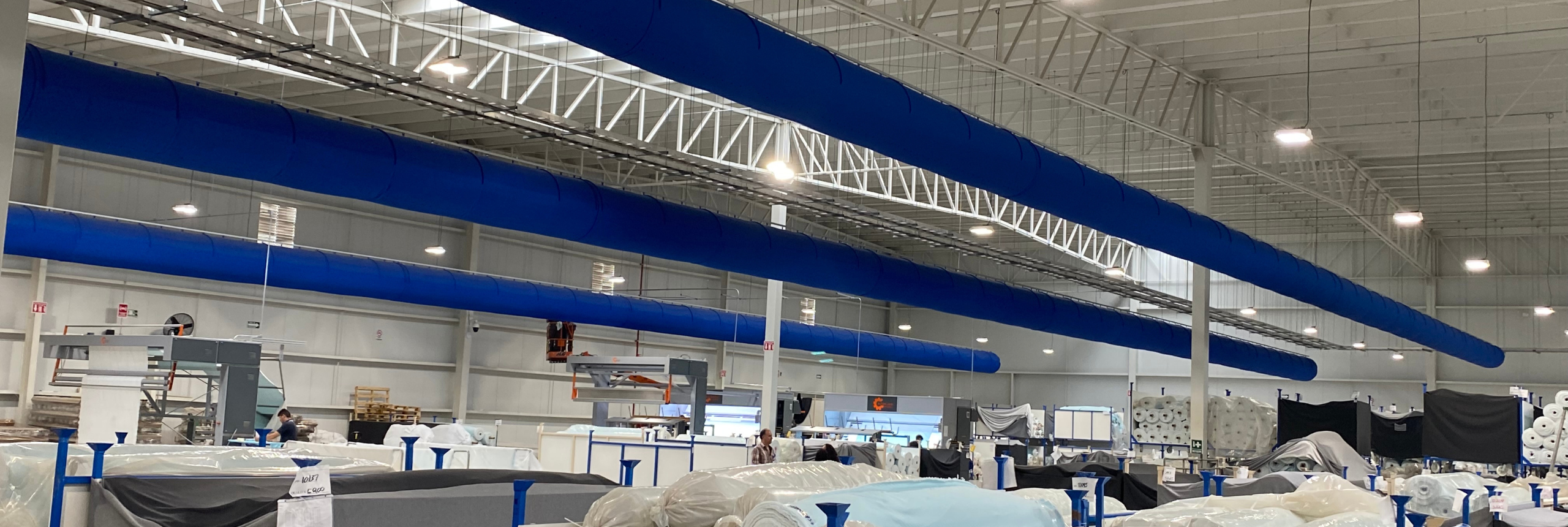
Why Global Industry Leaders Choose Fabric Air Dispersion Systems


This article explains why fabric air ducting—also known as fabric air dispersion systems—is becoming the preferred HVAC solution for global industry leaders. You’ll learn how these systems provide uniform airflow, eliminate condensation, and reduce energy consumption in large facilities such as warehouses, manufacturing plants, and food processing centers. The article highlights their hygienic, washable design for strict environments, the ease of installation compared to traditional metal ductwork, and their contribution to sustainability through lower energy use and reduced carbon footprint. By the end, you’ll understand how a fabric air duct system enhances efficiency, air quality, and operational performance across large-scale industrial applications.
When managing the indoor environment of large buildings like food processing facilities, warehouses, and manufacturing centers, precision-engineered HVAC systems are crucial for maintaining optimal comfort, performance, and safety. In these expansive spaces, controlling airflow, temperature, and humidity with accuracy is vital to ensure product integrity, worker comfort, and energy efficiency. Precision-engineered HVAC systems, like fabric air dispersion systems (also known as sock ducts and ventilation air socks), provide uniform airflow, eliminate hotspots, and prevent condensation—all while reducing energy consumption. Leading companies worldwide have adopted these systems to meet the specific challenges of large-scale operations, ensuring both operational efficiency and a comfortable, regulated environment.
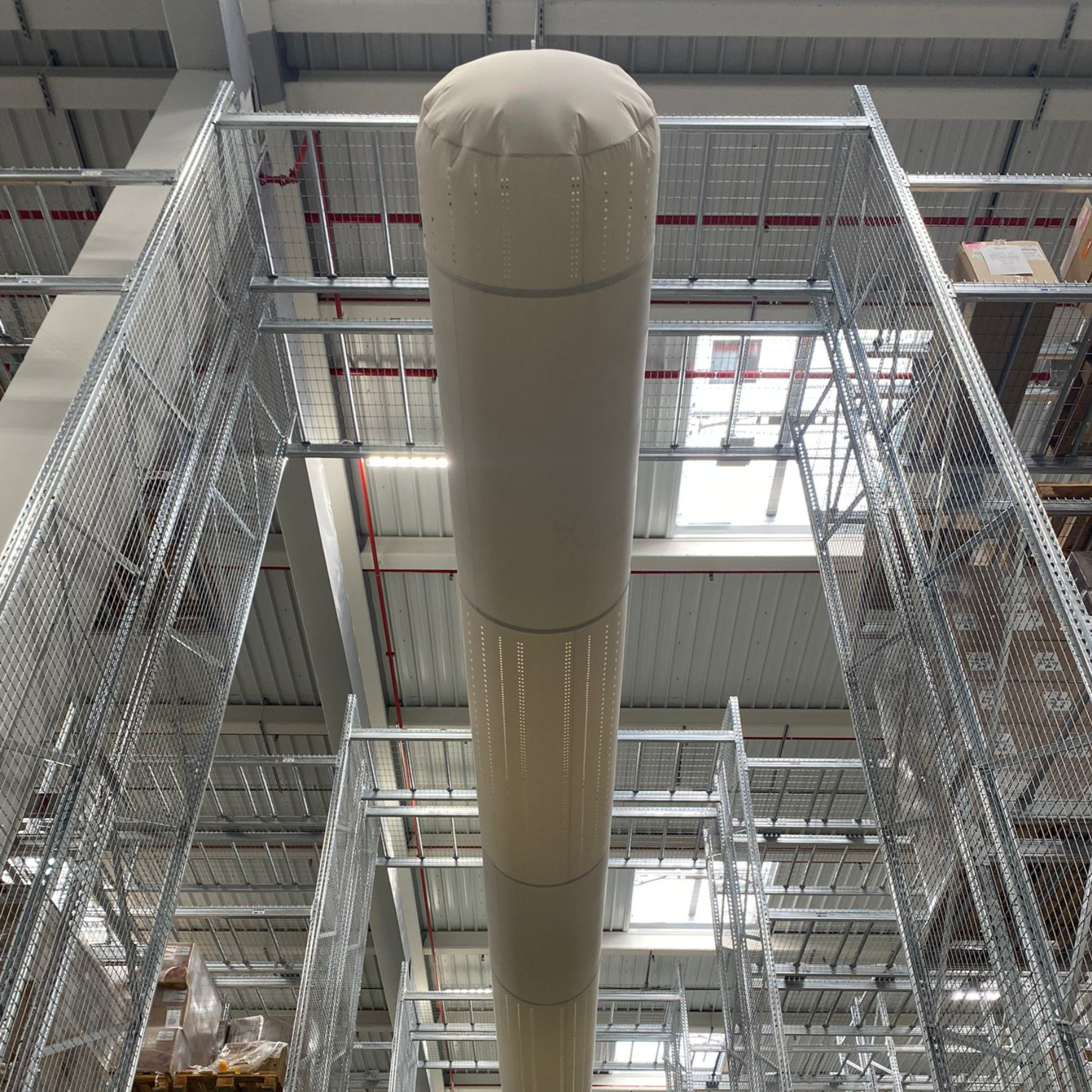
Advanced HVAC Solutions for Large-Scale Food Processing
Food processing facilities, whether handling dairy, meat, or packaged goods, face stringent hygiene requirements to maintain product safety and comply with health regulations. These environments require HVAC systems that not only provide consistent temperature control but are also easy to clean and resistant to contamination. Fabric air dispersion systems are available in washable materials making them an ideal solution for facilities where a high level of hygiene is critical.
One of the major challenges in large-scale food processing is managing condensation, which can lead to mold growth or bacterial contamination, a costly consequence of poor air distribution. Fabric air ducts can nearly eliminate condensation, significantly lowering the risk of such issues. Additionally, their lightweight construction makes them easy to remove, clean, and reinstall, ensuring minimal disruption to daily operations while maintaining the highest hygiene standards.
Fabric Air Ducts: The Key to Efficiency in the World’s Largest Warehouses
Warehouses, including massive facilities owned by Tesla, Boeing, and Amazon, rely heavily on efficient HVAC systems to maintain indoor air quality over thousands to millions of square feet. Traditional metal ductwork in large distribution centers can result in uneven air distribution, leading to hot or cold spots that reduce overall efficiency. Fabric air dispersion systems can solve this problem by providing 360-degree airflow, ensuring even temperature distribution across large spaces.
Fabric air ducts are inherently lighter than traditional metal alternatives, making them faster and easier to install—essential in high-traffic facilities where downtime directly impacts productivity. By opting for fabric-based HVAC systems, large, global companies can reduce installation time by up to 50%, allowing them to maintain operational flow while upgrading their air systems.
Enhancing Air Quality in Global Manufacturing Facilities
Companies like Siemens, Unilever, and Boeing rely on high-quality air management systems in their manufacturing plants to ensure product quality and operational efficiency. Large industrial environments often face challenges in maintaining consistent airflow, which can impact sensitive equipment or processes. Fabric air dispersion systems provide uniform airflow, reducing temperature fluctuations and preventing system inefficiencies.
In facilities with high ceilings like those operated by Toyota Group, fabric air dispersion ensures that conditioned air reaches all levels of the space. By optimizing airflow, these systems help reduce energy costs by up to 25%, making them a smart choice for companies committed to sustainability and operational excellence.
Energy Efficiency and Sustainability: A Shared Priority
As industries focus on reducing their environmental impact, energy-efficient HVAC systems have become a critical component in sustainability strategies. Fabric air dispersion systems can save 40% more energy than metal ductwork, contributing to both operational savings and reduced environmental impact.
For world renowned brands like Unilever, known for their sustainability initiatives, fabric air ducts provide a practical solution that aligns with their goals. In addition, the lighter weight of fabric air ducts streamlines logistics, further decreasing the system’s carbon footprint. This combination of energy efficiency, sustainability, and cost savings is a driving force behind their adoption by environmentally conscious organizations.
Fabric air dispersion systems offer world-class companies significant advantages, including improved air quality, energy savings, faster installation, and enhanced sustainability. These benefits are why leading industries—whether in dairy, manufacturing, or warehousing—are increasingly turning to fabric air ducts to optimize their large-scale facilities.
Additional Information
Fabric vs metal ducting – 4 key differences
Get valuable content first
Enter your email and be among the first to get tips and articles from our experts about HVAC industry topics.