






Meat Processing facility Kasap Kayseri
In meat processing facilities, air distribution is not merely a matter of comfort – it is critically important for hygiene, product quality, and operational efficiency.
Insufficient or unbalanced indoor air distribution can lead to undesirable conditions such as hot and cold dead zones, turbulent airflow, and condensation. These air distribution issues make it more difficult to preserve carcass quality and can negatively impact the health of personnel working in cold areas, potentially resulting in reduced workforce continuity and productivity losses.
In this context, a hygienic and properly designed air distribution system is one of the key engineering inputs that provides a competitive advantage in the food industry.
Combi 80, Combi 30
Type 11A Rapid, Type 8 Rapid
MicroFlow, SonicFlow
6.060 m³/h
Before
A meat processing company based in Kayseri, with a long-established position in the industry, set out to implement an air distribution system capable of meeting future-oriented requirements in its modern facility, where production and sales functions are fully integrated.
The architectural and mechanical infrastructure of the facility was designed in accordance with high hygiene standards, energy efficiency, and environmental sustainability principles. In addition to full compliance with food safety regulations, the system was planned with sufficient flexibility to accommodate future regulatory requirements. Within this framework, the selected air distribution system was required to deliver homogeneous, low-velocity airflow, prevent cold drafts that could affect personnel health, eliminate condensation and contamination risks, and feature a structure that simplifies maintenance processes. These criteria were among the project’s top priorities.
Solution
Meat Processing Area
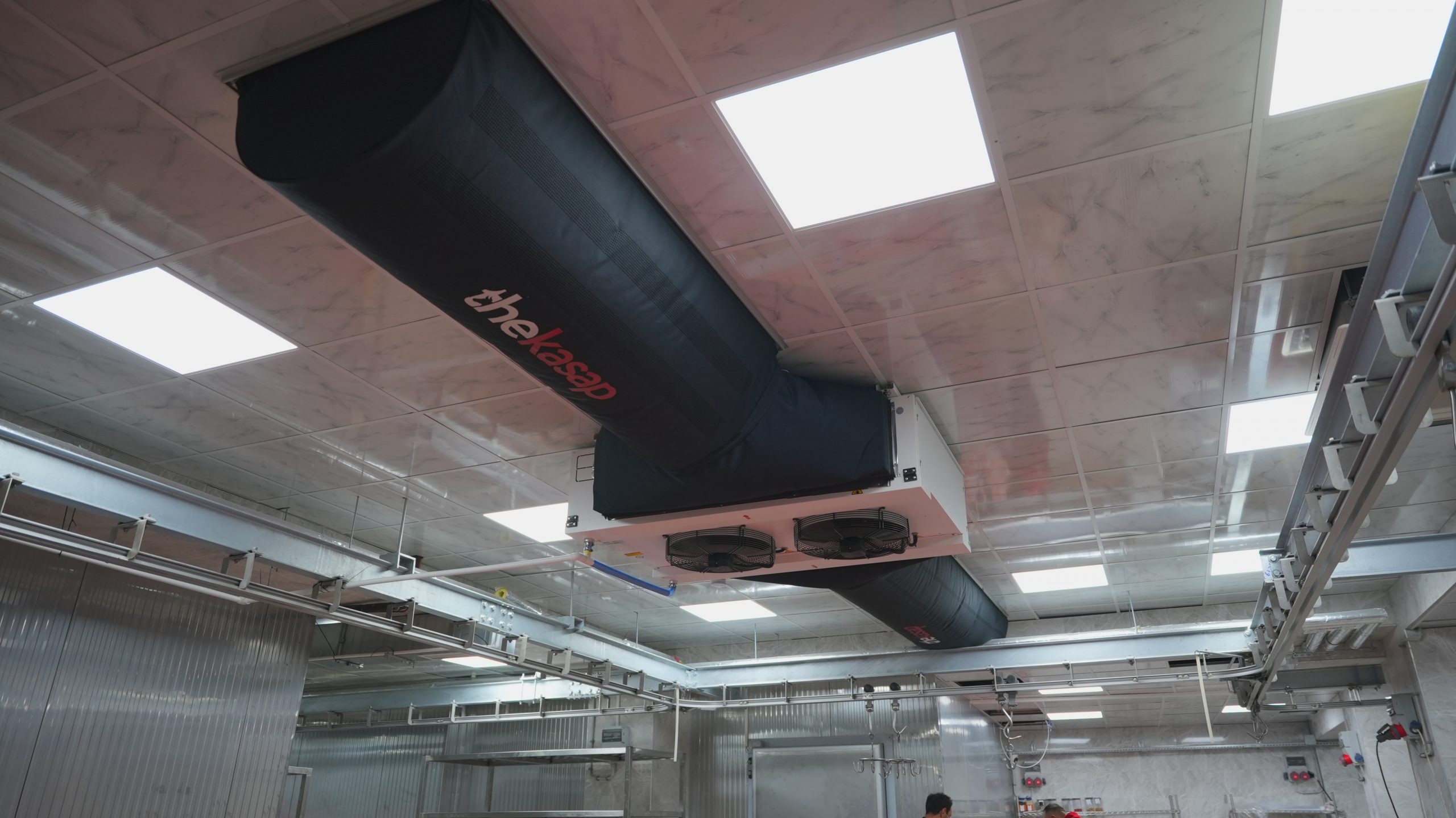
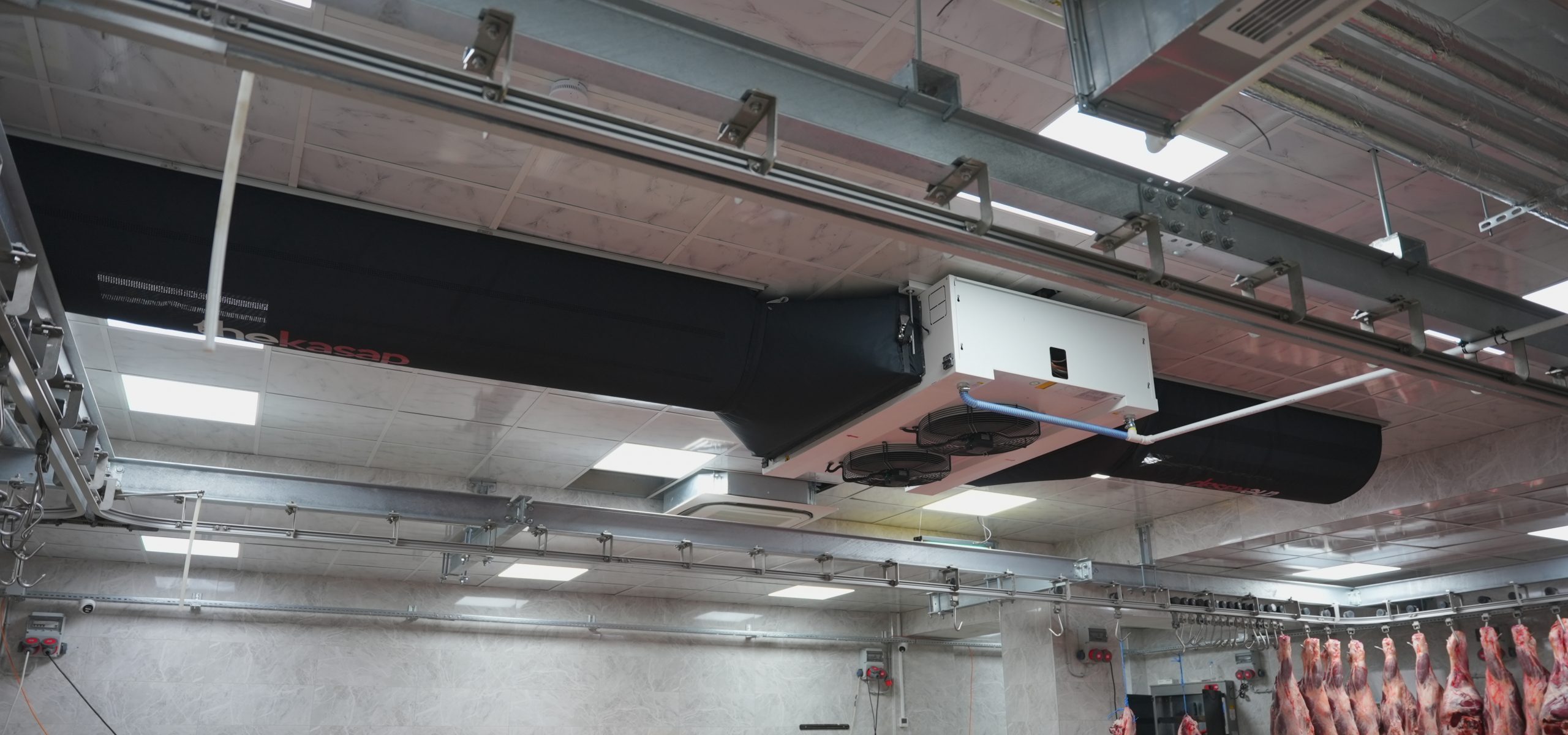
The meat processing area is a critical production zone with low ceiling height and continuous hygiene control requirements. In this area, semi-circular Combi 80 Series antimicrobial textile air ducts mounted on ceiling-type evaporators were used. The selected Combi 80 fabric provides hygiene at ISO Cleanroom Class 3 level and, thanks to its antibacterial surface coating, prevents microorganism growth on the duct surface, minimizing the risk of microbial contamination.
The air-permeable structure of the fabric prevents condensation and dripping on the duct surface. Homogeneous air distribution at low velocities of up to 0.20 m/s minimizes temperature differences within the space (ΔT ±0.5°C), maintaining thermal stability while enhancing operator comfort. Air distribution occurs in a laminar flow without creating local turbulence, resulting in a controlled environment that protects product quality.
The RapidSlider rail system, used in combination with a T-ray suspension system, allows the textile duct system to be dismantled quickly and easily and washed without difficulty. This enables periodic hygiene cycles required by HACCP, GMP, and similar food safety standards to be carried out efficiently, with minimal time and effort.
Sales Area
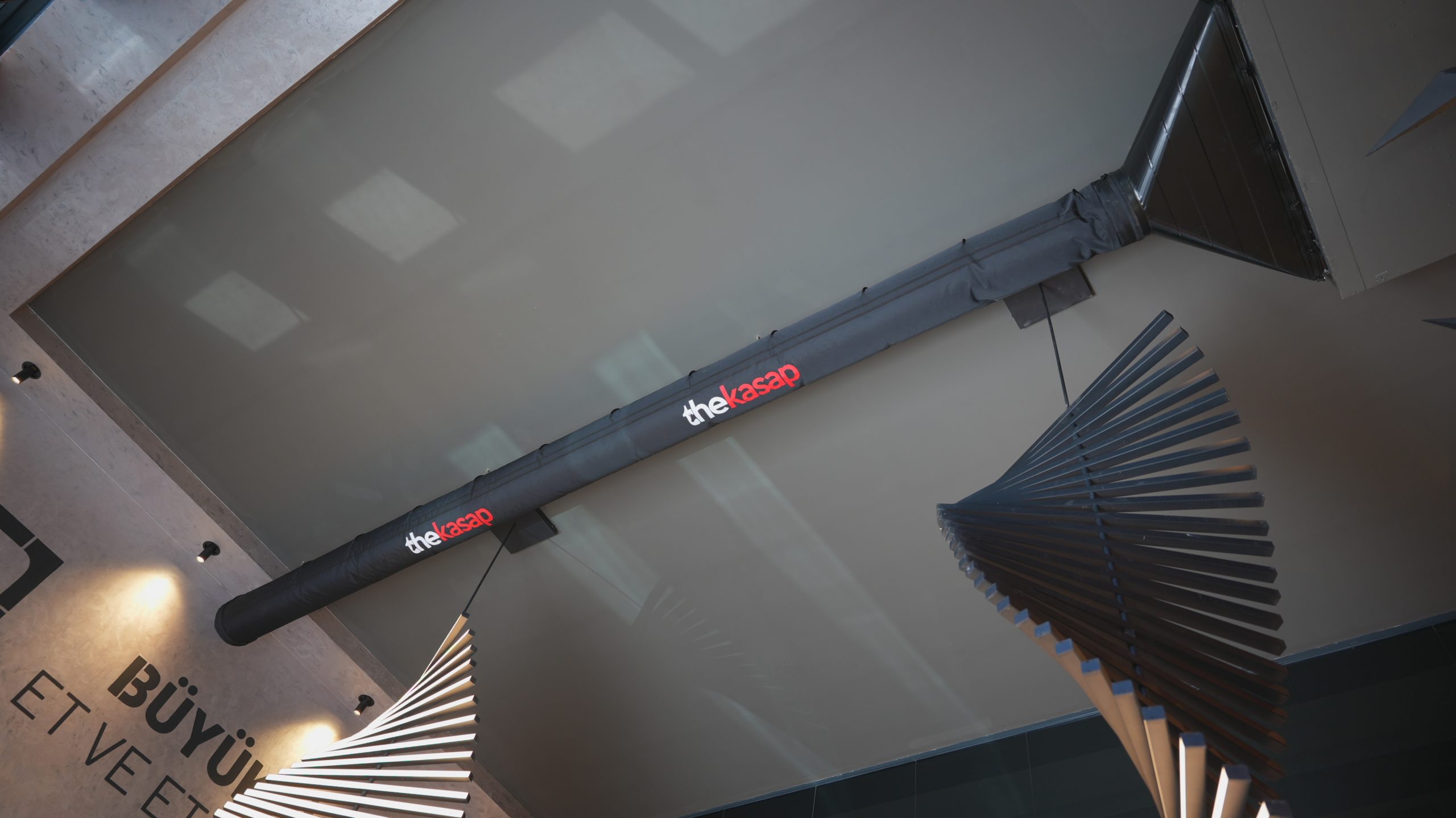
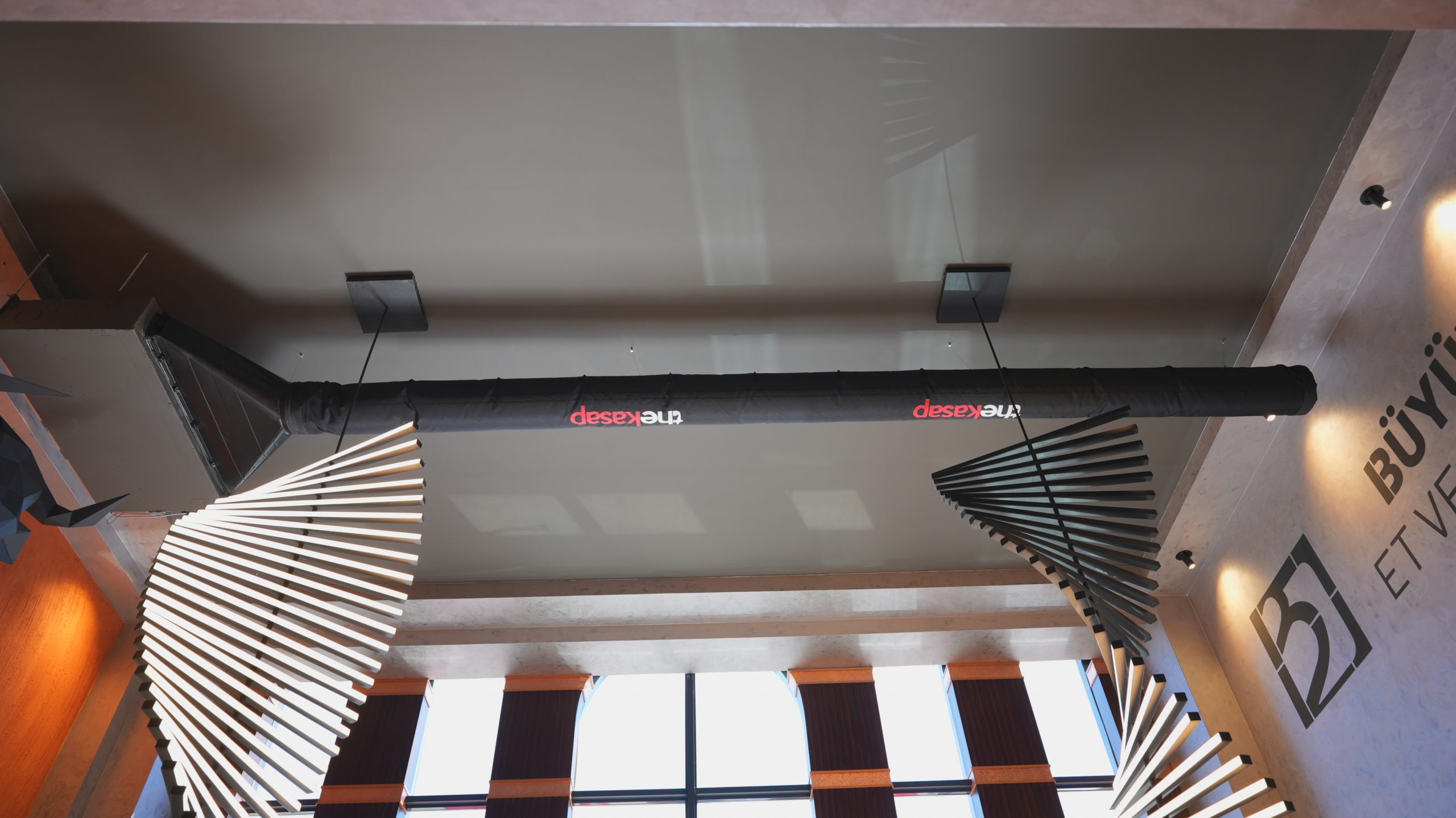
The sales area of the facility was designed not merely as a commercial space, but as an interior environment that conveys the brand’s trust to visitors from the very first point of contact. In this high-ceiling volume, carefully designed mechanical solutions needed to be seamlessly integrated into the architectural language.
In this context, round ducts made from Combi 30 fabric, running along the ceiling, were planned not only as a climate control solution but also as a design element that complements the architecture. Unlike metal systems that occupy ceiling voids, the fabric duct in this space stands out not as a static technical component but as an integral part of the interior design. The black fabric selection became part of the floor-to-ceiling color composition, while the custom logo print applied to the duct surface ensured the brand left a strong and memorable visual impression within the space.
Thanks to All-in-One suspension support system, the fabric air ducts maintain their form even when there is no airflow. As a result, the system becomes not only a mechanical installation element but also an aesthetic feature integrated with the space. Homogeneous, low-velocity, tailor-made air distribution creates an indoor air comfort that is felt without being perceived.
Result
The Kasap project is not merely a textile duct application. It is a benchmark project where hygiene, energy efficiency, interior aesthetics, and indoor air comfort come together.
In the meat processing area, the Combi 80 Series antibacterial textile air ducts provide low-velocity, laminar, and homogeneous air distribution, ensuring both food safety and personnel comfort while meeting the facility’s high hygiene requirements with ISO Cleanroom Class 3 compliance. Their non-condensing, corrosion-free structure, combined with the RapidSlider suspension system, delivers measurable savings in time and resources during hygiene cycles.
In the sales area, the Type 8 All-in-One system made from Combi 30 fabric stands out as a solution where air ducts contribute architecturally to the space. Rather than creating visual clutter in the ceiling void, the system functions as a design element that integrates seamlessly into the interior, maintaining its form even when there is no airflow and ensuring visual continuity. Custom-printed black fabric ducts that support brand identity create a strong visual memory at first contact, while also providing high comfort conditions through low-velocity, homogeneous air distribution.
The FabricAir textile ducts selected for The Kasap project offer a functional, lightweight, hygienic, and architecturally compatible alternative to metal ducts. Operating at low pressure, they minimize energy consumption, while their “tailor-made” air distribution precisely meets the specific needs of the space. The system successfully delivers an infrastructure that meets not only today’s requirements, but also future hygiene, sustainability, and design criteria.