








Fabric Ducting Enhances Comfort and Design in Resto-Bar
A new resto-bar in Thane, India, has taken a forward-thinking approach to indoor comfort by installing a fabric ducting system from FabricAir. Designed for both performance and aesthetics, the system provides even airflow throughout the space while minimizing structural impact, an ideal solution for retrofitting or ventilation in commercial dining venues.
Meeting the Ventilation Needs of a Hospitality Space
In restaurant and bar environments, indoor comfort can make or break the guest experience. Uneven temperatures, drafts, or stagnant air not only affect guests but can also make working conditions more difficult for staff.
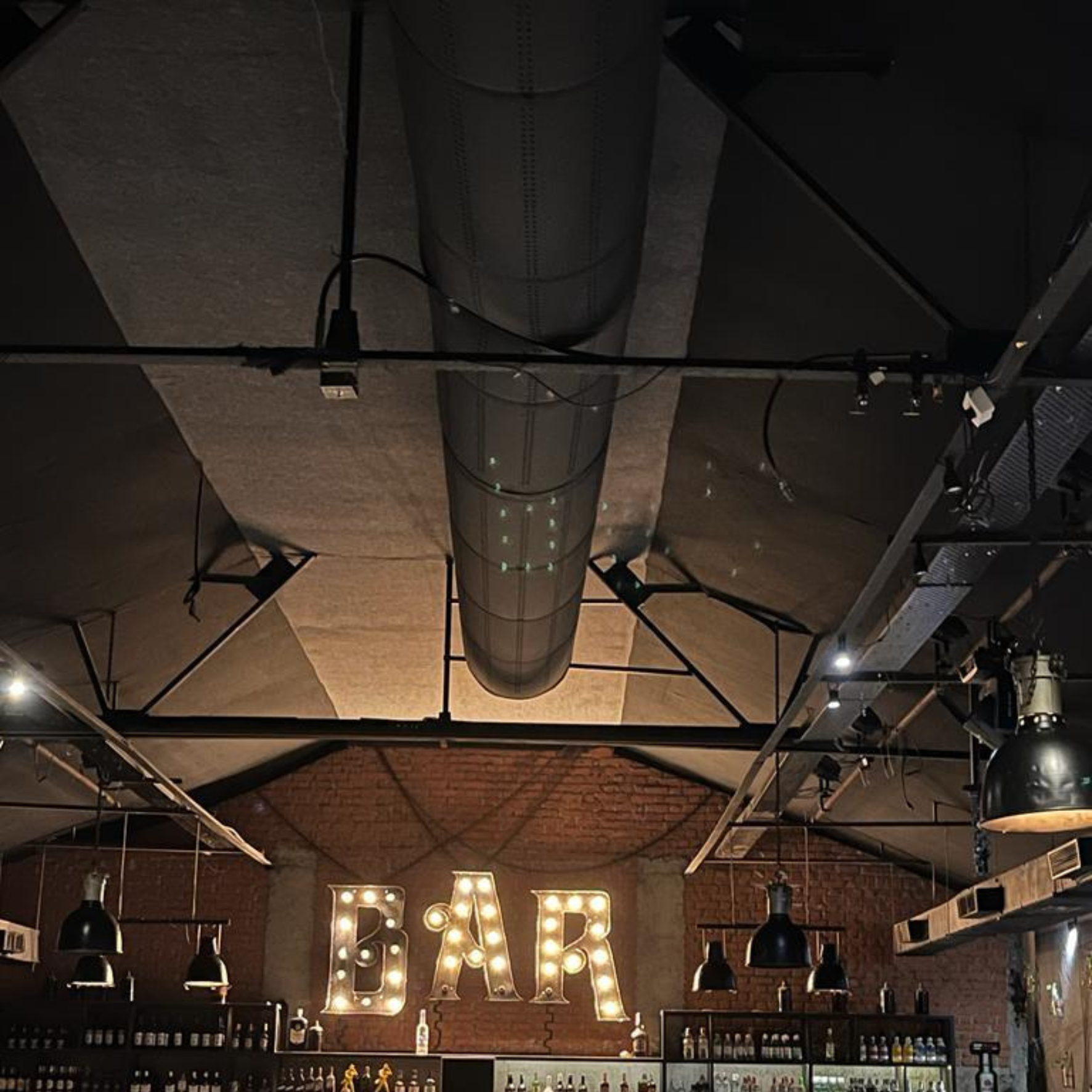
For this project, the venue needed a system that could provide consistent thermal comfort without compromising the building’s structure or interior design.
Traditional metal ducts, while common, can present challenges in these applications, particularly when space constraints and design aesthetics come into play. Fabric ducting offered a smarter alternative, delivering a lighter-weight, visually clean solution with superior air dispersion.
Fabric Ducting Selected for Performance and Appearance
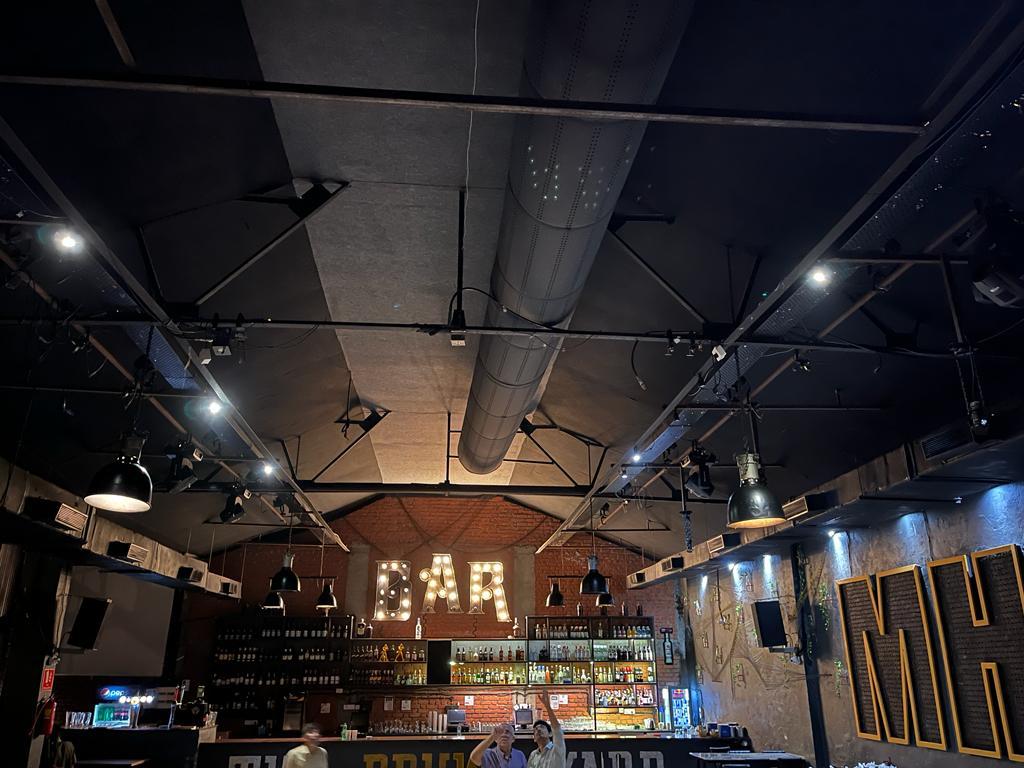
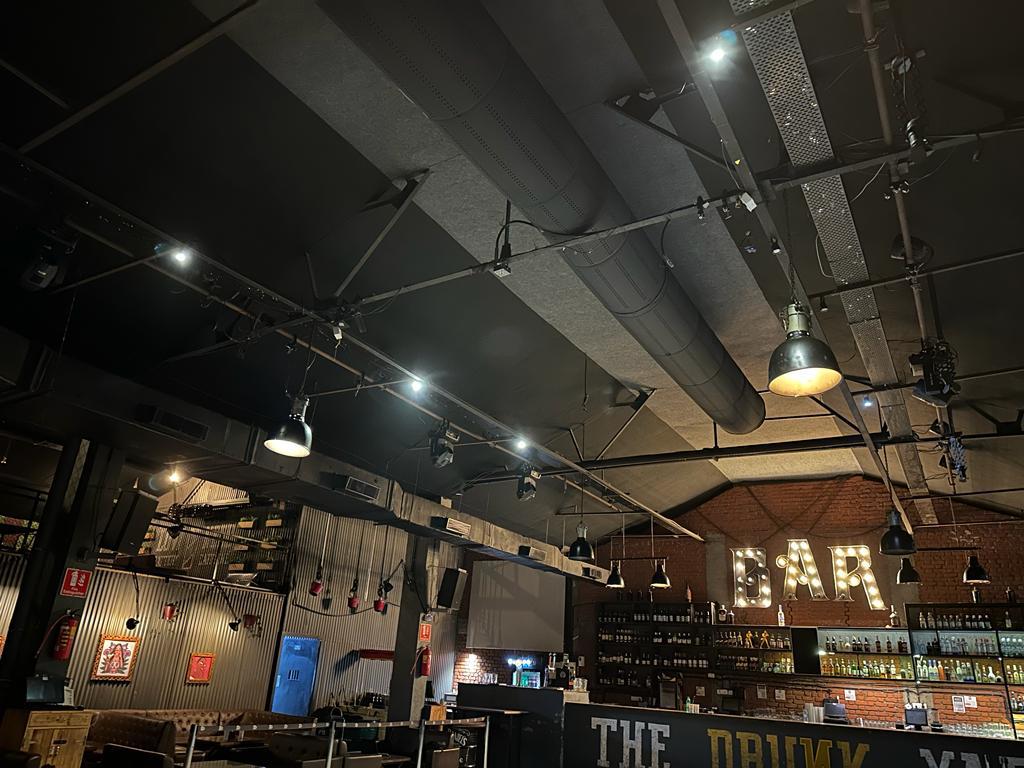
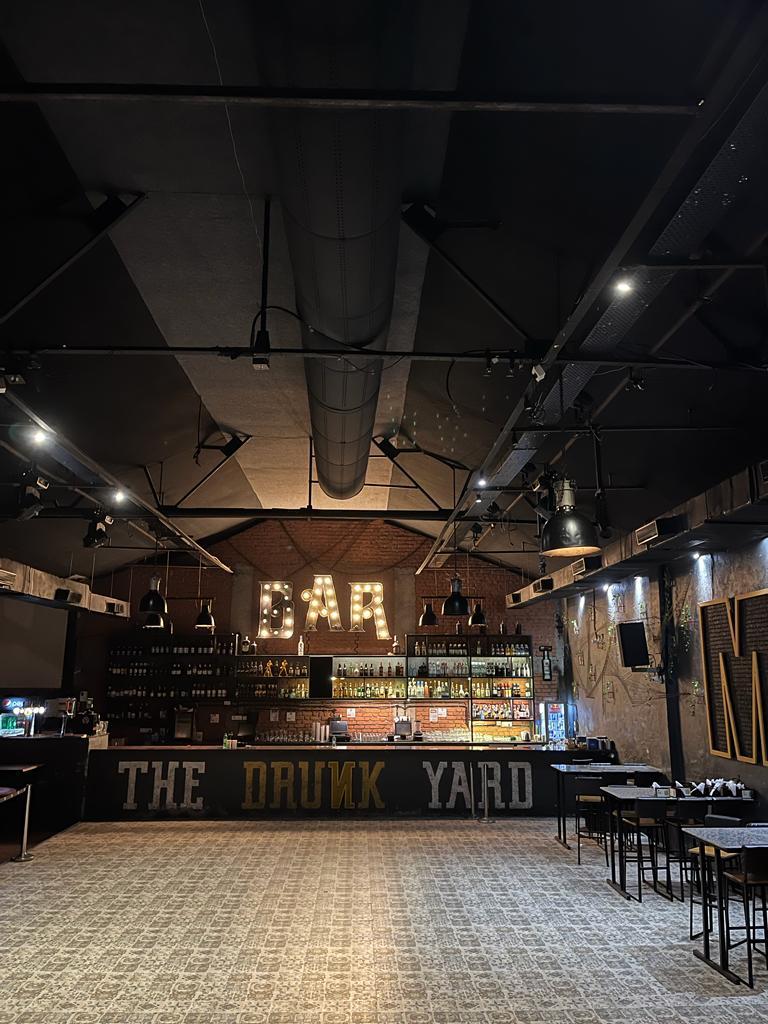
The system specified for the resto-bar includes the SonicFlow air flow model, which uses precision laser-cut perforations to direct airflow evenly and quietly throughout the space. This directional model is ideal for public venues like bars, where maintaining a comfortable climate without noticeable drafts is essential.
The ducts were manufactured using black Combi 20 fabric, a permeable, flame-retardant technical fabric designed to perform well in indoor hospitality environments. This fabric is easily laundered to maintain hygiene and appearance over time.
To keep the ducts open and aesthetically consistent even when the system is turned off, the installation used a Type 1 cable suspension system with 360° Hoops. These support hoops maintain the duct’s shape without interfering with internal airflow—an important feature for maximizing energy efficiency and preserving unobstructed ventilation paths.
Light on Structure, Heavy on Impact
In addition to improved airflow, one of the key benefits of this fabric ducting installation is its lightweight design. Compared to metal systems, fabric ducts place minimal strain on the ceiling structure, allowing for greater flexibility during installation and reducing the need for additional support infrastructure.
For contractors and installers, this can translate to faster installation times and easier integration into existing spaces, especially in projects where structural capacity is limited or design constraints are tight.
A Practical Solution for Commercial Retrofit Projects
This resto-bar project illustrates how fabric ducting can meet the complex demands of commercial hospitality spaces. From flexible installation and reduced weight to improved comfort and modern aesthetics, fabric-based air dispersion is becoming an increasingly preferred choice for HVAC contractors and facility designers.
Whether the goal is to retrofit an aging ventilation system or design a new one from the ground up, fabric ducting offers a reliable, high-performance alternative that adapts to the unique needs of bars, restaurants, and other social spaces.
Additional Information
PHOTOS: Fabric ducting in commercial spaces
Why HVAC Contractors Trust Fabric Ducting for Fast, Efficient Projects
Receive valuable content first
Enter your email and be among the first to get tips and articles from our experts about HVAC industry topics.


