








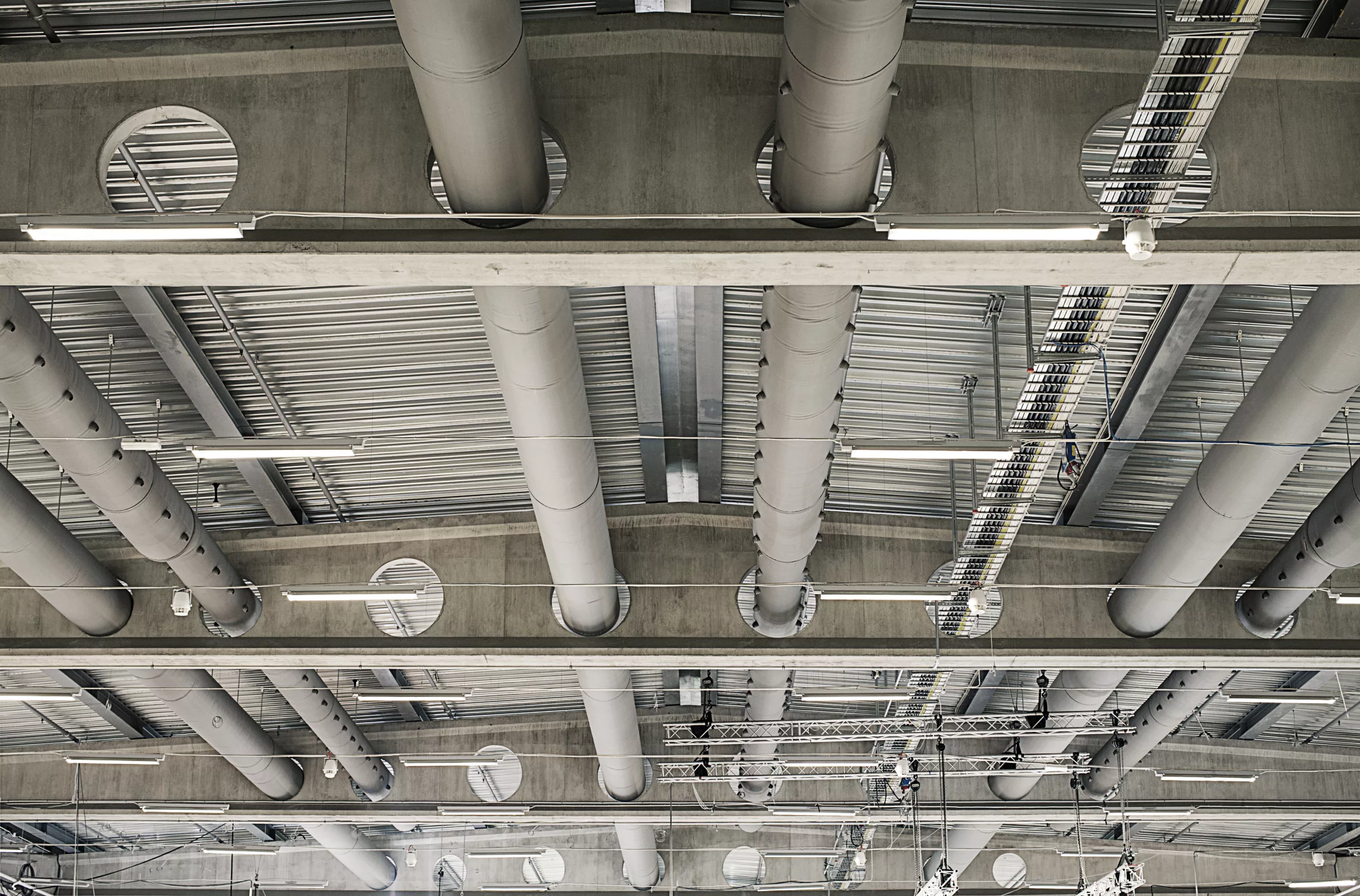
3 reasons why architects choose fabric ductwork


3 reasons why architects choose fabric ductwork
When designing the overall architecture of buildings, it is impossible not to think about air distribution systems. They are simply unavoidable in architectural work and many architects simply turn a blind eye to horrible-looking ceiling elements. With the advent of industrial architecture, ducts are often part of the design, but there are now solutions that do not require a cold industrial environment. All that is needed is the right choice of the distribution system itself.
Fabric-based air distribution solutions are life savers for architects. Function and aesthetics combine to create the perfect indoor environment with a stylish look that matches the building’s architecture. And there are some features that make this choice for an HVAC system perfect.
A great choice for overall aesthetics
Air socks, also known as fabric ducts, are textile based ventilation solutions which are perfect in terms of aesthetics. Due to their natural properties, fabrics can be chosen in a color that matches the overall look of the room. Likewise, it is even possible to print the desired logos, textures, or visuals, anything is possible if the desire is there. And above all, aesthetics need not sacrifice the efficiency of the air diffusion system.
On the contrary, with fabric ducts you can achieve much better results in air distribution, ensuring perfect indoor air quality, avoiding draughts, and helping to protect people from colds and diseases. Such solutions not only make the architect’s job easier but also, in the final result, completely satisfy the client.
Finally, fabric ducts are extremely lightweight and do not put extra weight on the building structure, so they can be installed even in the most challenging projects, such as buildings with glass ceilings.
Cutting on costs
Fabric-based air distribution solutions also contribute to resource and energy savings. Undoubtedly, this is a very important consideration for clients, and architects often have to wonder how to reduce the cost of a project without compromising its quality. And fabric ducts can be just the solution.
In addition to logistics, maintenance, and installation costs, fabric-based HVAC solutions can also save money in the long run by reducing energy depletion, as the ducts distribute the indoor air flawlessly, using up to 40% less energy. It is with this solution that energy-saving initiatives can be contributed to, at least not directly.
Technologically impeccable systems
Fabric-based air distribution systems provide unmatched technological performance. Taking into account all pertinent space dimensions and requirements, it produces a consistent air distribution with perfect mixing. No matter if the application is isothermal, heating, cooling, or a combination of all three, the endless design options assure a system that precisely complements the layout of any structure.
Condensation ceases to be an issue when adopting fabric-based dispersion methods. Due to the fabric’s inherent qualities, the ducts do not perspire, which prevents rusting, condensation drippings, or bacteria growth. For the majority of facilities, the ducts must be made of fireproof materials.
Additional Information
Case study: Fabric Ducts in Real Leaf Solutions Cannabis Grow House
FAQ
Air socks, also known as fabric ducts, are textile-based ventilation systems that can be chosen in a colour that matches the overall look of a room, and it’s even possible to print logos, textures or visuals onto the duct surface — turning what’s usually a hidden or unattractive ceiling element into a design feature.
Related terms: fabric duct colors, textile-based ventilation, custom duct printing, ceiling design element, architectural aesthetics
No — with fabric ducts, architects can achieve better air distribution results than with many conventional systems while still getting the colour and finish they want, since the aesthetic customisation doesn’t change the underlying engineered perforation pattern that controls airflow.
Related terms: air distribution performance, aesthetic customisation, engineered perforation, fabric ductwork, design without compromise
Fabric ductwork’s lighter weight and simpler installation process reduce labour and structural costs compared with metal ducting, giving architects room in the budget to specify a more customised finish without exceeding the overall ventilation budget.
Related terms: project cost control, lightweight ductwork, installation savings, budget flexibility, fabric ductwork
Fabric-based systems are custom engineered with the same rigour as conventional HVAC design — airflow calculations and system sizing are still based on the room’s actual requirements — so the technology matches conventional systems on performance while adding the aesthetic flexibility metal ductwork can’t offer.
Related terms: custom engineered system, airflow calculations, technological performance, fabric-based air distribution, system sizing
Read more in FabricAir’s Care-free Air Distribution for Ultimate Comfort.
Get valuable content first
Enter your email and be among the first to get tips and articles from our experts about HVAC industry topics.