








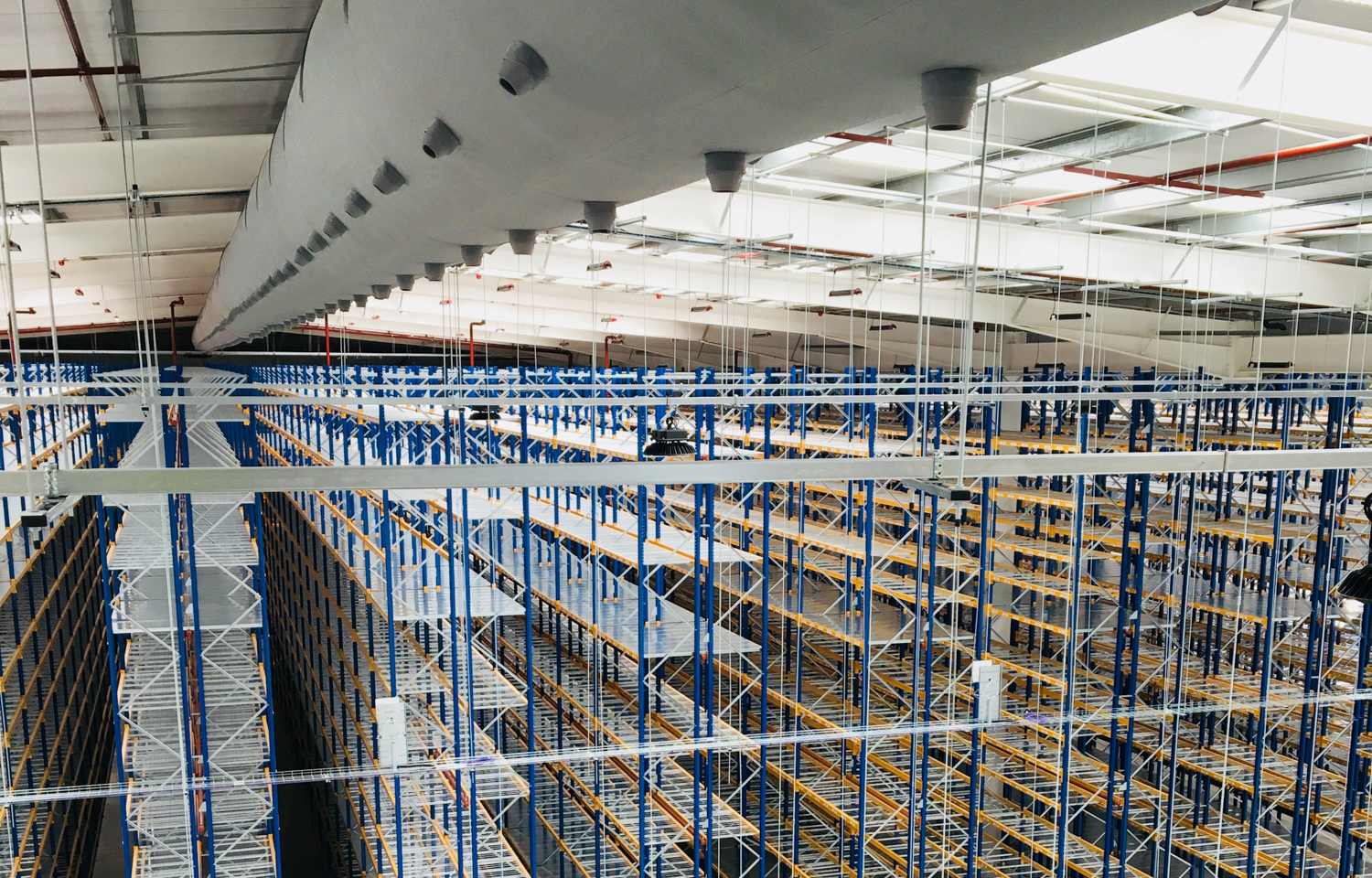
What are air socks and how do they work in HVAC systems?


What are air socks and how do they work in HVAC systems?
If you’ve walked through a large warehouse, a food production facility, or a modern sports hall, you’ve probably seen them — long fabric tubes suspended from the ceiling, gently inflated and quietly doing the job of distributing air across the space. Those are air socks, and while the name might be unfamiliar, the technology behind them is straightforward, proven, and in widespread use across the UK.
FabricAir has manufactured fabric duct systems since 1973 and has completed around 2,700 installations across the UK, supporting air distribution projects in industrial, commercial and public environments.
This guide explains what air socks are, how they work inside an HVAC system, and what makes them a different kind of solution to the metal ductwork most people are familiar with.
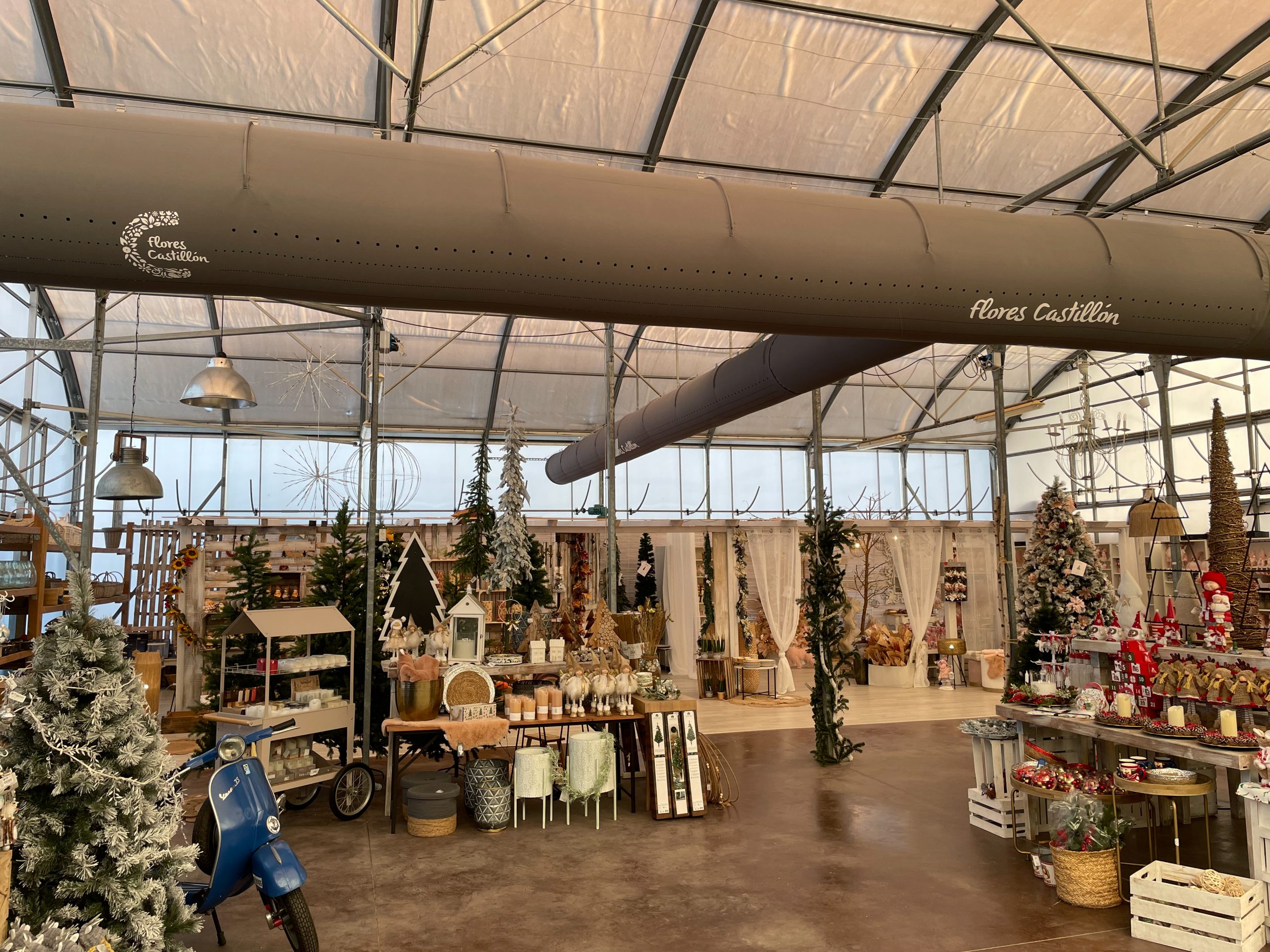
What is an air sock?
An air sock is a textile duct — a tube made from engineered fabric that hangs from a ceiling rail or cable and inflates when air is supplied from the HVAC system. Rather than transporting air to a single delivery point and releasing it through a grille, an air sock distributes air continuously along its entire length, through the fabric itself. The result is an even, low-velocity airflow across the full zone beneath it, without the draughts and temperature variations that grille-based systems can produce.
The technology has been in commercial use since the 1970s and is also known as fabric ducting, textile ducting, or duct socks — the variation in terms reflects regional usage more than any technical difference. In continental Europe, “textile duct” and “fabric ducting” tend to be the preferred terms; in the UK and North America, “air sock” and “duct sock” are more commonly heard. They all describe the same thing. For a more detailed breakdown of how these terms relate, see our guide to fabric air dispersion terminology.
How does an air sock work?
The operating principle is simple. When the air handling unit starts, conditioned air enters the fabric duct and inflates it to its full shape — round, half-round or rectangular depending on the installation. The internal static pressure keeps the duct taut and gives it its characteristic appearance. From there, air exits through the fabric along the full length of the run.
There are three main ways air is delivered through a fabric duct, and the right one depends on the application. With a permeable fabric, air seeps gently through the weave at very low velocity across the entire surface — this creates the even, draught-free distribution that air socks are known for, and is the preferred method for cooling and any environment where condensation control is important. Where longer throw distances are needed, laser-cut micro-perforations in the fabric allow more directed, higher-velocity delivery. And in large open spaces such as warehouses or sports halls, fabric nozzles can be incorporated to project air over significant distances from high mounting heights.
Because air exits along the entire length of the duct rather than from a single point, temperature and velocity are consistent across the zone — no hot spots, no cold corners.
Many installations combine these methods in the same duct — permeable fabric for the majority of the run, with perforations or nozzles in specific areas where conditions require it. The fabric type, perforation pattern and nozzle placement are all determined at the specification stage based on the airflow requirements and the layout of the space.
Why fabric instead of metal?
Metal ductwork has been the standard for HVAC distribution for decades, and it remains the right choice for certain applications. But fabric ducting offers some practical advantages that are difficult to replicate in sheet metal, particularly in environments where hygiene, maintenance and installation logistics matter.
The most significant is condensation. When cool air passes through permeable fabric, the surface temperature stays above the dew point because the air is moving through the material rather than resting against a cold metal wall. In food production facilities, cold stores and pharmaceutical environments, this eliminates a persistent source of contamination risk that metal ductwork — even insulated metal ductwork — struggles to fully address.
Maintenance is another area where the difference is tangible. A fabric air sock weighs between 1 and 5 kg. It unclips from its ceiling rail, goes into a standard commercial washing machine, and is back in place the same day. Cleaning the interior of a metal duct system requires a specialist contractor, access equipment, and a facility shutdown. For any operation running regular hygiene audits — BRCGS in food production, GMP in pharmaceutical — the ability to document regular duct washing without specialist involvement is a meaningful operational advantage.
Installation is faster too. Because the ductwork is lightweight and mounts on a simple aluminium rail or cable suspension system, a typical installation requires no heavy equipment and can be completed in hours rather than days. This makes fabric ducting a practical choice for retrofits and fit-outs with compressed timelines, as well as new builds where programme pressure is a factor.
Where are air socks used?
The technology is flexible enough to appear in environments that look very different from each other. In many UK food processing and manufacturing environments, fabric ducting is a practical choice for new installations because the combination of washability, condensation-free performance and hygiene documentation makes it easier to manage than traditional metal ductwork. In warehouses and distribution centres, long-throw nozzle systems distribute air across large floor plates from high mounting heights, often in spaces where getting even temperature at floor level has historically been a challenge.
Sports halls and gyms benefit from high-level distribution that reaches the occupied zone without creating downdraught over courts or pitches. Pharmaceutical cleanrooms and laboratories use the precise low-velocity airflow characteristics of permeable fabric to maintain cleanroom classification without turbulence. In data centres, even cooling distribution across server rows prevents the hot spot formation that shortens equipment life. And in hospitals and healthcare environments, the draught-free, low-noise, washable characteristics of fabric ducting suit the requirements of wards, theatres and diagnostic spaces where air quality and infection control are priorities.
What these environments share is a need for consistent, controllable air distribution — which is precisely what air socks are engineered to deliver.
Specifying an air sock system
Unlike standard metal ductwork components, fabric air socks are custom-designed to each project. The specification process starts with a project brief — floor dimensions, airflow volumes, supply temperatures and the application type — from which FabricAir’s UK engineering team selects the fabric, flow model, profile and suspension method. For projects where airflow verification is important before manufacture, computational fluid dynamics (CFD) analysis is available to model the performance of the system in the actual space. Systems are then manufactured and delivered, typically within the shortest lead times in the market, ready for installation by the M&E contractor on site.
Air socks are fabric air ducts used to distribute conditioned air from an HVAC system. They are suspended from the ceiling, inflate when air is supplied, and release air along their length through the fabric surface, perforations or nozzles.
Yes. Air socks, duct socks, fabric ducting and textile ducting are different names for the same type of air distribution system. The preferred term often depends on the country, sector or specification, but they describe the same technology.
Air socks work by distributing air along the full length of the duct instead of releasing it from a single grille or diffuser. Conditioned air enters the fabric duct, inflates it, and then exits through permeable fabric, laser-cut perforations or fabric nozzles, depending on the airflow requirements of the space.
Air socks are used across the UK in industrial, commercial and public environments, including food production facilities, warehouses, sports halls, gyms, pharmaceutical spaces, data centres, hospitals and modern commercial buildings.
Air socks are lightweight, washable and designed to provide even air distribution across a space. They can help reduce draughts, avoid hot and cold spots, simplify installation and support hygiene routines in environments where regular cleaning and documentation are important.
Yes. Permeable fabric ducting can help reduce condensation because air moves through the fabric surface rather than resting against a cold metal duct wall. This makes air socks especially useful in cooling applications, food production, cold storage and other hygiene-sensitive environments.
Yes. Fabric air socks can be unclipped from the suspension system, washed in a commercial washing machine and reinstalled. This can make maintenance easier than cleaning traditional metal ductwork, especially in facilities with hygiene audit requirements.
Yes. Air socks are custom-designed for each project. The fabric type, duct diameter, profile shape, colour, suspension method, perforation pattern and nozzle placement can be selected based on the building layout, airflow volume, supply temperature and application.
Get valuable content first
Enter your email and be among the first to get tips and articles from our experts about HVAC industry topics.