









4 Ways Facility Managers Can Improve IAQ with Fabric Ducts


This article explains how facility managers can use fabric air ducting to enhance indoor air quality (IAQ) and create healthier, more productive environments. You’ll learn four key strategies—improving ventilation, controlling humidity, simplifying maintenance, and integrating high-efficiency filtration to optimize air quality throughout a facility. The article highlights how fabric air ducts deliver uniform airflow, prevent condensation, and are fully washable, reducing microbial buildup and maintenance demands. It also explores how proper airflow and consistent humidity balance contribute to energy efficiency and occupant well-being. By the end, you’ll understand how adopting fabric air ducting can help facility managers ensure cleaner, more consistent air circulation, minimize operational costs, and boost comfort and cognitive performance in modern workplaces.
Indoor air quality (IAQ) is a vital concern for facility managers, directly influencing the health, comfort, and productivity of building occupants. Poor IAQ can lead to a variety of issues, from respiratory discomfort and allergies to diminished cognitive function, all of which can reduce workplace efficiency and increase absenteeism. Improving IAQ requires a multifaceted approach, including effective ventilation, consistent humidity control, regular HVAC maintenance, and high-efficiency filtration.
Fabric-based HVAC systems provide a powerful solution by enhancing airflow, supporting energy efficiency, and simplifying maintenance. In this article, we’ll discuss four key strategies for facility managers to use fabric air ducts to significantly improve IAQ and create healthier, more comfortable indoor environments for building occupants.
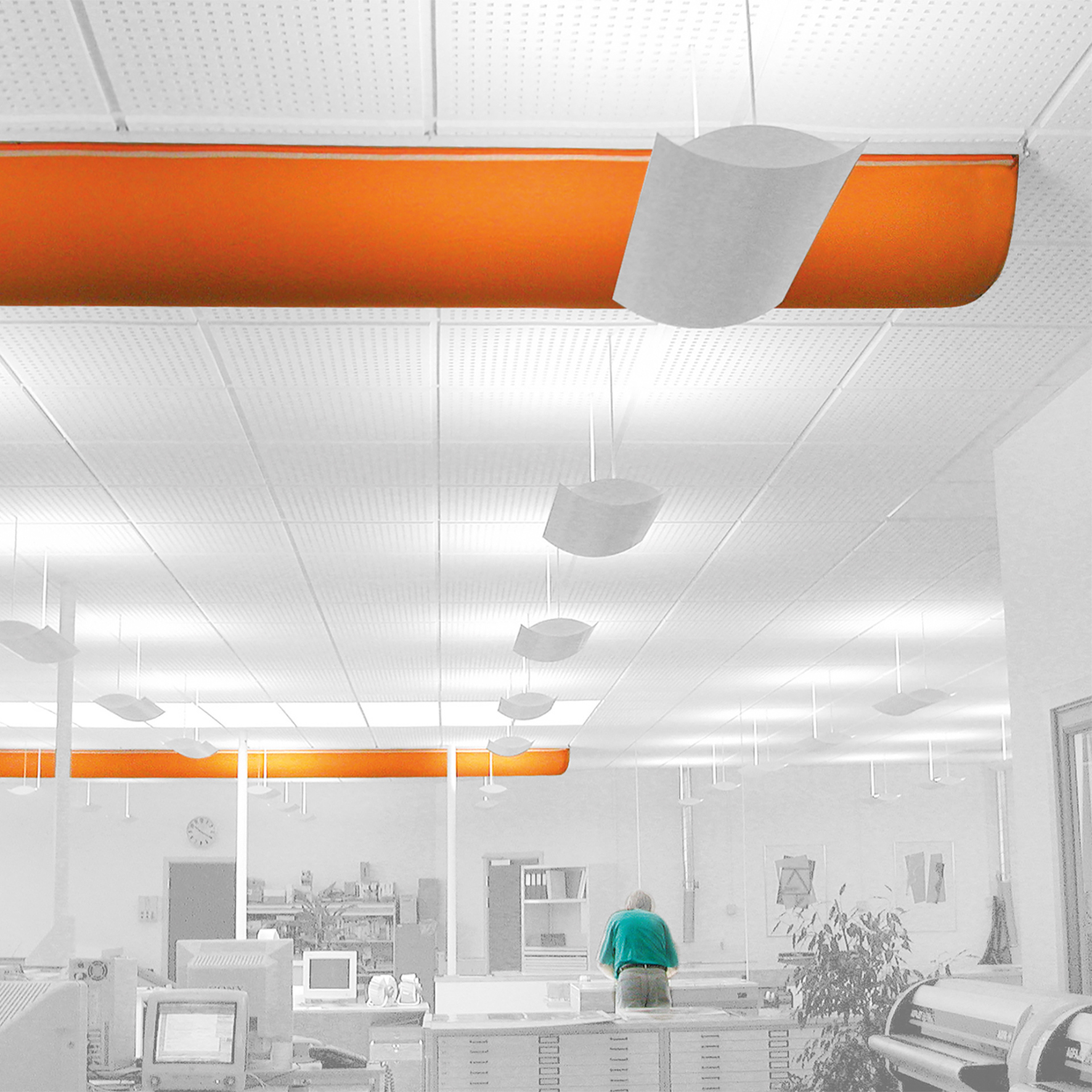
1. Enhance Ventilation and Airflow Distribution
Increasing ventilation rates and ensuring even airflow distribution helps dilute indoor pollutants and reduces the concentration of contaminants in occupied spaces. Fabric air ducts are particularly effective for uniform air distribution, preventing drafts and stagnant areas. The precise and customizable airflow from fabric air ducts enables facility managers to achieve optimal ventilation without overtaxing HVAC systems. This efficiency reduces energy consumption, resulting in lower operational costs and a more sustainable facility over time.
2. Control Humidity Levels
Maintaining relative humidity between 40% and 60% helps reduce the growth of mold and mildew, which can negatively impact IAQ. Maintaining this balance helps protect occupants’ health, ensuring a comfortable environment and improved air quality. Permeable duct materials, like certain fabric air duct systems, are custom engineered to deliver precise airflow through the duct walls effectively reducing moisture buildup. This proactive approach protects IAQ by preventing microbial growth and keeping air distribution components dry. With no condensation issues, fabric air ducts ensure clean, dry air circulation, ideal for industries like food processing or healthcare.
3. Regular Maintenance and Cleaning of HVAC Systems
Dust, mold, and microbial growth can accumulate in ductwork, especially in environments with high humidity. Routine inspection and cleaning of ducts can prevent these contaminants from recirculating in the air, directly supporting healthier IAQ. Routine maintenance of HVAC components, including duct cleaning, filter replacement, and coil cleaning, helps prevent dust and microbial buildup. Fabric air ducts are low maintenance and washable, making them a convenient choice for keeping systems clean and functional.
Beyond cleaning, comprehensive inspections of the HVAC system help identify leaks, mold buildup, or airflow blockages early. Scheduled inspections can catch potential issues that affect IAQ before they escalate, keeping air distribution efficient and ensuring that contaminant control measures are in place across the entire system.
4. Implement High-Efficiency Air Filtration Systems
Regularly replacing or cleaning HVAC filters is essential, as filters trap airborne contaminants like dust, pollen, and bacteria that impact IAQ. Using high-efficiency filters (such as HEPA or MERV-rated) and replacing them according to the manufacturer’s guidelines can significantly reduce airborne particles and allergens, ensuring clean air circulation.
Using high-efficiency filters, such as HEPA filters, in HVAC systems captures airborne contaminants like dust, pollen, and allergens, contributing to cleaner indoor air. Pairing these filters with fabric air duct systems can further enhance the effectiveness of filtration by delivering air evenly across the space.
A study by Harvard University showed that better air quality in offices can increase cognitive function in workers. Comfortable temperatures and better IAQ contribute to higher employee focus and productivity, reducing errors and improving overall performance. A comfortable working environment, achieved by maintaining consistent air quality and temperature, directly influences employee productivity and satisfaction. The even distribution of air prevents temperature fluctuations, ensuring that employees remain comfortable throughout the day, regardless of their workspace location.
Fabric-based HVAC systems provide a smart, efficient solution to improving indoor air quality in a variety of facilities. By enhancing airflow, reducing maintenance, and providing energy-efficient options, fabric air ducts offer facility managers a comprehensive approach to maintaining optimal IAQ while also improving comfort and productivity for building occupants.
Additional Information
An Innovative Approach to Indoor Climate Control
Why Global Industry Leaders Choose Fabric Air Dispersion Systems
FAQ
A useful starting point is to look at the complete HVAC strategy: outdoor air and ventilation rates, airflow distribution, filtration, humidity control, and maintenance. Good filtration alone is not enough if clean supply air does not reach the occupied areas effectively.
Related terms: indoor air quality, ventilation, occupied zones, airflow distribution, Clean Air Starts Here, commercial HVAC applications
Both very dry and very humid conditions can create indoor-environment problems. High humidity can contribute to condensation and microbial growth, while very dry air can affect occupant comfort and increase static-related concerns in some environments. Humidity should therefore be managed together with ventilation and temperature.
Related terms: humidity control, condensation, indoor air quality, natatorium condensation control, electrostatic discharge, HVAC management
Filters, coils, ducts, and other HVAC components can accumulate dirt or lose performance over time. Planned inspection, filter replacement, and cleaning help the system continue to operate as intended and allow facility teams to identify airflow or hygiene problems before they become larger issues.
Related terms: HVAC maintenance, filter replacement, cleaning schedule, indoor air quality, washable fabric ducts, Clean Air Starts Here
Fabric ducts do not replace or improve the filter itself. Their role is to distribute the filtered supply air throughout the space. A well-designed air distribution system can help deliver that air more consistently to occupied zones and reduce areas with insufficient air movement.
Related terms: high-efficiency filtration, filtered supply air, uniform airflow, flow models, indoor air quality
Get valuable content first
Enter your email and be among the first to get tips and articles from our experts about HVAC industry topics.