








Ventilation ducts: purpose, types and key design considerations


Ventilation ducts are a core component of HVAC systems in modern commercial and industrial buildings. Although often hidden above ceilings or within service zones, ductwork plays a crucial role in indoor air quality (IAQ), thermal comfort and overall energy efficiency.
As building standards evolve and awareness of air quality increases, HVAC professionals are re-evaluating traditional air distribution methods. Today, engineers increasingly compare fabric ducts, metal ducts and flexible ducting to determine which solution provides the best performance across airflow distribution, installation efficiency and long-term maintenance.
Understanding the differences between these duct types helps designers select ventilation systems that support both comfort and energy-efficient building operation.
What Are Ventilation Ducts?
Ventilation ducts are channels used to transport air through a building’s HVAC system. They connect air handling units (AHUs) with supply outlets, occupied spaces and extraction points.
A typical duct system supports several important functions:
• Supply of fresh or conditioned air
• Return airflow back to HVAC units
• Extraction of stale or contaminated air
Without properly designed ductwork, it would be difficult to maintain consistent airflow, temperature and indoor air quality across large indoor spaces.
Main Types of Ventilation Ducts
Modern HVAC systems generally use three main duct solutions: fabric ducts, metal ducts and flexible ducting. Each option has different performance characteristics and installation requirements.
Fabric Ducts (Innovative HVAC Air Distribution)
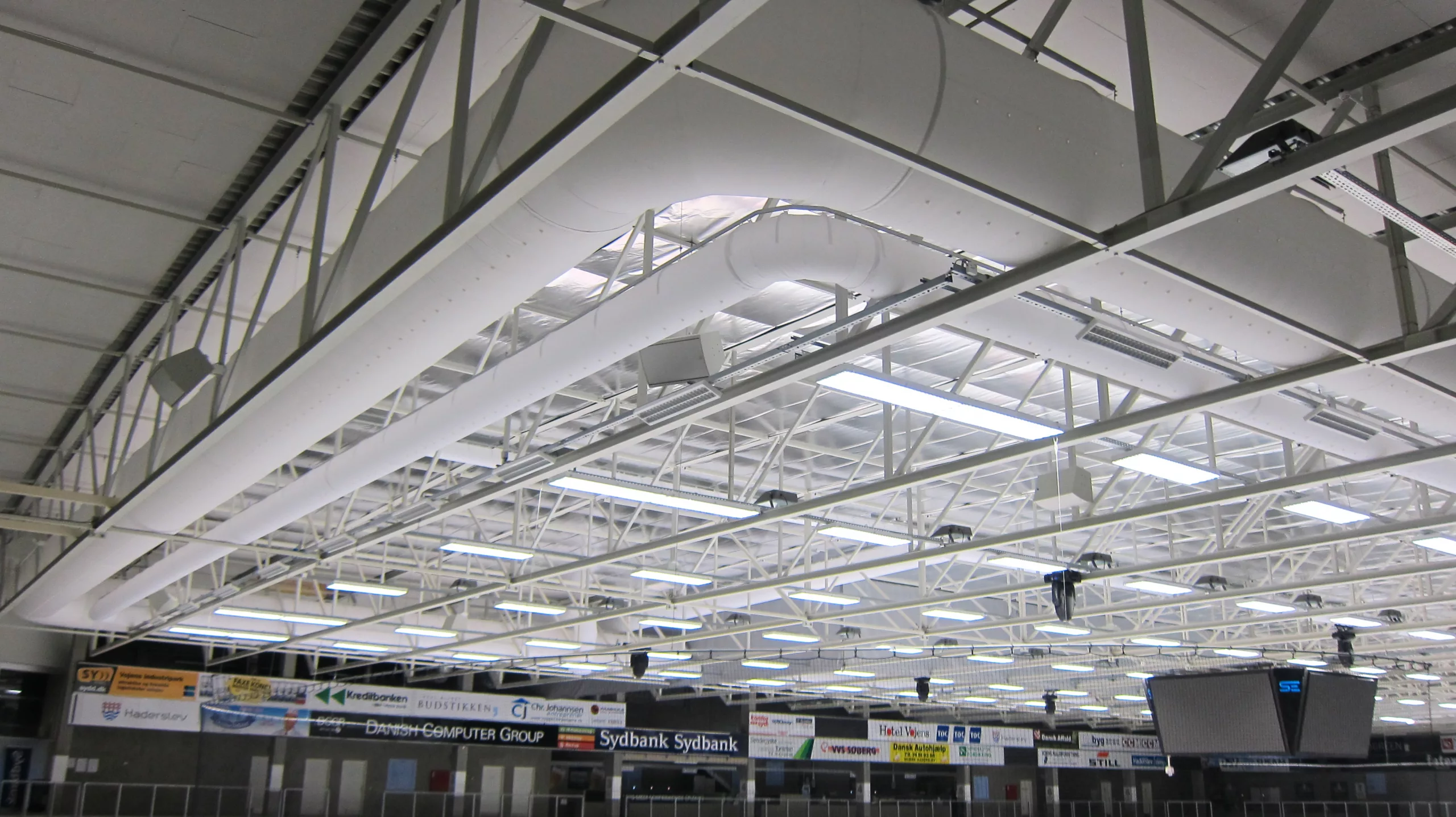
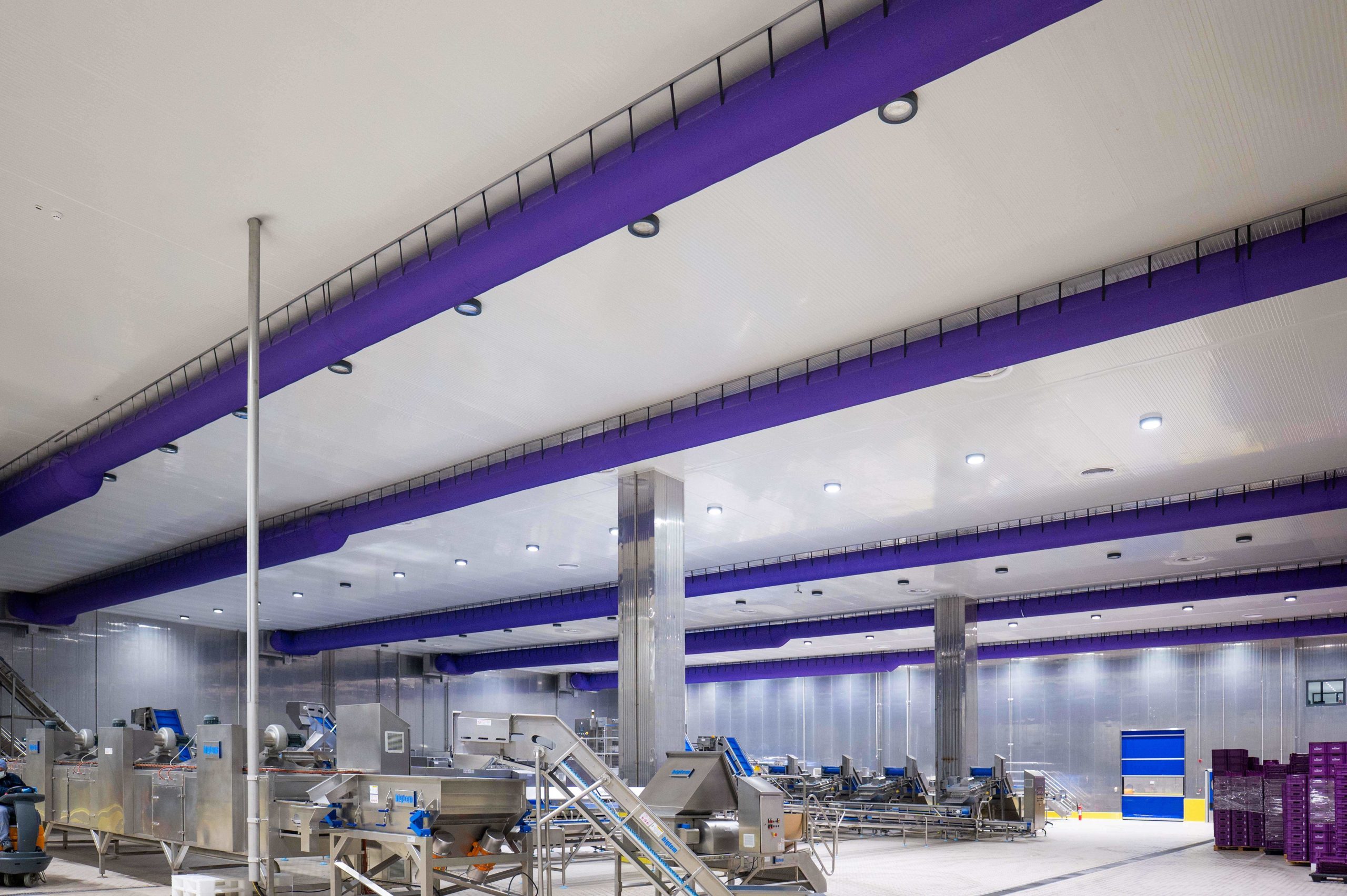
Fabric ducts — also known as textile air dispersion systems — represent one of the most innovative developments in modern HVAC design.
Instead of distributing air through a limited number of diffusers, fabric ducts release air through engineered perforations or permeable textile surfaces along the entire duct length. This approach enables more uniform airflow distribution and helps reduce temperature variations within the space.
Studies and field installations have shown that textile air dispersion systems can significantly improve airflow efficiency and may even reduce HVAC energy consumption due to lower pressure losses in the system.
Key benefits of fabric ducts:
• Uniform airflow distribution, reducing hot and cold spots
• Draft-free air delivery thanks to low-velocity dispersion
• Lightweight materials, enabling faster installation
• Lower pressure loss, improving system efficiency
• Washable textile materials, supporting hygienic environments
Fabric duct systems are widely used in:
• Commercial facilities
• Industrial production environments
• Sports halls and leisure centers
• Logistics and warehouse facilities
• Public buildings such as schools
Learn more about textile air distribution technology
Metal Ducts (Traditional HVAC Solution)
Rigid metal ductwork made from galvanized steel or aluminum has historically been the standard HVAC solution.
These ducts are valued for their durability and their ability to handle high-pressure airflow systems. However, metal ductwork is often considered a traditional solution that can involve longer installation times and additional system components.
Key benefits of metal ducts:
• High structural strength
• Suitable for high-pressure systems
• Long operational lifespan
However, metal ducts also have several limitations in modern HVAC projects:
• Heavier materials increase installation time and labor costs
• Additional insulation is often required to prevent condensation
• Air distribution typically relies on multiple diffusers, which can lead to uneven airflow patterns
For these reasons, many HVAC designers are exploring more flexible and efficient air distribution solutions.
Flexible Ducting
Flexible ducts are commonly used as short connectors between rigid ductwork and diffusers.
They consist of flexible plastic or foil materials reinforced with wire coils.
Key benefits of flexible ducts:
• Easy installation in tight spaces
• Low material cost
• Flexible routing around structural obstacles
However, flexible ducts are rarely used for complete ventilation distribution systems because they can introduce higher pressure losses and airflow restrictions, particularly when bends or compression occur.
As a result, they are usually applied as secondary components within larger duct systems.
Key Design Considerations When Selecting Ventilation Ducts
When designing ventilation systems, engineers must evaluate several factors that influence performance, comfort and system efficiency.
These include airflow distribution, installation complexity, energy efficiency and long-term maintenance.
Comparison of Ventilation Duct Types
The differences between duct systems become clearer when comparing key performance factors.
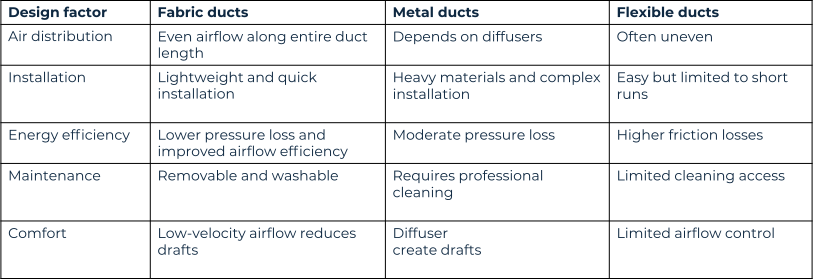
Because of these characteristics, many modern HVAC projects are shifting toward solutions that combine efficient airflow distribution with faster installation and easier maintenance.
Designing Fabric Duct Systems with FabricAir PRO
Digital design tools are also transforming how HVAC systems are specified.
FabricAir provides FabricAir PRO, a free Revit add-in that allows engineers and designers to configure textile air distribution systems directly within BIM workflows.
The tool helps engineers:
• Design fabric duct systems directly in Revit
• Improve accuracy in system configuration
• Speed up project planning and quoting
• Improve collaboration between design and installation teams
Conclusion
Ventilation ducts are essential infrastructure in HVAC systems and have a direct impact on indoor comfort, air quality and energy consumption.
Understanding the differences between fabric ducts, metal ducts and flexible ducting helps engineers and contractors choose the most suitable solution for each project.
As HVAC technology continues to evolve, innovative air distribution systems such as textile ducts — supported by digital tools like FabricAir PRO — are playing an increasingly important role in creating efficient and comfortable indoor environments.
Get valuable content first
Enter your email and be among the first to get tips and articles from our experts about HVAC industry topics.