








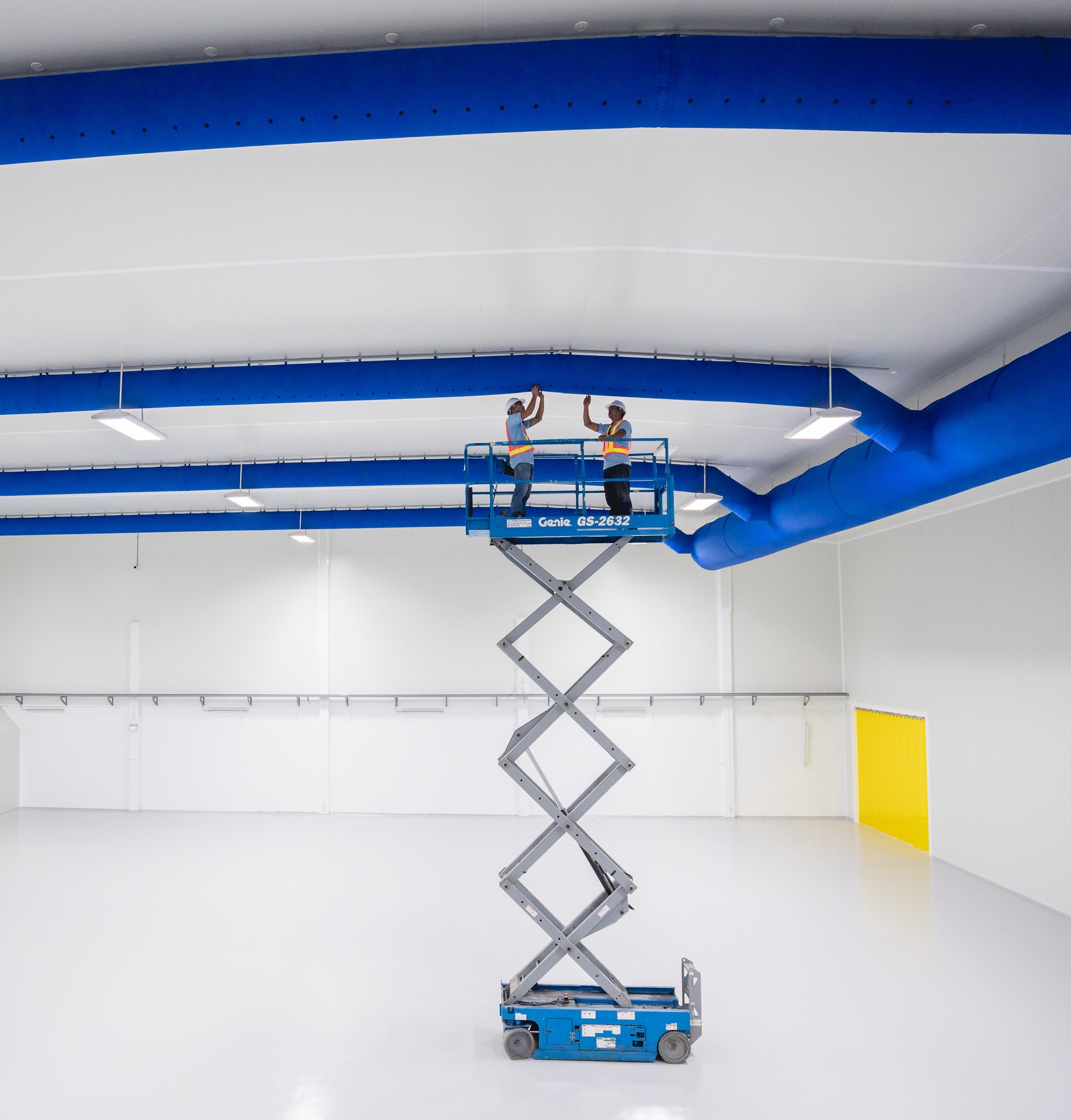
Air duct installation: key steps, challenges and modern alternatives


Air duct installation is one of the most critical stages of any HVAC project. Even when a ventilation system is carefully designed, improper installation can lead to air leakage, uneven airflow, higher energy consumption and uncomfortable indoor environments.
Understanding the installation process — and how different duct systems affect installation time, cost and performance — is essential for HVAC contractors and facility managers.
This guide explains the main steps in air duct installation and highlights common challenges, while comparing traditional metal ductwork with modern fabric air dispersion systems.
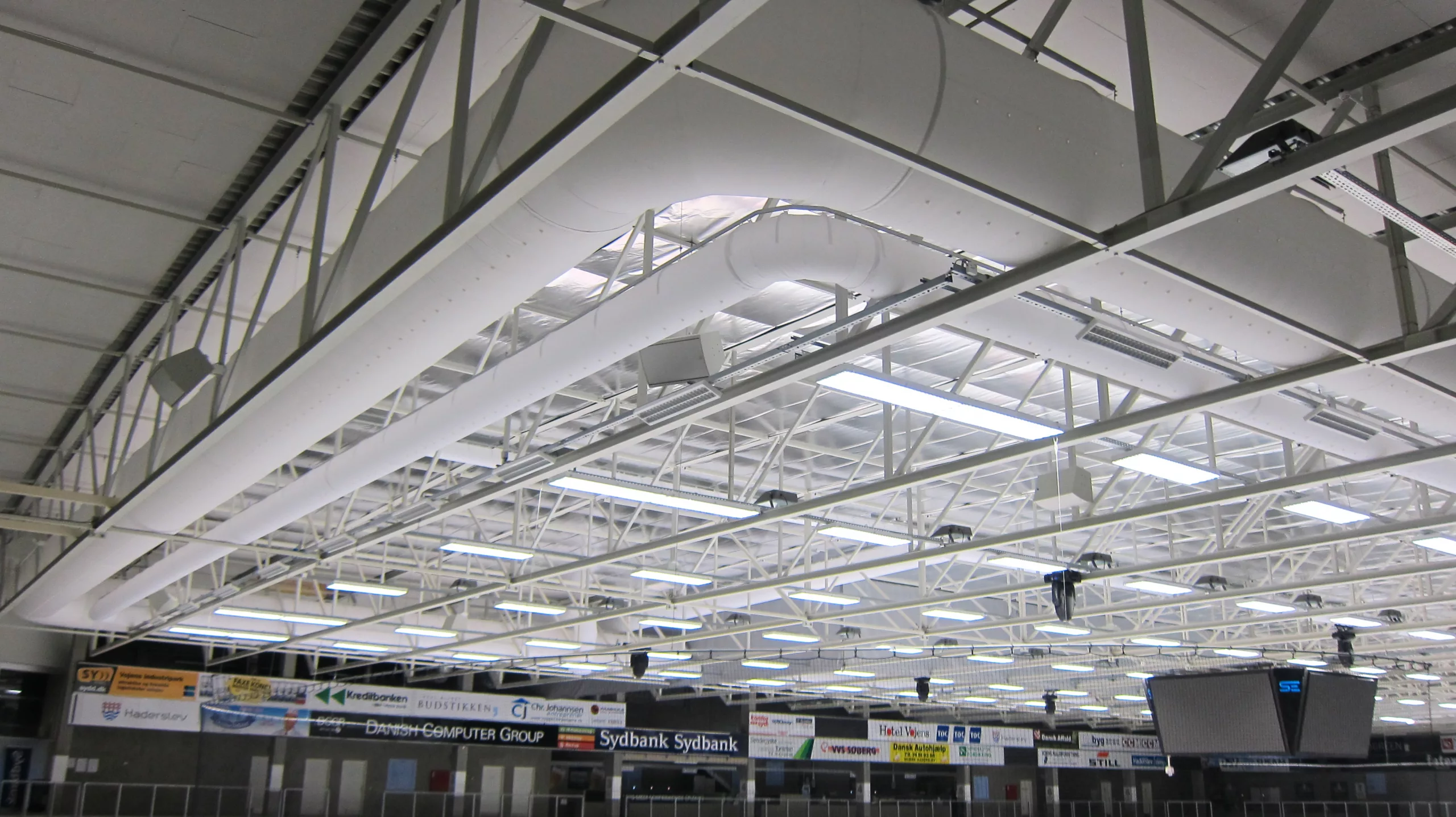
Step 1 — Planning and duct layout
Before installation begins, contractors typically confirm several key elements:
• available ceiling space
• duct routing and structural obstacles
• supply and return air locations
• fire safety and access requirements
• coordination with lighting, piping and other building systems
Proper planning reduces installation delays and ensures the system delivers balanced airflow throughout the building.
Traditional metal duct systems rely on diffusers to distribute air from specific points. This requires careful diffuser placement to avoid drafts or uneven air distribution.
Fabric air dispersion systems use a different approach. Instead of concentrated airflow from diffusers, air is distributed evenly along the entire duct length through engineered perforations.
Step 2 — Installation differences: metal vs fabric ducts
One of the biggest differences between HVAC duct systems is installation complexity.
Metal duct installation
Metal ductwork is installed in rigid sections that must be assembled on site.
Typical installation steps include:
• lifting and suspending heavy duct sections
• connecting joints and fittings
• sealing connections with mastic or tape
• installing insulation to prevent condensation
• mounting diffusers and grilles
Large systems often contain hundreds of joints, and each connection requires sealing to prevent air leakage.
Because of their weight and rigid construction, metal ducts usually require larger installation teams and more installation time.
Fabric duct installation
Fabric air dispersion systems offer a significantly faster installation process.
The ducts are lightweight and typically mounted using:
• aluminum track systems
• tensioned cable suspension systems
The fabric duct is then attached to the suspension system using zippers or clips.
Because fabric ducts weigh far less than metal ducts and require fewer connections, installation time can often be reduced by up to 50–70% compared to traditional duct systems.
This faster installation can significantly reduce labor costs and project timelines.
Another important benefit is noise reduction.
Fabric ducts distribute air through small perforations or permeable textile surfaces. This lowers air velocity and reduces turbulence, which helps create a quieter indoor environment compared to metal ducts where air exits through concentrated diffusers.
Step 3 — Sealing and air leakage control
Air leakage is one of the most common performance challenges in HVAC systems.
Metal duct systems contain many mechanical joints and connections, which creates potential leakage points. Even small leaks can reduce airflow efficiency and increase fan energy consumption.
Typical leakage points include:
• duct joints
• elbows and transitions
• access panels
• diffuser connections
Because these joints are sealed on-site, final system quality often depends on installer experience and workmanship. Fabric ducts reduce this risk significantly.
These challenges are closely related to installation and maintenance limitations of traditional metal duct systems.
Unlike metal duct systems, fabric ducts are manufactured with factory-stitched seams and fewer mechanical joints. This minimizes unintended air leakage and improves airflow control.
Instead of losing air through gaps, airflow is delivered through precisely designed perforations that provide controlled air distribution.
Step 4 — Commissioning and airflow balancing
After installation, HVAC systems must be commissioned and balanced.
During commissioning, technicians verify:
• correct supply airflow volumes
• balanced airflow across zones
• acceptable noise levels
• temperature consistency throughout the building
Metal duct systems often require multiple diffuser adjustments to achieve proper airflow balance.
Fabric air dispersion systems distribute air evenly along the duct length, which can simplify the balancing process and improve overall air distribution.
Common installation challenges
Several issues can affect long-term HVAC performance.
Uneven airflow and drafts
In metal duct systems, air is typically supplied through individual diffusers. If these are incorrectly sized or poorly balanced, it can create drafts and uneven temperature zones.
Fabric air dispersion systems provide uniform airflow distribution along the entire duct, which helps eliminate hot and cold spots and improves thermal comfort.
This also contributes to better indoor air quality.
Maintenance and cleaning
Maintenance access can be challenging in traditional duct systems.
Metal ducts often require internal cleaning using specialized equipment.
Fabric ducts provide a different solution, as textile ducts can be removed and washed, making maintenance easier while supporting hygienic HVAC systems in commercial and public buildings.
Condensation in cold environments
Condensation and frost buildup can be a challenge in refrigerated environments.
Metal ducts typically require additional insulation to prevent condensation.
FabricAir offers specialized textile solutions such as Defrost Duct, designed to prevent frost accumulation and maintain stable airflow in cold storage facilities.
Conclusion
Air duct installation has a direct impact on HVAC performance, energy efficiency and indoor comfort.
Traditional metal duct systems can be effective, but they often involve longer installation times, multiple sealing points and complex airflow balancing.
Fabric air dispersion systems offer an alternative approach that simplifies installation, reduces leakage risk and provides uniform air distribution.
For many modern HVAC projects — especially large open spaces — fabric ducts provide a flexible and efficient solution for delivering comfortable indoor environments.
Get valuable content first
Enter your email and be among the first to get tips and articles from our experts about HVAC industry topics.