FabricAir keeps energy efficiency, hygiene and temperature under control in PassivHaus certified warehouse
Certifying an industrial warehouse under the Passivhaus standard is not common. This seal, almost always reserved for homes, recognizes buildings that maintain exceptional interior comfort with near-zero energy consumption.
A company in the pharmaceutical sector has achieved it in its new logistics warehouse, making it a pioneering reference among buildings of its type. The certification came through a set of design and insulation decisions considered from the very first plan, and it recognizes the building’s outstanding energy efficiency.
The certification the company earned proves that sustainability was not a last-minute addition to its warehouse, but a clearly defined priority from the start of the project.
FabricAir is proud to be part of a building of this caliber and to support their client in building this new and groundbreaking facility where we worked alongside Ergo Synergys, Del Castillo Ingeniería y Bionm Arquitectura.
The challenge
From the HVAC system’s perspective, the project’s main challenge was the precision it required. The warehouse must meet the pharmaceutical industry’s strictest requirements around hygiene, climate stability and other standards.
The core demand was to keep a maximum temperature of 24°C with no stratification, and a variation of less than 10°C between the building’s different zones. In an environment where stored products can be sensitive to minimal fluctuations, that tight margin left no room for approximate solutions.
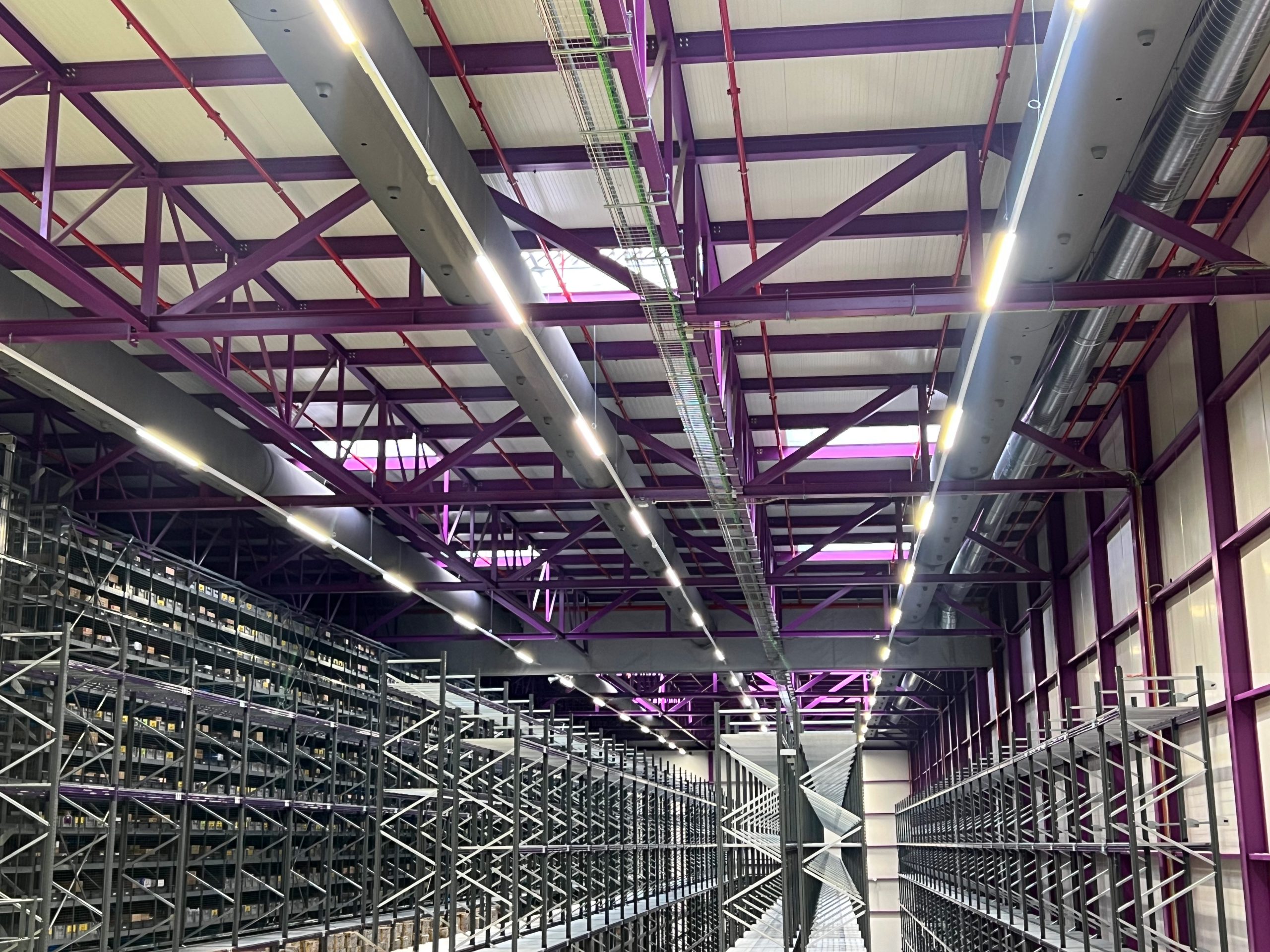
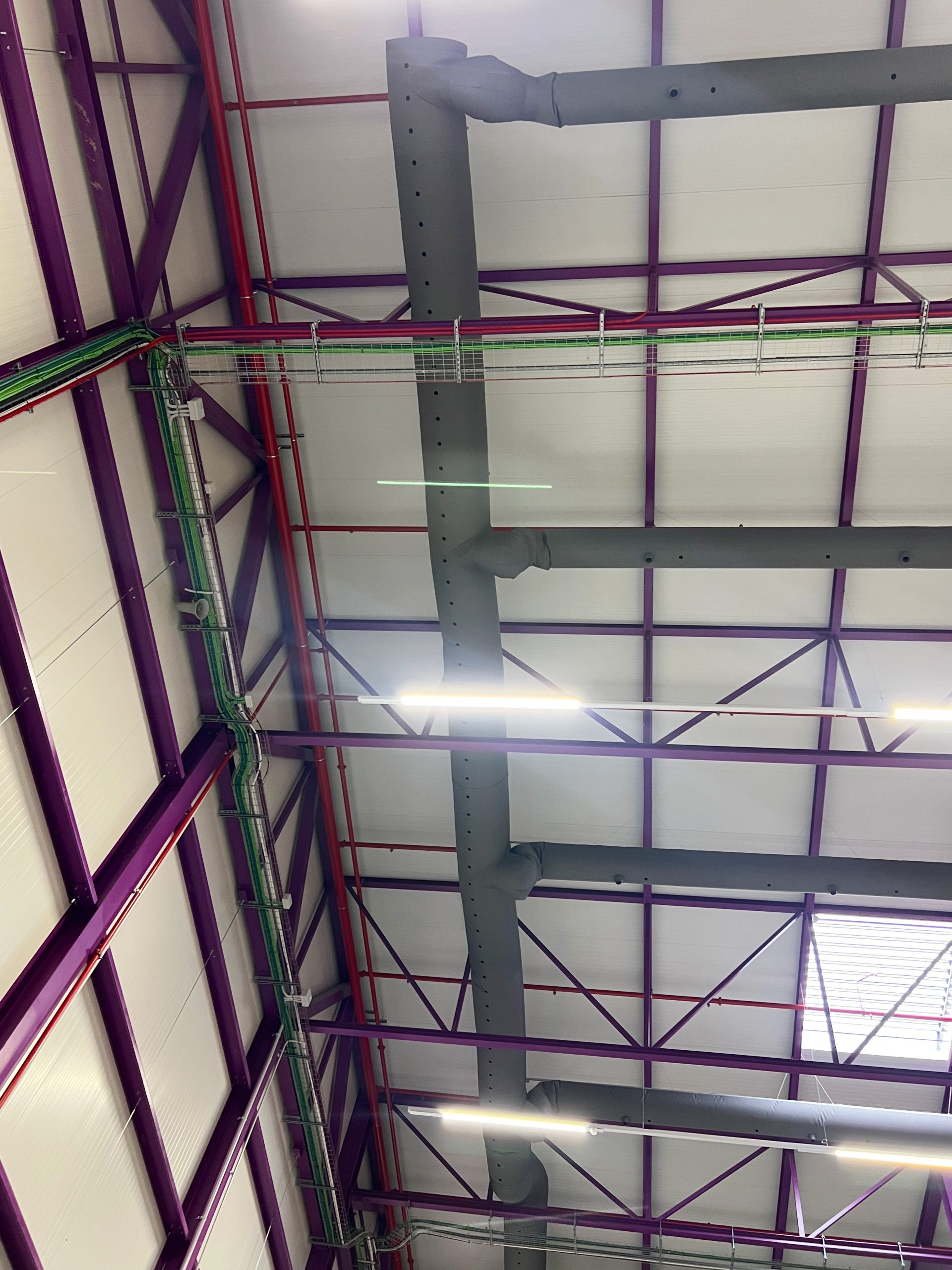
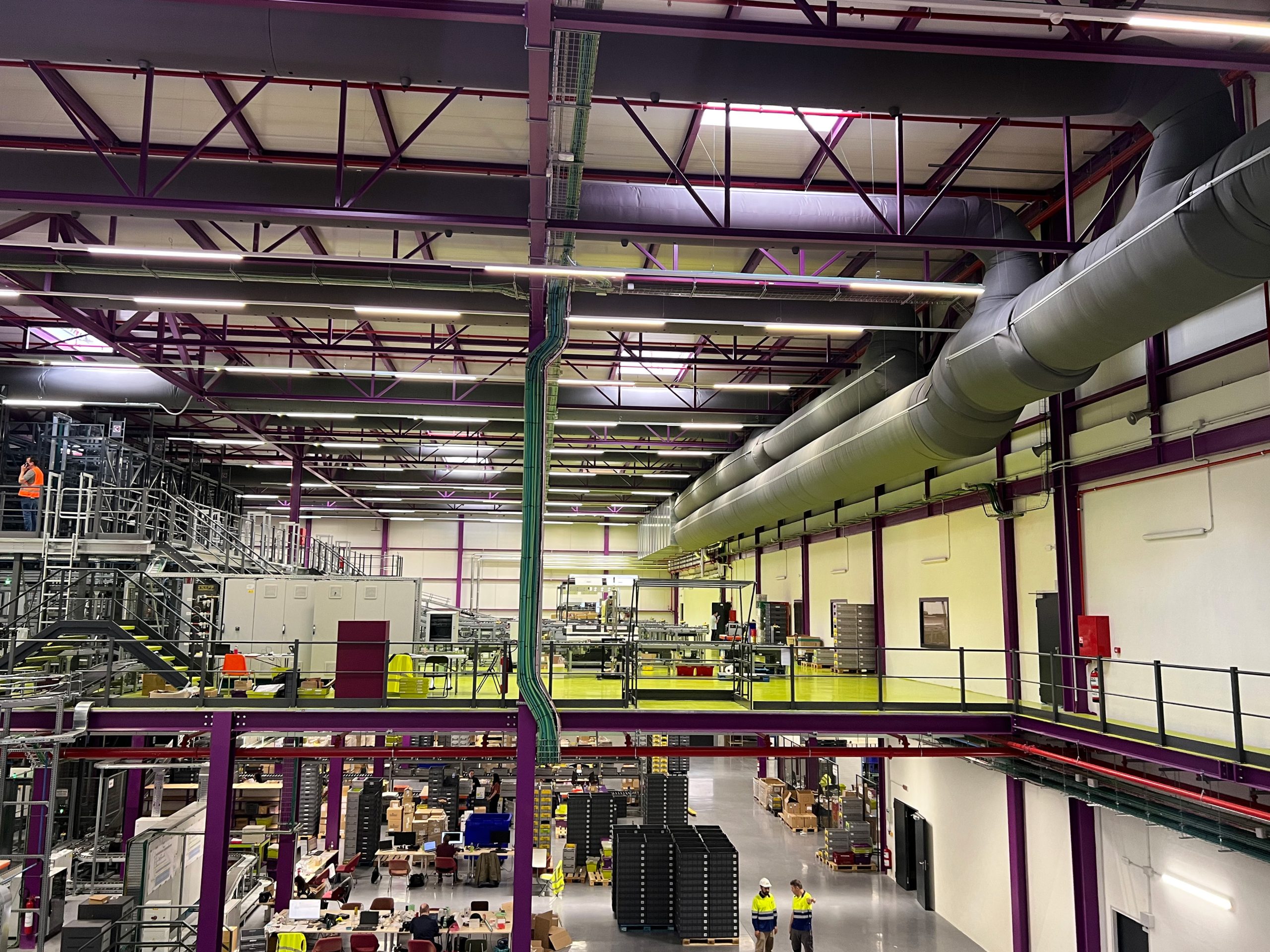
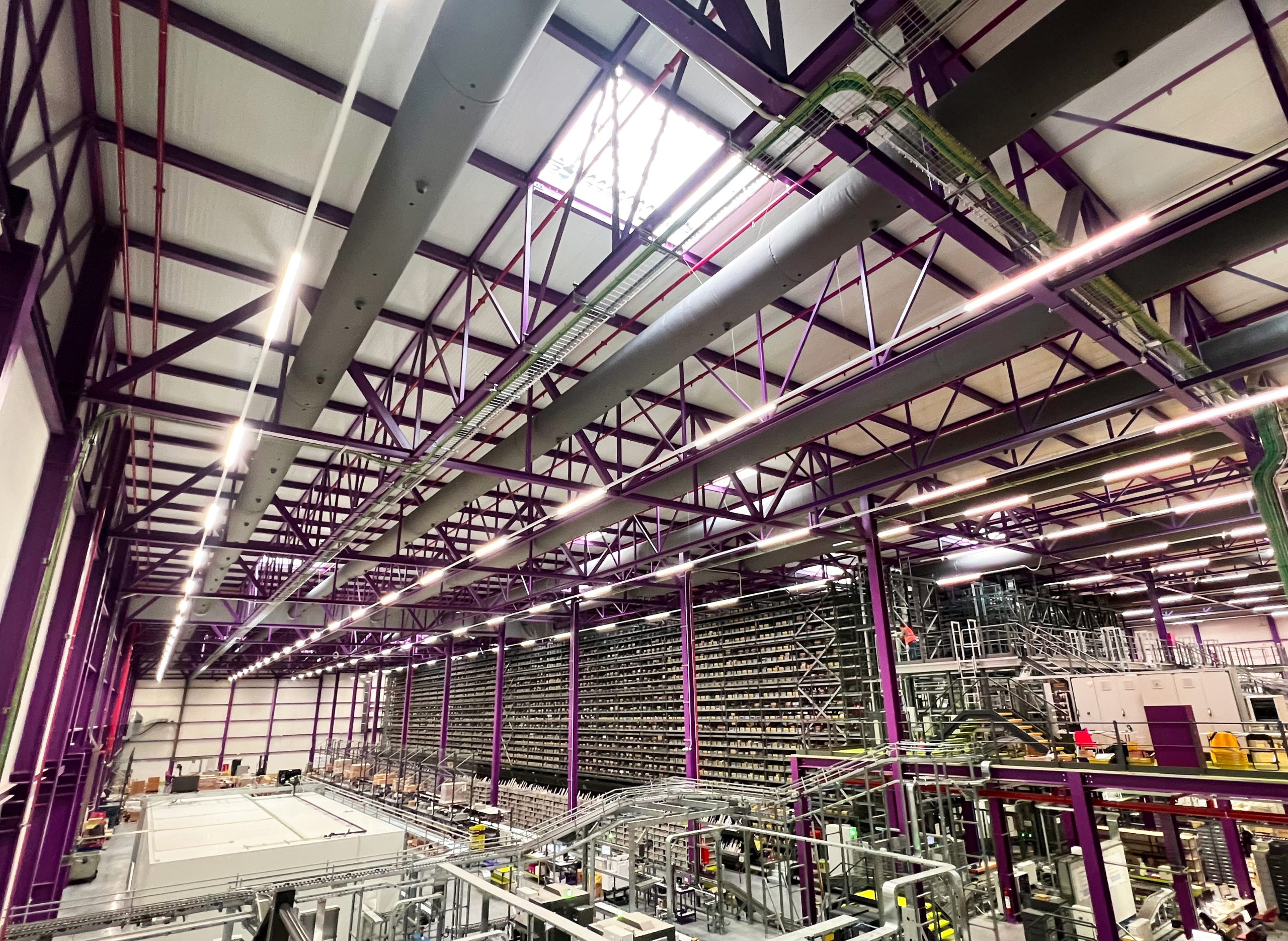
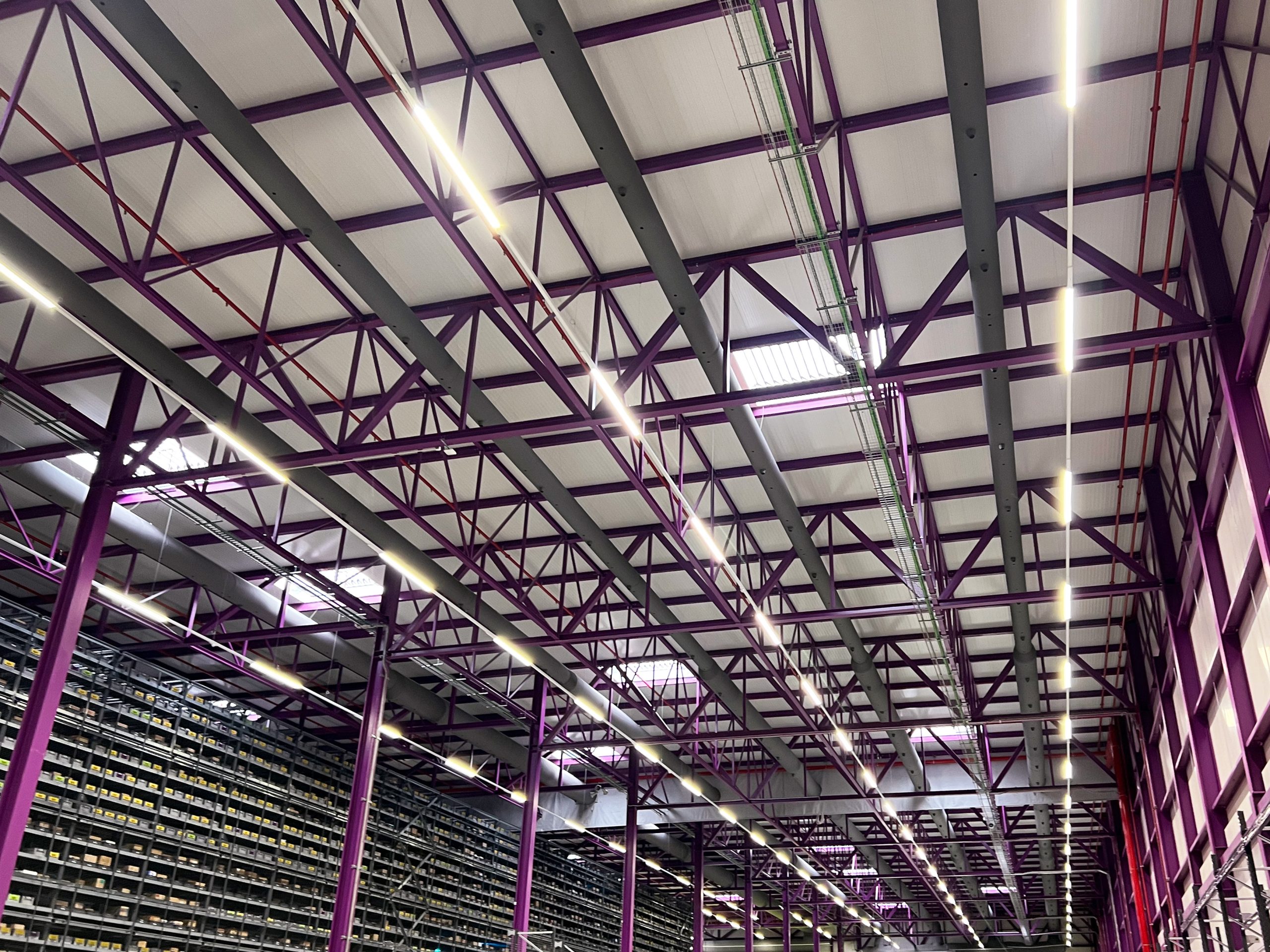
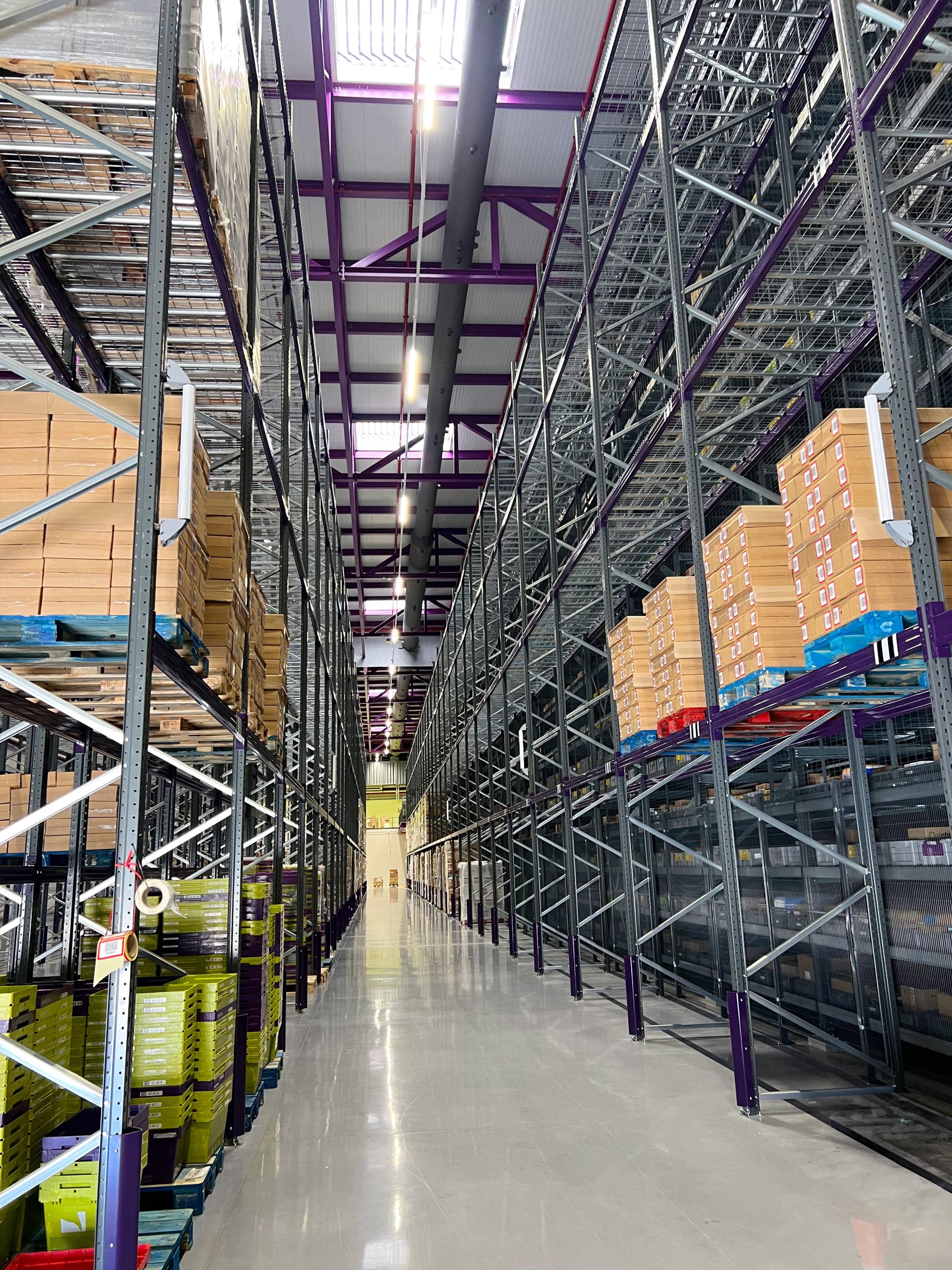
The building’s architecture added another layer of difficulty. This is a large warehouse, with ceilings reaching 15 meters high and a dense structure with beams and trusses to work around. The ducts had to run 13 meters high, with sections exceeding 100 meters in length. Designing a system that could be installed with the speed and precision that FabricAir guarantees in such a demanding space, required meticulous engineering work from our team.
The solution
FabricAir responded with a Combi 90 fabric duct system, with an antibacterial treatment compatible with pharmaceutical standards, mounted on a Type 8 suspension without a ring and with up to three different duct diameters, adjusted to the airflow needs of each zone.
Result
Thanks to the custom design our team crafted for the system, the warehouse has been able to maintain stable temperatures. That means holding back gradients and stopping warm air from collecting near the ceiling, two silent enemies of any HVAC system that FabricAir’s ducting system has managed to keep in check. As a result, the new building meets its industry’s required standards while maintaining its energy efficiency.
Why FabricAir
Choosing a fabric duct system over more conventional alternatives was no accident. The clienthad already installed a more traditional system in a warehouse in another city, and that experience made clear that this type of solution did not offer the precision needed to control temperature gradients with the accuracy this project demanded.
Two more practical factors reinforced that choice. The client and FabricAir are based in the same city, which made the relationship a natural fit from the start. And FabricAir’s reputation for attentive, high-quality service had already reached the client before the project began.
When stable air becomes efficiency
Passivhaus certification does not depend on a single element, but on the sum of many well-orchestrated decisions: reinforced insulation, the absence of thermal bridges, airtightness and heat-recovery ventilation working together so the building needs almost no external energy to stay in balance.
FabricAir’s system fits naturally into that philosophy. By keeping the air stable across every zone of the warehouse, it stops the climate machinery from working under constant strain, and an environment that doesn’t fluctuate is, simply put, the best way to an energy efficient building.