


Sustainability Abbreviations & Terms Glossary
Terminology related to sustainability concepts and methods
| Term | Full name | Explanation |
|---|---|---|
| ESG | Environmental, Social & Governance | The three dimensions used to evaluate a company's sustainability performance and non-financial risks. Forms the basis of modern sustainability reporting. |
| CSR | Corporate Social Responsibility | A broad, traditionally voluntary framework in which companies take responsibility for their social and environmental impacts. Largely replaced by standardized ESG reporting. |
| LCA | Life Cycle Assessment | A methodology to assess the environmental impacts of a product or service across its full life cycle — from raw material extraction through production, use, and end-of-life. |
| PEF | Product Environmental Footprint | An EU-developed methodology to measure and communicate the environmental performance of products in a standardised and comparable way |
| DNSH | Do No Significant Harm | A principle within the EU Taxonomy requiring that an economic activity must not significantly harm any of the six environmental objectives (e.g., climate mitigation, circular economy, biodiversity). |
| IRO | Impacts, Risks & Opportunities | The core analytical concept in ESRS/CSRD reporting. Companies must identify and assess their material IROs related to sustainability topics across the value chain |
| DMA | Double Materiality Assessment | An ESRS requirement to assess materiality from two perspectives: (1) Impact materiality (effect on people & environment) and (2) Financial materiality (effect on the company's finances). |
| KPI | Key Performance Indicator | A measurable value used to track progress toward sustainability targets and goals (e.g., tCO₂e per product unit, % renewable energy). |
| SDGs | UN Sustainable Development Goals | 17 global goals adopted by all UN member states in 2015 (Agenda 2030), covering areas such as climate action, clean energy, responsible consumption, and reduced inequalities |
| NACE | Nomenclature of Economic Activities | The EU's standard industrial classification system, used to categorize companies by economic activity. Relevant for EU Taxonomy alignment and sector-specific ESRS requirements. |
Emissions & Climate Frameworks
| Term | Full name | Explanation |
|---|---|---|
| GHG Protocol | Greenhouse Gas Protocol | The global standard for corporate GHG accounting and reporting, developed by WRI and WBCSD. Defines the three emission scopes. |
| Scope 1 | Greenhouse Gas Protocol | GHG emissions from sources owned or directly controlled by the company (e.g., on-site fuel combustion, company-owned vehicles). |
| Scope 2 | Indirect Energy Emissions | Indirect GHG emissions from the generation of purchased electricity, steam, heat, or cooling consumed by the company. |
| Scope 3 | Value Chain Emissions | All other indirect emissions occurring in the company's upstream and downstream value chain (e.g., supplier production, product use, business travel, waste). Divided into 15 categories. |
| SBTi | Science Based Targets initiative | A global body that validates corporate GHG reduction targets aligned with climate science and the Paris Agreement (1.5°C pathway). Covers Scopes 1, 2, and 3. |
| GWP | Global Warming Potential | A metric that compares the heat-trapping ability of different greenhouse gases relative to CO₂ over a specific time period (typically100 years). E.g., methane (CH₄) has a GWP of ~28. |
| CO₂e | Carbon Dioxide Equivalent | A standard unit for measuring the total climate impact of all greenhouse gases, expressed as the equivalent amount of CO₂ that would cause the same warming effect |
| NDC | Nationally Determined Contribution | Climate action plans submitted by each country under the Paris Agreement, outlining targets and measures to reduce emissions and adapt to climate change. |
| UNFCCC | UN Framework Convention on Climate Change | Change The international treaty (1992) that forms the basis for global climate negotiations, including the Kyoto Protocol and Paris Agreement. |
| IPCC | Intergovernmental Panel on Climate Change | The UN body that assesses scientific evidence on climate change. Its reports are the primary reference for 1.5°C and 2°C warming scenarios. |
Regulation Related Terms
| Term | Full name | Explanation |
|---|---|---|
| CSRD | Corporate Sustainability Reporting Directive | EU directive requiring large companies to report on sustainability impacts, risks and opportunities using ESRS standards. After the Omnibus I amendments (2026), it only applies to companies with more than 1,000 employees and more than EUR 450 million net turnover. |
| SFDR | Sustainable Finance Disclosure Regulation | EU regulation (2019/2088) requiring financial market participants to disclose how they integrate sustainability risks and impacts into investment decisions and products. |
| EU Taxonomy | EU Taxonomy Regulation (2020/852) | EU classification system defining which economic activities qualify as "environmentally sustainable." Used to determine the degree to which investments or business activities are green. |
| CSDDD | Corporate Sustainability Due Diligence Directive | EU directive requiring companies to identify, prevent, and mitigate actual and potential adverse human rights and environmental impacts across their value chains. |
| NFRD | Non-Financial Reporting Directive | The predecessor to the CSRD. Required certain large EU companies to disclose non-financial information. Now being replaced/expanded by the CSRD. |
| ETS | EU Emissions Trading System | A "cap and trade" system where companies must hold permits for each ton of CO₂ they emit. A key EU tool for reducing industrial greenhouse gas emissions. |
Reporting Standards & Frameworks Abbreviations
| Term | Full name | Explanation |
|---|---|---|
| ESRS | European Sustainability Reporting Standards | The detailed reporting standards under the CSRD, developed by EFRAG. Organized across Environmental (E1–E5), Social (S1–S4), and Governance (G1) topics, plus two cross-cutting standards (ESRS 1 & ESRS 2). |
| GRI | Global Reporting Initiative | A widely used international framework for sustainability reporting, enabling organizations to disclose their environmental, social, and economic impacts in a standardized and comparable way. |
| SASB | Sustainability Accounting Standards Board | Industry-specific standards for disclosing financially material sustainability information to investors. Now integrated under the IFRS Foundation alongside ISSB. |
| CDP | Carbon Disclosure Project | A global non-profit platform where companies, cities, and governments disclose environmental data (climate, water, forests). Widely used by investors and procurement teams. |
| GPC | Global Protocol for Community-Scale GHG Inventories | A framework for cities and local governments to measure and report greenhouse gas emissions across Scopes 1, 2, and 3. |
Types of Product Declarations
| Term | Full name | Explanation |
|---|---|---|
| EPD | Environmental Product Declaration | A third-party verified document that reports a product's environmental impact across its life cycle, based on an LCA. Customers use EPD data for Scope 3 reporting, whole-life carbon calculations and green building certifications. |
| EN 15804+A2 | European standard for construction product EPDs | The core rules for EPDs of construction products in Europe. The A2 amendment (2019) splits climate impact into GWP-total, GWP-fossil, GWP-biogenic and GWP-luluc. It also aligns the impact categories with the EU PEF method. |
| PCR | Product Category Rules | Specific rules for calculating and reporting the impacts of one product category. They make EPDs within the same category comparable. |
| ISO 14025 | Environmental labels and declarations: Type III | The international standard for environmental declarations such as EPDs. It requires independent verification. |
| ISO 14040 / 14044 | Life cycle assessment: principles and requirements | The international standards that define how to carry out an LCA. Every EPD builds on them. |
EU Product Rules
| Term | Full name | Explanation |
|---|---|---|
| ESPR | Ecodesign for Sustainable Products Regulation (EU 2024/1781) | EU regulation that sets sustainability requirements for almost all physical products, such as durability, repairability and recycled content. The EU introduces the requirements product group by product group through delegated acts. |
| DPP | Digital Product Passport | A digital record of a product's sustainability information, usually accessed through a QR code. It is introduced under the ESPR and the revised CPR. It will make product data such as materials and environmental impact available along the value chain. |
| CPR | Construction Products Regulation (EU 2024/3110) | The revised EU regulation for placing construction products on the market. It applies from January 2026. It gradually adds environmental sustainability requirements, including declaration of GWP for products covered by harmonised standards. |
Buildings & Whole-Life Carbon
| Term | Full name | Explanation |
|---|---|---|
| EPBD | Energy Performance of Buildings Directive (EU 2024/1275) | EU directive that sets energy performance rules for buildings. Under the recast, new buildings must calculate and disclose their life-cycle GWP. This applies from 2028 for large buildings and from 2030 for all new buildings. New buildings must also be zero-emission from 2030. |
| Embodied Carbon | Embodied Carbon | The GHG emissions linked to producing, transporting, installing, maintaining and disposing of building materials and products. EPDs provide this data for each product. |
| Operational Carbon | Operational Carbon | The GHG emissions from energy use during a building's operation, such as heating, cooling, ventilation and lighting. Energy-efficient HVAC systems reduce it. |
| Whole-Life Carbon | Whole-Life Carbon | The total of embodied and operational carbon over a building's full life cycle. The EPBD and most green building certifications now use this approach. |
| Level(s) | EU framework for sustainable buildings | A voluntary European Commission framework for assessing and reporting building sustainability. It uses core indicators such as life-cycle GWP and indoor air quality. It also links to the EPBD and the EU Taxonomy |
| LEED | Leadership in Energy and Environmental Design | Leadership in Energy and Environmental Design A green building certification system developed by the US Green Building Council. Projects can earn credits for using products with EPDs. |
| BREEAM | Building Research Establishment Environmental Assessment Method | A green building certification system developed by BRE in the UK. Widely used in Europe. It rewards products with verified environmental data |
| DGNB | Deutsche Gesellschaft für Nachhaltiges Bauen (German Sustainable Building Council) | A German certification system that assesses buildings across their whole life cycle. It is common in the DACH region and Denmark. |
| WELL | WELL Building Standard | A certification focused on occupant health and wellbeing, run by the International WELL Building Institute. Indoor air quality and thermal comfort play a large role, which makes it relevant for HVAC. |
Additional Information
FAQ
The Corporate Sustainability Reporting Directive (CSRD) is an EU directive requiring companies to report on sustainability impacts, risks, and opportunities using ESRS standards. It replaces and expands the Non-Financial Reporting Directive (NFRD), which only required certain large EU companies to disclose non-financial information.
The European Sustainability Reporting Standards (ESRS) are the detailed reporting standards under the CSRD, developed by EFRAG. They are organized across Environmental (E1–E5), Social (S1–S4), and Governance (G1) topics, plus two cross-cutting standards (ESRS 1 and ESRS 2).
Note: In 2025–2026, the EU’s Omnibus simplification package narrowed the scope of the CSRD. Check the current company thresholds on the European Commission website.
Related terms: ESRS, EFRAG, NFRD, Double Materiality Assessment (DMA), Impacts, Risks & Opportunities (IRO)
Learn more: European Commission: Corporate sustainability reporting | EFRAG
The three emission scopes come from the Greenhouse Gas (GHG) Protocol. This is the global standard for corporate GHG accounting and reporting, developed by WRI and WBCSD.
Scope 1 covers GHG emissions from sources owned or directly controlled by the company, for example on-site fuel combustion and company-owned vehicles. Scope 2 covers indirect GHG emissions from the generation of purchased electricity, steam, heat, or cooling consumed by the company.
Scope 3 covers all other indirect emissions in the company’s upstream and downstream value chain, such as supplier production, product use, business travel, and waste. The GHG Protocol divides Scope 3 into 15 categories. For most companies, it is also the largest share of their emissions.
Related terms: GHG Protocol, CO₂e, Science Based Targets initiative (SBTi), Carbon Disclosure Project (CDP)
Learn more: GHG Protocol
The EU Taxonomy (Regulation 2020/852) is an EU classification system defining which economic activities qualify as “environmentally sustainable”. It helps determine the degree to which investments or business activities are green.
Do No Significant Harm (DNSH) is a principle within the EU Taxonomy. An economic activity must not significantly harm any of the six environmental objectives, such as climate mitigation, circular economy, and biodiversity.
The EU uses NACE, its standard industrial classification system, to categorize companies by economic activity. This makes NACE relevant for EU Taxonomy alignment.
Related terms: DNSH, NACE, CSRD, Sustainable Finance Disclosure Regulation (SFDR)
Learn more: European Commission: EU Taxonomy for sustainable activities
A carbon footprint is the total GHG emissions caused directly and indirectly by an individual, organization, product, or event. It is measured in tonnes of CO₂e.
CO₂e (carbon dioxide equivalent) is a standard unit for the total climate impact of all greenhouse gases. It expresses the impact as the amount of CO₂ that would cause the same warming effect.
Global Warming Potential (GWP) is the metric behind this conversion. It compares the heat-trapping ability of different greenhouse gases relative to CO₂ over a specific time period, typically 100 years. For example, methane (CH₄) has a GWP of about 28.
Related terms: Greenhouse Gas (GHG), Decarbonisation, Life Cycle Assessment (LCA), Key Performance Indicator (KPI)
Learn more: IPCC (Intergovernmental Panel on Climate Change)
A Life Cycle Assessment (LCA) is a methodology to assess the environmental impacts of a product or service across its full life cycle. It covers everything from raw material extraction through production, use, and end-of-life.
The Product Environmental Footprint (PEF) is an EU-developed methodology to measure and communicate the environmental performance of products in a standardised and comparable way. It builds on life cycle thinking.
Related terms: Product Environmental Footprint (PEF), Carbon Footprint, Environmental Product Declaration (EPD)
Learn more: European Commission: Environmental Footprint methods
The circular economy is an economic model designed to eliminate waste and keep materials and products in use for as long as possible. It is based on principles of redesigning, reusing, repairing, and recycling.
It is the direct alternative to the linear economy, the traditional “take-make-dispose” model where resources are extracted, used once, and discarded as waste.
The circular economy is a core pillar of the EU Green Deal. It is also directly embedded in SDG #12 (Sustainable Consumption and Production). Business models such as Product-as-a-Service (PaaS) support it by encouraging manufacturers to design for durability, reuse, and end-of-life recovery.
Related terms: Linear Economy, Product-as-a-Service (PaaS), UN Sustainable Development Goals (SDGs), EU Taxonomy
Learn more: European Commission: Circular economy action plan
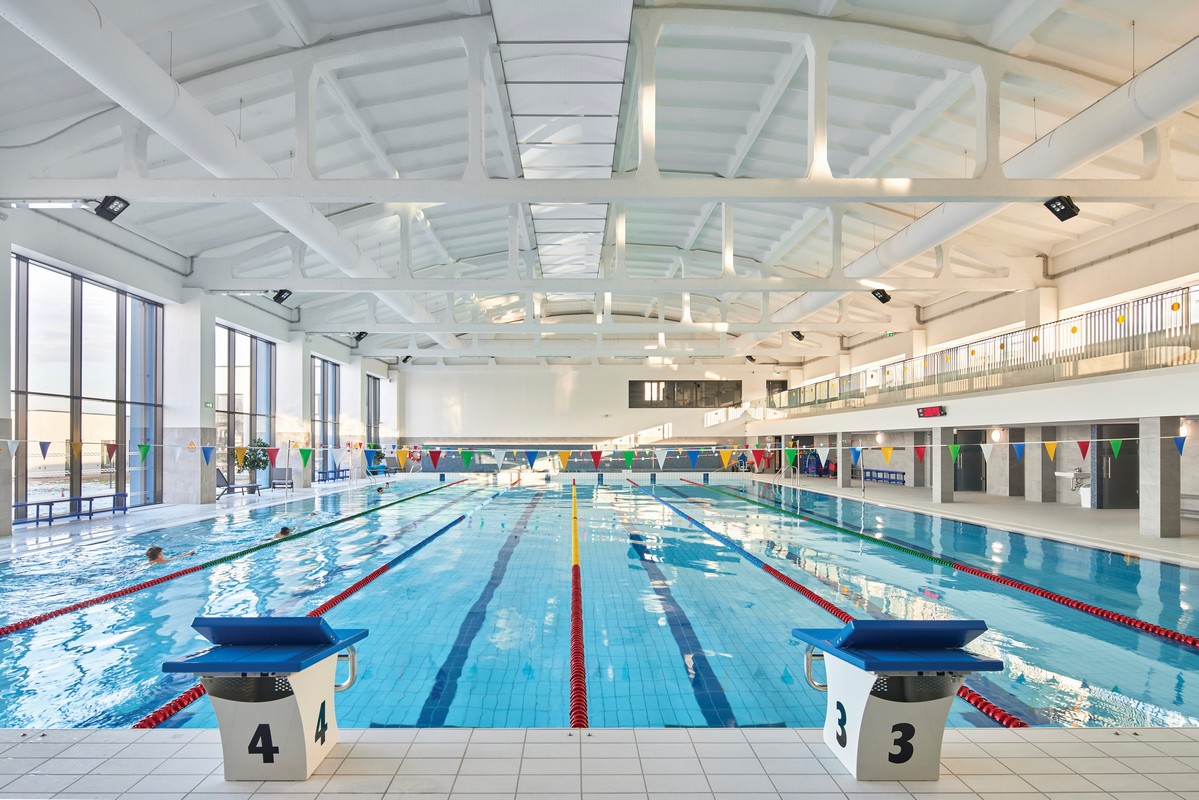
FabricAir is pleased to announce the launch of its Return Air System, designed to pull charged air from the room.

FabricAir's new whitepaper reviews 125 studies and finds 81% of European classrooms breach safe CO₂ limits, affecting student health, learning ...

FabricAir Sp. z o.o. has officially become a member of the Polish Green Building Council (PLGBC), reinforcing the company's commitment ...
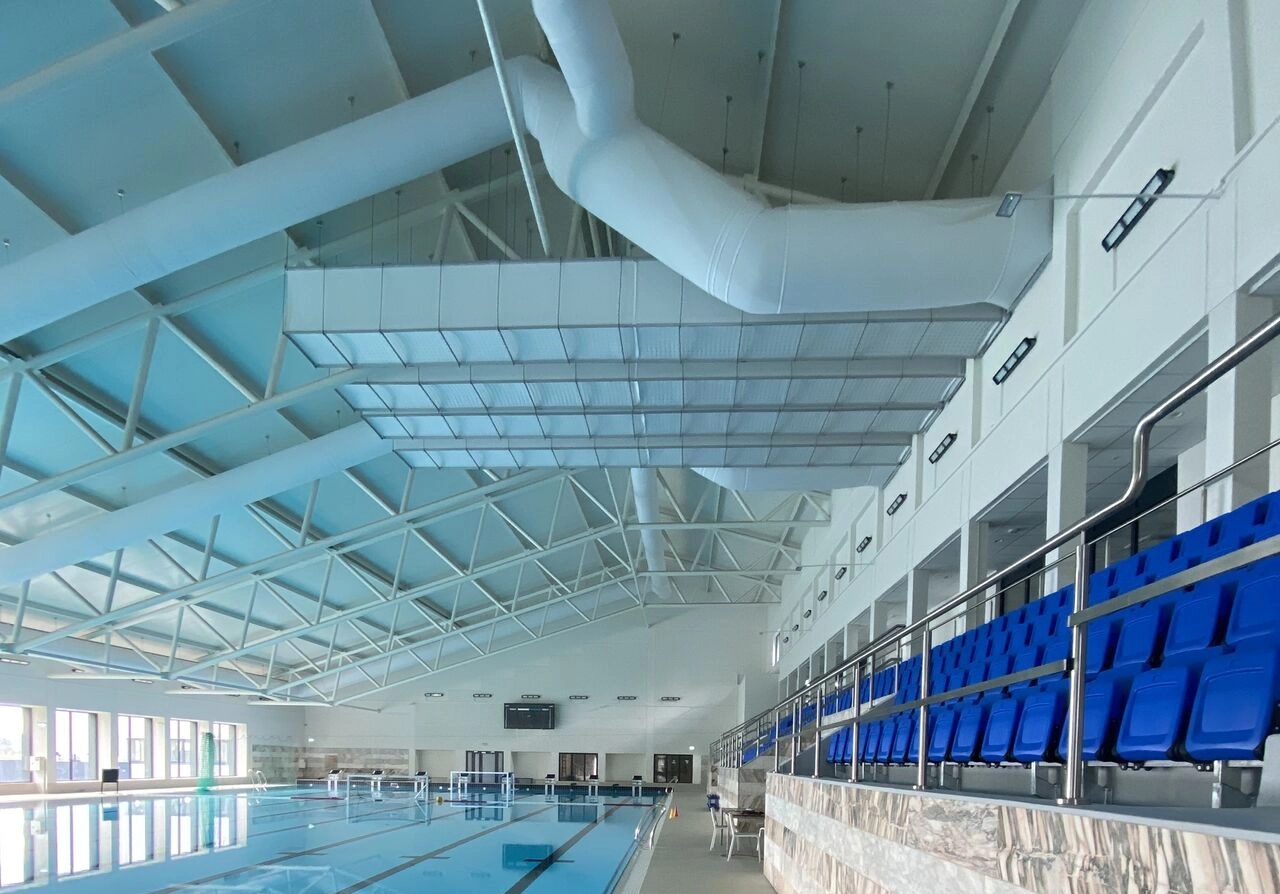
How do you maintain comfort in a humid pool environment? See how fabric ducts solved airflow and condensation challenges in ...

FabricAir introduces Combi Eco, a more sustainable version of its trusted Combi fabric, produced using advanced dope dyed yarn technology.
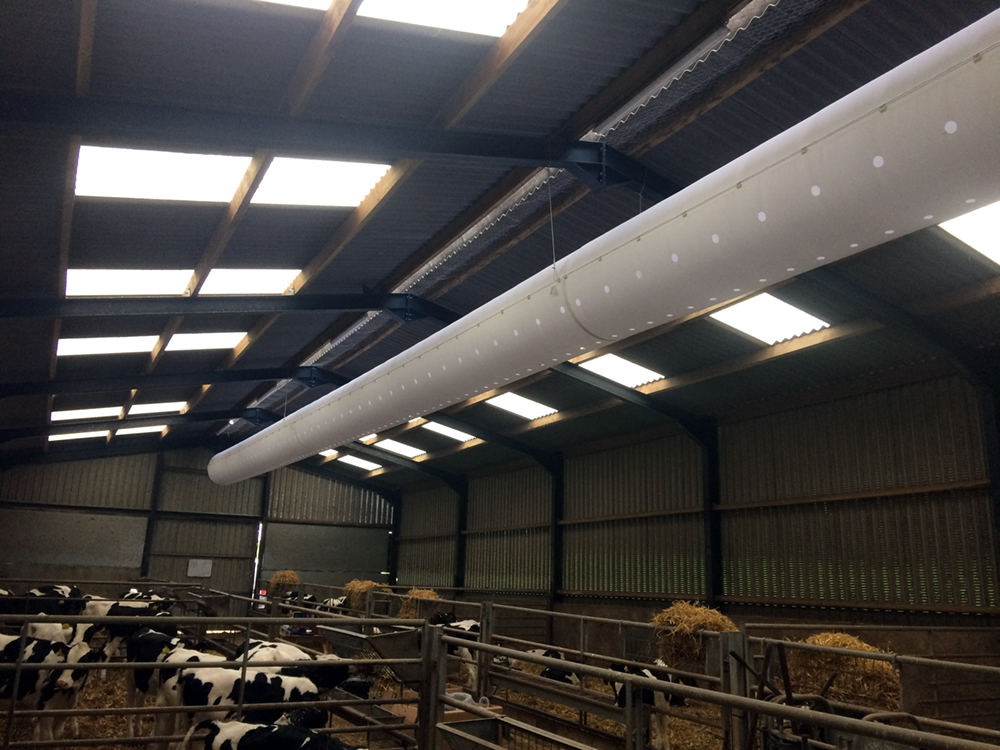
FabricAir is pleased to announce the launch of ClimaBarn, a new ventilation system designed specifically for dairy barns.
FabricAir experts will showcase fabric duct solutions at the 2025 ISK-SODEX Exhibition in Istanbul.

The renovated Zirmunai Pool in Vilnius features a custom FabricAir fabric duct system designed for corrosion resistance, energy efficiency, and ...

FabricAir, a provider of innovative HVAC solutions will be exhibiting at the AHR Mexico Expo in Monterrey, booth number 1035.
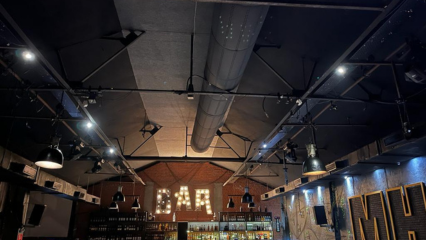
A new resto-bar in Thane, India, installed a custom fabric ducting system to deliver even airflow, thermal comfort, and visual ...
FabricAir is pleased to announce the launch of its Return Air System, designed to pull charged air from the room.
FabricAir's new whitepaper reviews 125 studies and finds 81% of European classrooms breach safe CO₂ limits, affecting student health, learning ...


