



Resources: EU sustainability and product legislation

Key regulations
New EU rules are changing how HVAC systems and building products are designed, documented and sold.
This page gathers the key regulations on carbon data, packaging, textiles, chemicals and energy efficiency, with their dates, main requirements and links to official sources. It is intended for architects, engineers, installers and distributors, and we update it regularly as the legislation develops.
EU sustainability legislation for HVAC and building products
| Legislation EU | Official reference | Important dates | Requirements | Links of interest |
|---|---|---|---|---|
| Product Environmental Footprint (PEF) | Commission Recommendation (EU) 2021/2279 | Adopted: 15 December 2021 Expected enforcement: 2027–2028 |
The building industry requires life cycle assessment (LCA) data on building materials, usually as an Environmental Product Declaration (EPD) with global warming potential (GWP) data. Customers increasingly request more specific LCA data and environmental impact indicators beyond GWP, such as waste. Once the PEF method applies, it will become the common EU protocol for this data. |
PEF Recommendation on EUR-Lex |
| Packaging and Packaging Waste Regulation (PPWR) | Regulation (EU) 2025/40 | Applies: 12 August 2026 |
Extended Producer Responsibility makes the producer responsible for its packaging along the full value chain. Producers must sign up and submit packaging data in each country, usually through producer responsibility organisations (PROs). Implementation varies across the EU. The required data covers the volume and weight of all packaging materials, such as cardboard, plastic bags, straps, staples and labels. Companies must also define who acts as the producer when products go directly to end users or to installers. Customers and installers may request this packaging data. Similar EPR schemes exist outside the EU, for example in Canada, Norway, the UK and Turkey. |
PPWR on EUR-Lex |
| Separate collection of textile waste | Directive (EU) 2018/851 | Applies: 1 January 2025 | Textile waste must be collected separately instead of being handled as general waste, which is usually incinerated or landfilled. This includes production offcuts (pre-consumer waste) and used textile products. The rules also drive the future sourcing of recycled materials. Their scope for technical textiles is not yet fully clear. |
EU textiles strategy |
| Ban on the destruction of unsold clothes and shoes | Regulation (EU) 2024/1781 | Large companies: 19 July 2026 Medium-sized companies: 19 July 2030 |
Sending certain textiles and accesories to recycling counts as destruction, with only a limited list of exceptions. The ban does not cover technical textiles at this point, but it may extend to them in the future. As a result, the market for textiles and recycled textiles will change in the coming years. |
ESPR on EUR-Lex |
| Ecodesign for Sustainable Products Regulation (ESPR) | Regulation (EU) 2024/1781 | Product rules expected: 2027–2028 |
Product-specific rules will set ecodesign requirements for textile products, such as durability, reparability, recyclability and recycled content. Companies must follow their release and meet the requirements before placing products on the EU market. |
ESPR on EUR-Lex |
| Extended Producer Responsibility (EPR) for textiles | Directive (EU) 2025/1892 | In force: 16 October 2025 Schemes in place: 17 April 2028 |
Producers become responsible for the textile products they place on the market until the end of their life, similar to EPR for packaging. The EU promises alignment across Member States. | European Commission: revised Waste Framework Directive |
| REACH: hazardous substances in building materials | Regulation (EC) No 1907/2006 | In force: 1 June 2007 |
Building materials, including their plastic components, must comply with the REACH restrictions on hazardous substances. Suppliers of articles that contain a substance of very high concern above 0.1% by weight must inform their customers. |
REACH on EUR-Lex |
| Persistent Organic Pollutants (POPs) | Regulation (EU) 2019/1021 | In force: 15 July 2019 | The regulation prohibits or restricts persistent organic pollutants in products, with concentration limits that also apply to plastic components. Separate rules apply to plastics in addition to REACH. | POPs Regulation on EUR-Lex |
| Microplastics regulation (REACH) | Regulation (EU) 2023/2055 | New requirements to be released | New regulation will set requirements, testing and certification for microplastics released from synthetic textiles. Companies will need documentation showing that their products comply. REACH already restricts synthetic polymer microparticles intentionally added to products, under Regulation (EU) 2023/2055 |
EEA: microplastics from synthetic textiles |
| PFAS in materials | Proposed restriction under REACH | Decision expected: end of 2026 | Documentation will be required that products comply. This calls for supply chain transparency: explicit product declarations, chemical content documentation and Health Product Declarations (HPDs) from suppliers. Detailed material and chemical content data will also feed into Digital Product Passports to keep traceability over the product life cycle. |
ECHA: PFAS |
| Extended Producer Responsibility (EPR) for electrical and electronic equipment (WEEE) | Directive 2012/19/EU | In force: 13 August 2012 |
Companies must sign up to the EPR scheme in each country where their electrical equipment is installed or sold. There is a risk of fines for those who do not comply. OEMs also need data from their suppliers, as they must comply with EPR themselves. |
European Commission: WEEE |
| Digital Product Passport (DPP) | Ecodesign for Sustainable Products Regulation (ESPR), Regulation (EU) 2024/1781 | EU DPP registry: live since July 2026 Expected to be enforced by the end of 2027–2028, product group by product group |
The DPP will be required for market access. It gathers product documentation in a digital format, including LCA data under the PEF protocol and detailed material and chemical content. | European Commission: Digital Product Passport |
| Construction Products Regulation (CPR) | Regulation (EU) 2024/3110 | Applies: 8 January 2026 |
The updated CPR adds environmental data to the documentation of construction products, starting with global warming potential (GWP). Construction products will also be linked to a Digital Product Passport. | CPR on EUR-Lex |
| Ecodesign requirements for fans (ErP 2026) | Regulation (EU) 2024/1834 | Applies: 24 July 2026 | Fans in ventilation systems must meet stricter energy efficiency requirements, with more product information to declare. The full HVAC system is increasingly subject to energy efficiency rules. Future documentation requirements for other HVAC suppliers are not yet defined. |
Fan regulation on EUR-Lex |


FabricAir's sustainability roadmap
At FabricAir, we prepare for new EU sustainability regulations before they apply. Our fabric ducts already come with an Environmental Product Declaration (EPD), and our configurator includes global warming potential (GWP) data for each solution. In 2027, a new life cycle assessment (LCA) tool will add more detailed environmental information per project.
At the same time, we are building a digital system to report packaging data in each market and screening suppliers of recycled polyester for our fabrics. Recycling our production offcuts and replacing PVC components are also on our agenda.
Additional Information
FAQs
Extended producer responsibility makes the producer responsible for its packaging along the full value chain. Under the Packaging and Packaging Waste Regulation (PPWR), in place since 12 August 2026, producers must sign up and submit packaging data in each country, usually through a producer responsibility organisation (PRO). The data covers the volume and weight of packaging materials such as cardboard, plastic bags, straps, staples and labels. Implementation varies across EU countries, so requirements can differ from one market to another.
Related terms: packaging waste, EPR scheme, PRO membership, packaging data reporting, PPWR compliance
It depends on the delivery chain. When products go directly to end users, the obligations differ from cases where they are delivered through installers and contractors. In some cases, installers act as producers and carry their own packaging EPR obligations. For this reason, customers and installers may request packaging data from their suppliers.
Related terms: producer definition, installer obligations, distributor obligations, packaging EPR, supply chain responsibility
Yes. FabricAir’s fabric air duct systems come with a third-party verified Environmental Product Declaration (EPD), and the configurator includes global warming potential (GWP) data. In addition, project-specific carbon footprint data is available with every duct system quote. As a result, architects and engineers can use this data in building assessments and green building certifications. In 2027, a new life cycle assessment (LCA) tool will extend it with environmental impact indicators beyond GWP.
Related terms: Environmental Product Declaration, global warming potential, embodied carbon, life cycle assessment, green building certification
The Digital Product Passport (DPP) will be required for market access in the EU, with enforcement expected by the end of 2027–2028. It will gather product documentation in a digital format, including life cycle data based on the Product Environmental Footprint (PEF) method. FabricAir’s new LCA tool will include protocols for both PEF and the DPP, so its product data is ready as the requirements develop. Learn more about FabricAir’s commitment to sustainability.
Related terms: DPP, Product Environmental Footprint, ESPR, product sustainability data, EU market access
Not at this point. Since 19 July 2026, large companies may not destroy unsold clothes and shoes, and sending them to recycling also counts as destruction. The ban currently covers apparel and footwear only, although it may extend to technical textiles such as fabric ducts in the future. Details on FabricAir’s materials are available in the fabric documentation.
Related terms: destruction of unsold goods, ESPR, technical textiles, textile waste, EU textile strategy
FabricAir is screening the market for recycled polyester textiles that could become a new product line for its customers. A separate project is identifying products that can be made from FabricAir’s production offcuts, as a first step before pursuing fibre-to-fibre recycling. In addition, the company is looking at replacing PVC in components such as sliders and straps, as PVC is difficult to recycle. Read more on FabricAir’s sustainability page.
Related terms: recycled polyester, circular economy, fibre-to-fibre recycling, production offcuts, PVC substitution

FabricAir is pleased to announce the launch of its Return Air System, designed to pull charged air from the room.

FabricAir's new whitepaper reviews 125 studies and finds 81% of European classrooms breach safe CO₂ limits, affecting student health, learning ...
FabricAir Sp. z o.o. has officially become a member of the Polish Green Building Council (PLGBC), reinforcing the company's commitment ...

How do you maintain comfort in a humid pool environment? See how fabric ducts solved airflow and condensation challenges in ...
FabricAir introduces Combi Eco, a more sustainable version of its trusted Combi fabric, produced using advanced dope dyed yarn technology.
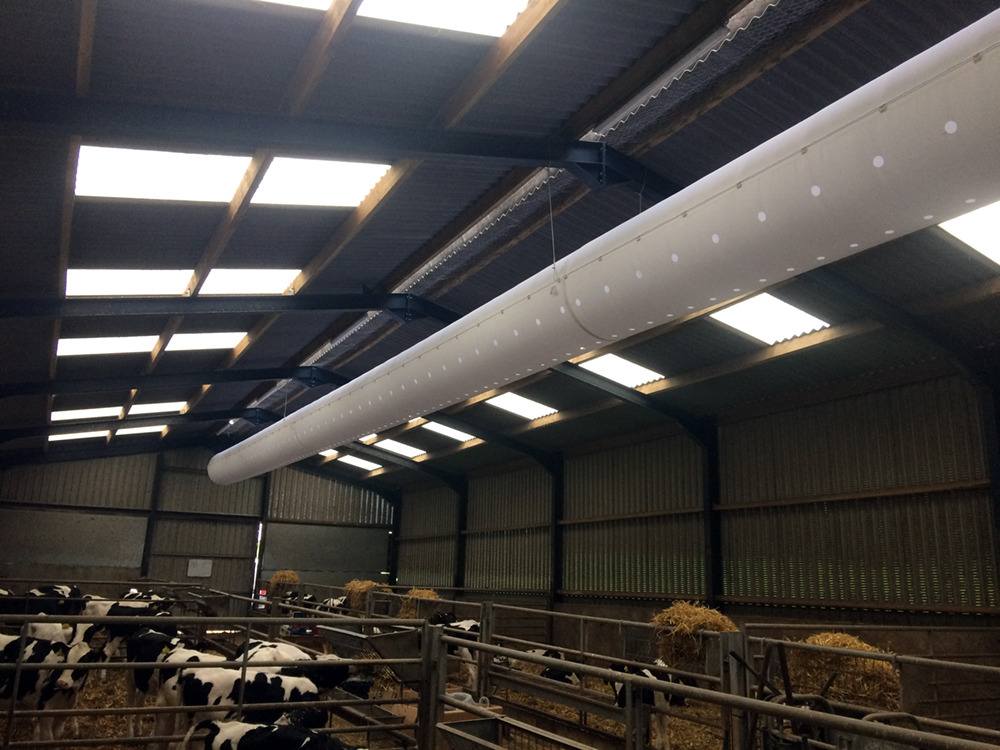
FabricAir is pleased to announce the launch of ClimaBarn, a new ventilation system designed specifically for dairy barns.
FabricAir experts will showcase fabric duct solutions at the 2025 ISK-SODEX Exhibition in Istanbul.

The renovated Zirmunai Pool in Vilnius features a custom FabricAir fabric duct system designed for corrosion resistance, energy efficiency, and ...

FabricAir, a provider of innovative HVAC solutions will be exhibiting at the AHR Mexico Expo in Monterrey, booth number 1035.
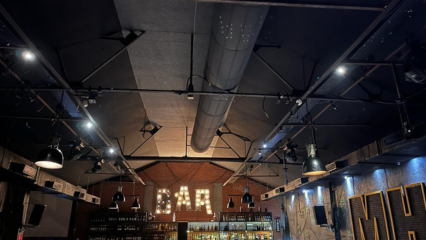
A new resto-bar in Thane, India, installed a custom fabric ducting system to deliver even airflow, thermal comfort, and visual ...
FabricAir is pleased to announce the launch of its Return Air System, designed to pull charged air from the room.
FabricAir's new whitepaper reviews 125 studies and finds 81% of European classrooms breach safe CO₂ limits, affecting student health, learning ...


