


Fabric duct installation
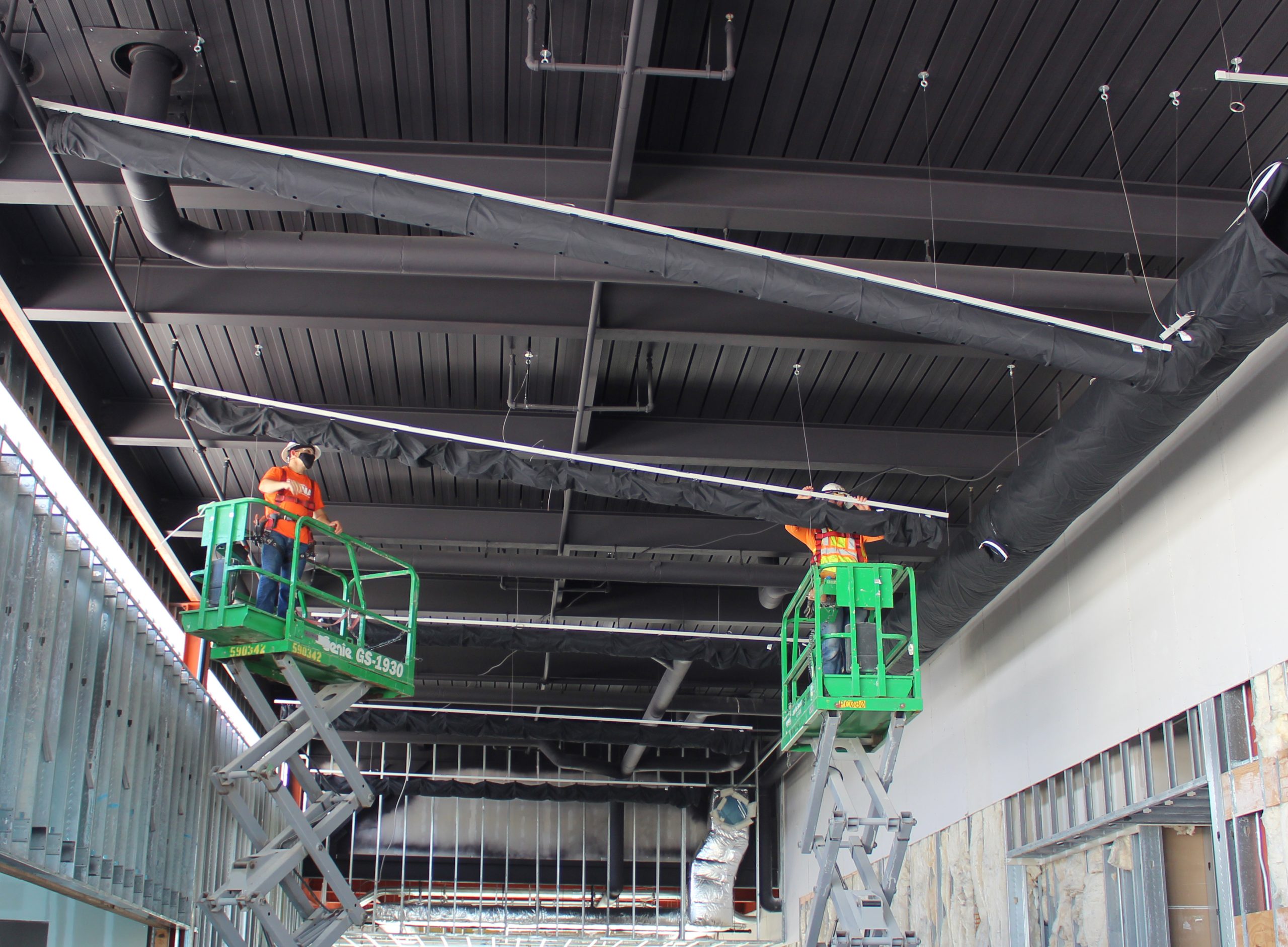
One supplier. From duct to commissioned system.
FabricAir designs and manufactures fabric duct systems and in selected countries, our own teams install them too. One supplier, one contract, full accountability from design through to commissioning. Whether you need a full-service fabric duct installation package or just the duct system itself, we adapt to your project requirements. Installation is optional but there are good reasons to keep it with us.
Why choose FabricAir for fabric duct installation?
Everything from one supplier
Installed by the people who engineered the duct
Minimal operational downtime
No installation errors
Complete documentation and warranty
No specialist training or additional equipment required
On-site problem solving
Clean and professional installation
How fabric duct installation works
-
1
Site assessment and preparation
Before installation begins, our team visits the site to review conditions, agree on installation requirements, and set clear responsibilities, so there are no surprises once work starts. -
2
Installation planning
Our teams coordinate schedules, site access, logistics, and operational downtime windows, so your facility continues running normally throughout the ductwork installation project. -
3
Professional installation
FabricAir teams handle suspension system setup, duct positioning, and connection to the HVAC unit. Lightweight fabric construction means 4 times faster on-site handling compared to traditional metal ductwork. -
4
Airflow balancing and commissioning
Once installed, the system is balanced and commissioned to confirm it performs to the project's airflow and distribution specifications. You receive a fully tested, ready-to-operate system.
Where we operate
FabricAir delivers fabric duct installation services directly with our own teams in five markets, and through local partners in selected countries elsewhere.
| FabricAir Direct Our own teams |
Full-service fabric duct installation by FabricAir-employed teams. Backed by manufacturer warranty on installed system performance. Denmark | Sweden | Norway | Germany | Lithuania |
| Local Partners Selected markets |
Installation by experienced local partners. Contact us to find out if installation support is available in your country. |
| Self-Install Support Available anywhere |
Full installation guides, suspension manuals, technical videos, and remote technical support for self-installation projects. |
Need support with your fabric duct installation project?
Frequently asked questions about fabric duct installation
Fabric duct installation is generally faster than traditional metal ductwork because the systems are lightweight and easier to handle on site. Small projects typically complete in 1-2 days, medium-sized projects in 1-2 weeks, and large or multi-zone installations may take several weeks. Exact timelines depend on project size, ceiling height, accessibility, and system complexity.
Costs depend on project size, building type, accessibility, suspension requirements, HVAC complexity, and installation timing. FabricAir provides project-specific quotes covering supply and installation together, so there are no hidden coordination costs between separate contractors or suppliers.
Yes. Fabric duct systems are used extensively in food processing, cold storage, pharmaceutical, and clean-room environments. FabricAir installation teams understand the hygiene and operational requirements of these sectors and work to the relevant standards, including HACCP-compatible installation practices.
Yes. FabricAir teams are experienced in retrofit and live-environment installations. We coordinate around your production schedule, including phased delivery, out-of-hours installation, and weekend work where needed to minimise disruption to your operations.
Yes. Many customers successfully complete fabric ductwork installation using FabricAir’s installation guides, suspension manuals, and technical videos. Self-installation is a realistic option for straightforward projects. For larger or more complex commercial installations, professional support is recommended to ensure correct commissioning and full system performance.
Using a single supplier for fabric duct supply and installation removes the coordination layer between manufacturer and installer. It reduces the risk of installation errors, improves communication throughout the project, and keeps budgets and timelines under clearer control. It also means one point of accountability if anything needs to be addressed after commissioning.


