



Heating Tents and Temporary Structures with Fabric Ducts


Winter is a busy season for temporary structures. Christmas markets, winter weddings and year-end corporate events often take place in tents. Guests expect the space to feel warm from the moment they walk in. A tent, an exhibition pavilion or an ephemeral event structure is an occupied indoor space too, even if it only stands for a few days or a few months. Therefore, climate control in these spaces shares some design principles with that of permanent buildings.

Carlos Alonso Ollacarizqueta
Sales Manager, Spain
Spain
However, heating a tent is harder than heating a conventional building. The membrane offers little insulation, so heat escapes quickly through the roof and walls. A tent also has no rigid envelope, no fixed plant room and an installation window measured in hours, so it needs a duct built for those conditions. In addition, warm air rises and collects at the top of the tent, while guests sit or stand below. As a result, the system must bring that heat down to where people are and spread it evenly.
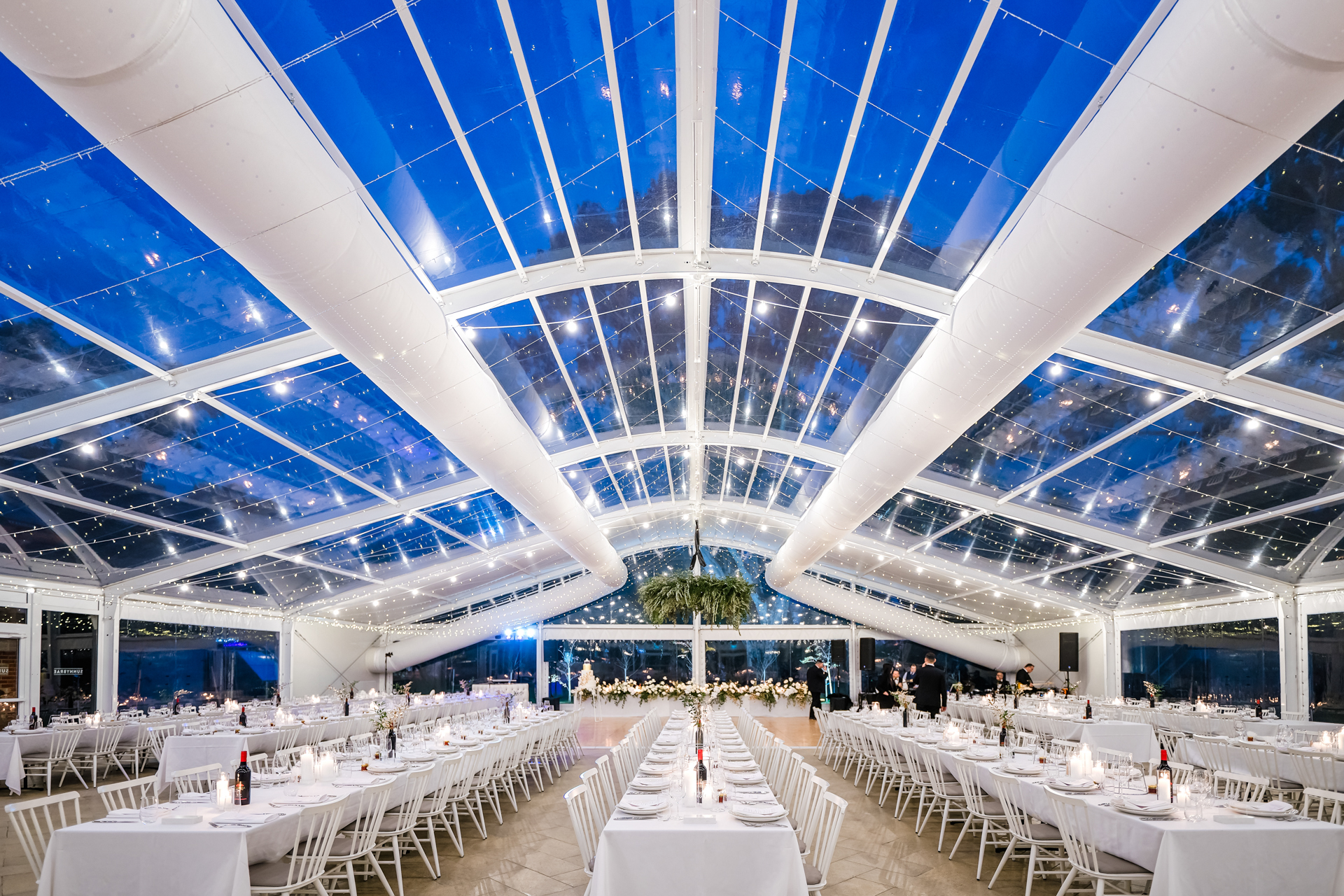
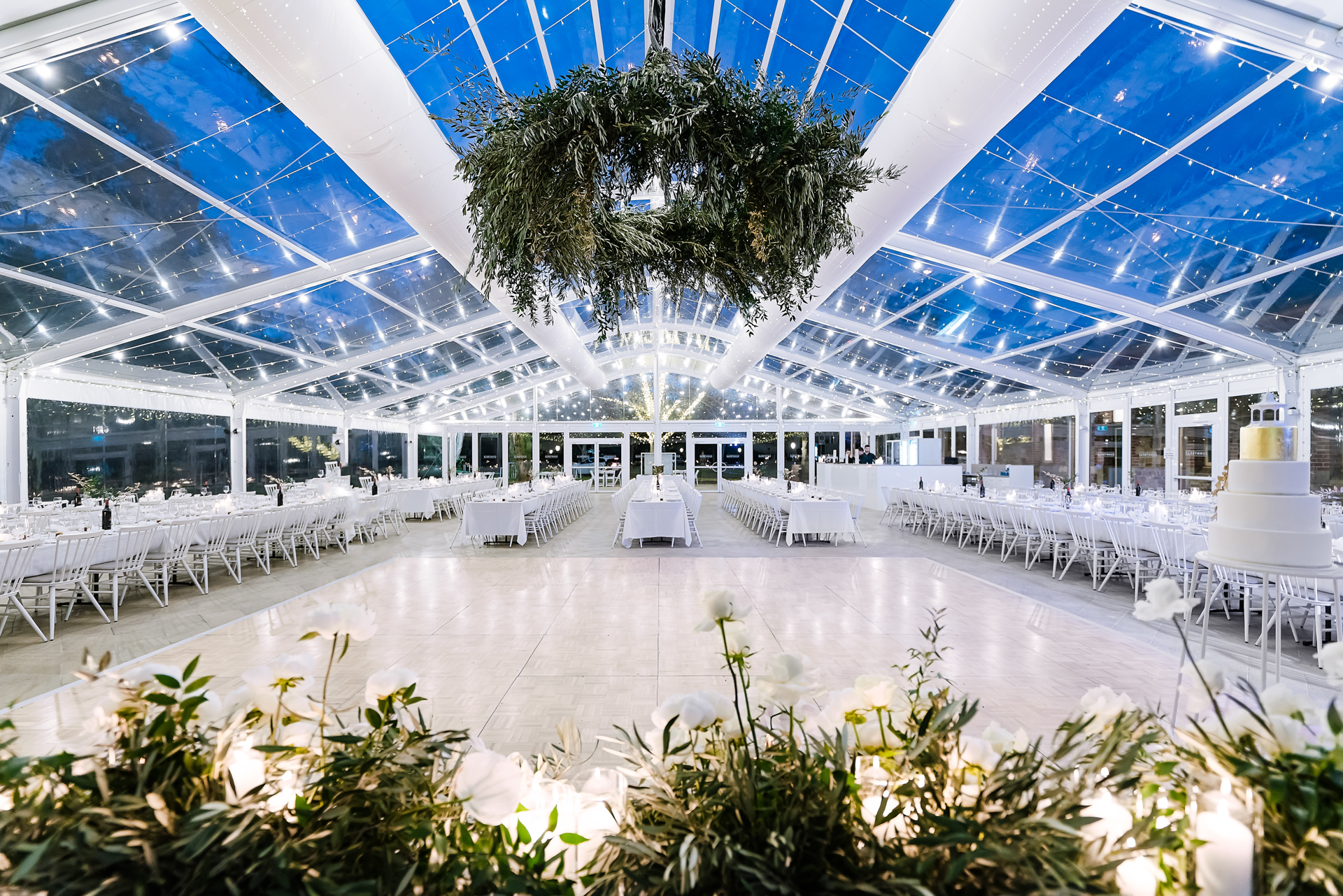
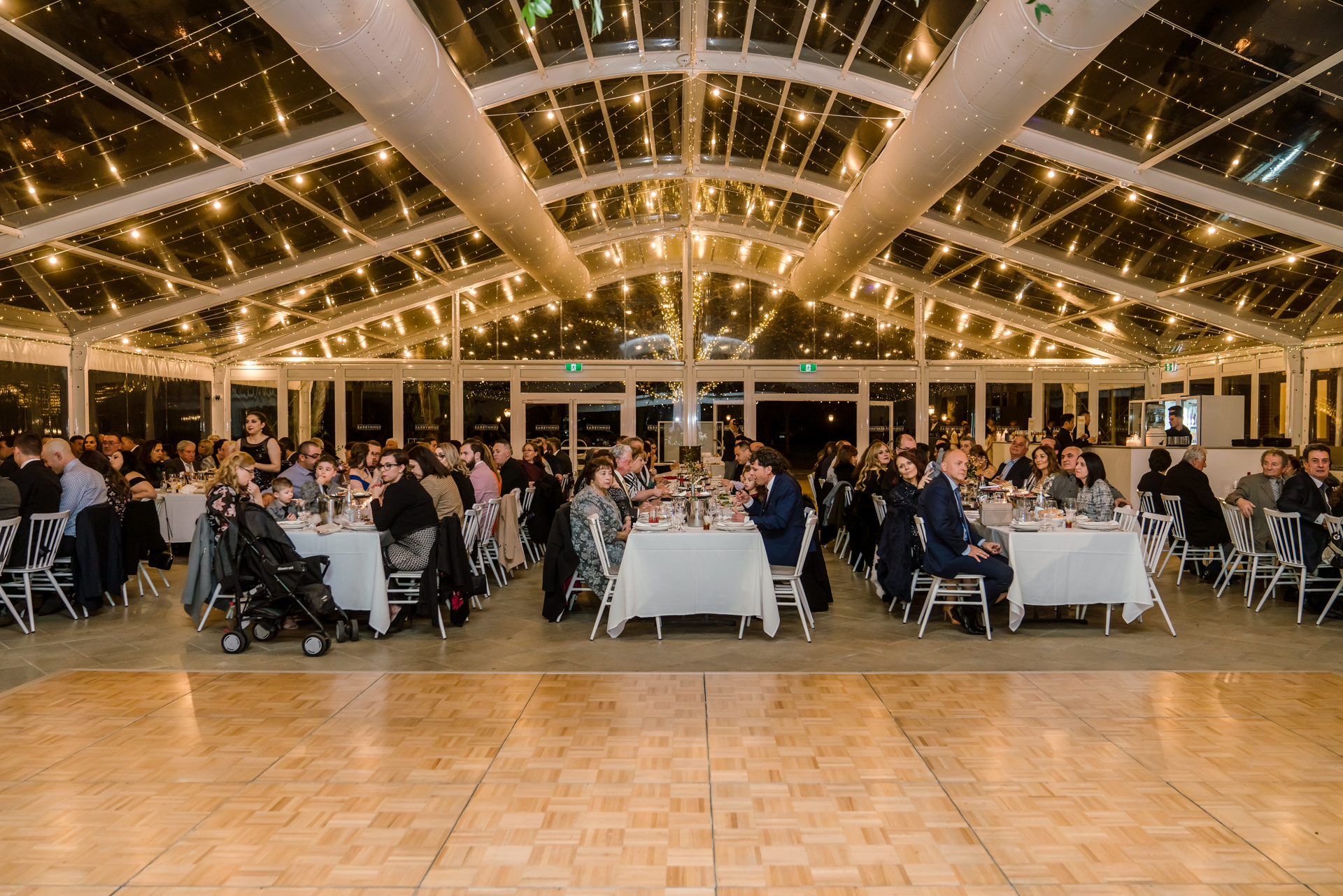
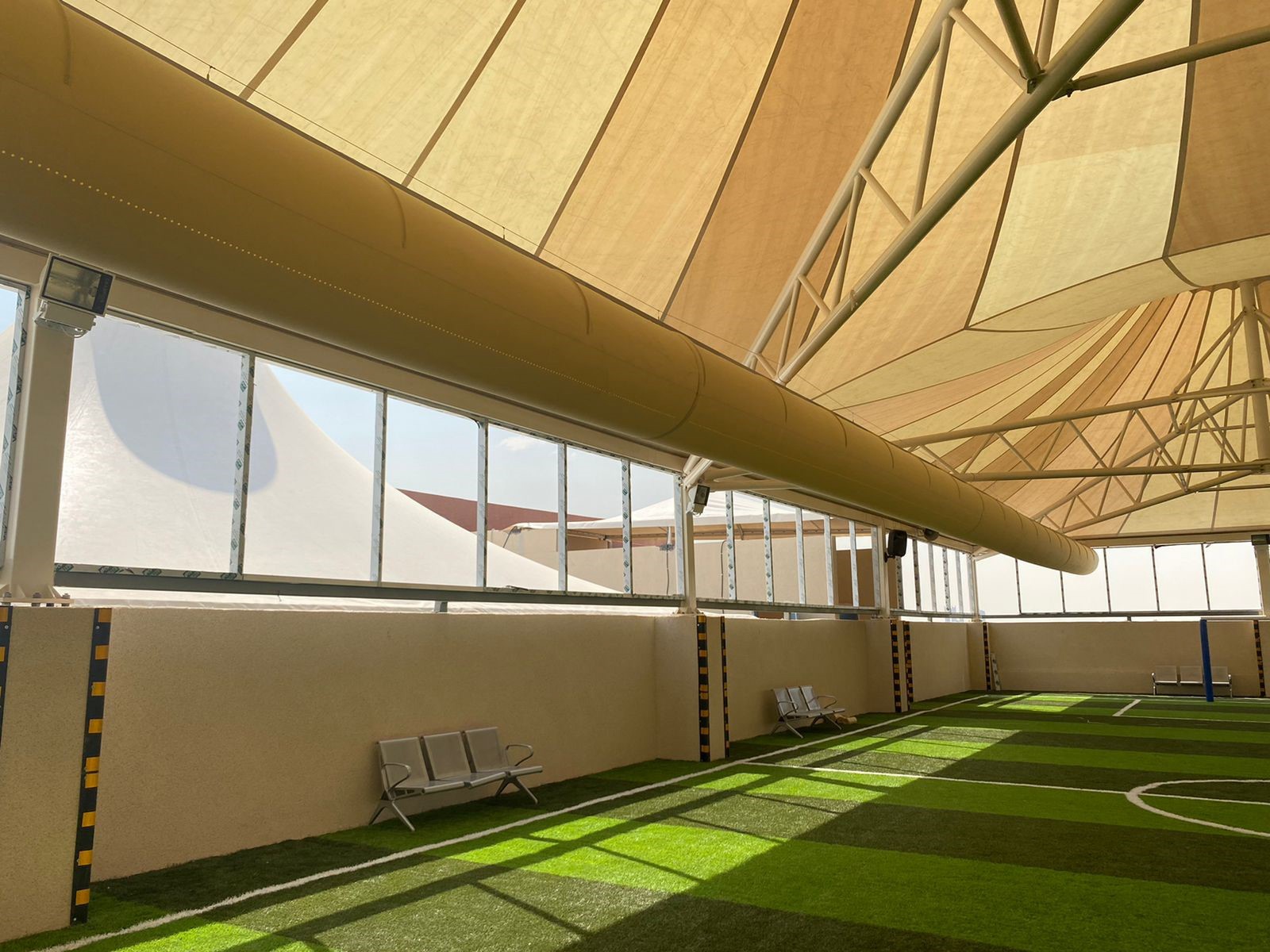
Here, fabric duct solves problems that metal duct cannot: it adds no extra weight to a structure with no reinforcement, it builds up no condensation when the temperature gap between indoors and outdoors is wide, it follows curved geometry without special fittings and it spreads warm air evenly across the whole space.
Why Fabric Duct Fits Tents and Ephemeral Structures
Temporary structures share traits that most permanent buildings do not. Their frame is calculated to carry tension and wind load, not the added weight of a full metal duct run. FabricAir fabric ducts weigh less than 300 grams per square meter of fabric. A complete duct, including its suspension hardware, typically comes to around 1 kg per linear meter at Ø800 mm. That already counts as a large duct. Installers can hang that weight directly from the aluminum truss with no extra structural reinforcement. In addition, FabricAir’s All-in-One (AiO) support lets the duct hang from a single point at 12 o’clock and keeps its shape when the ventilation stops.
Installation speed is just as decisive as weight. Each section arrives made to measure and labeled from the factory, so the installation crew fits it with basic tools and no specialized training. The speed of the process suits the schedule of a trade fair perfectly, since the climate system there often goes up and comes down within hours, always against the clock. Having everything on hand is essential, so FabricAir delivers the complete system in a single package.
Last-minute changes always come up, but they are not a problem either. The zippers that join FabricAir duct sections let crews insert extra sections or adjust existing ones. As a result, the system can always be tailored to fit, even on site.
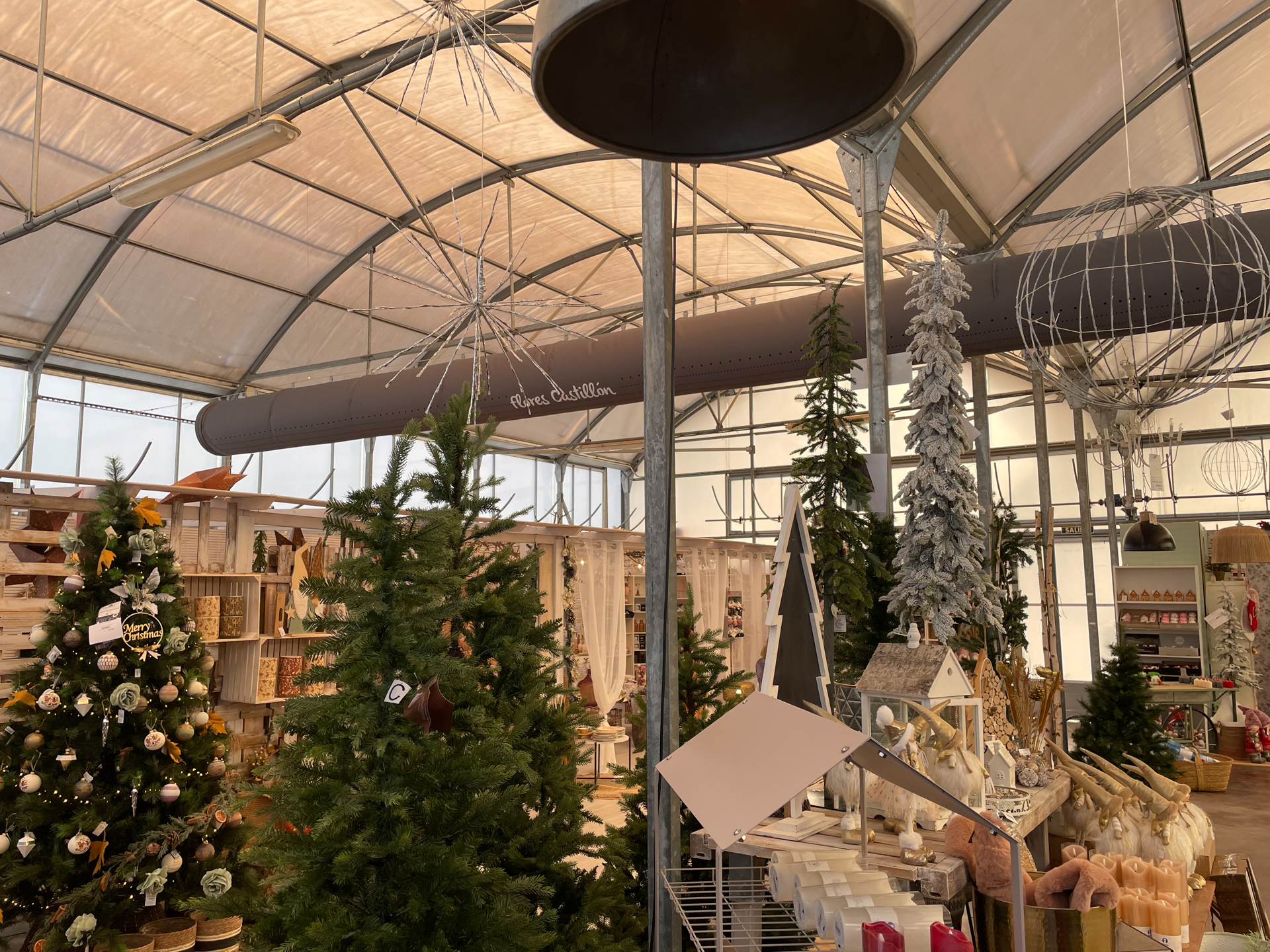
Permeable fabric also solves a condensation problem common in tents. A wide temperature gap between the conditioned interior and hot exterior air can create surface condensation on metal duct. FabricAir permeable fabric lets a minimal airflow pass through the whole duct surface, which prevents condensation droplets from forming. That keeps the fabric close to room temperature and avoids unwanted drips over attendees, or even over food and drinks.
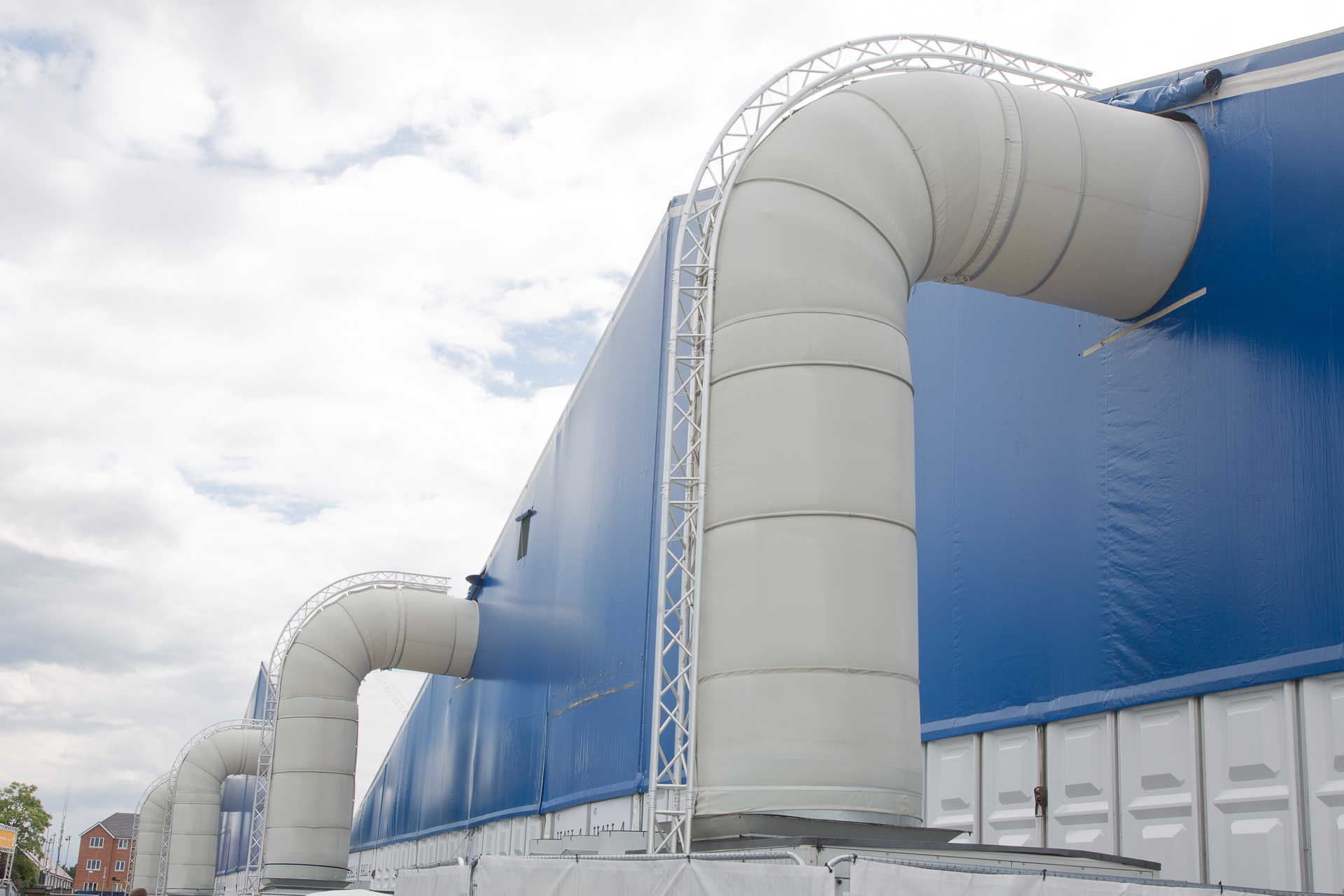
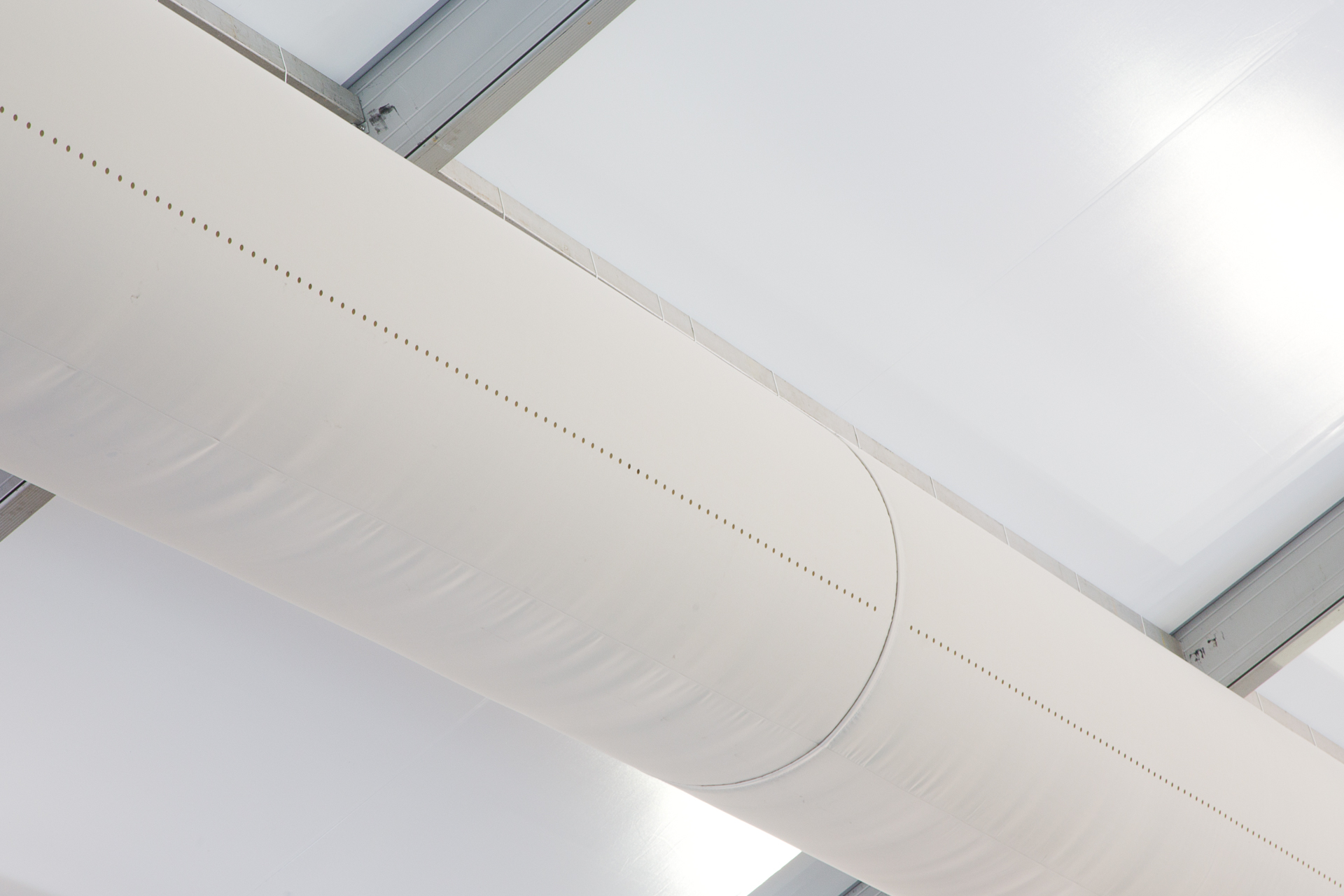
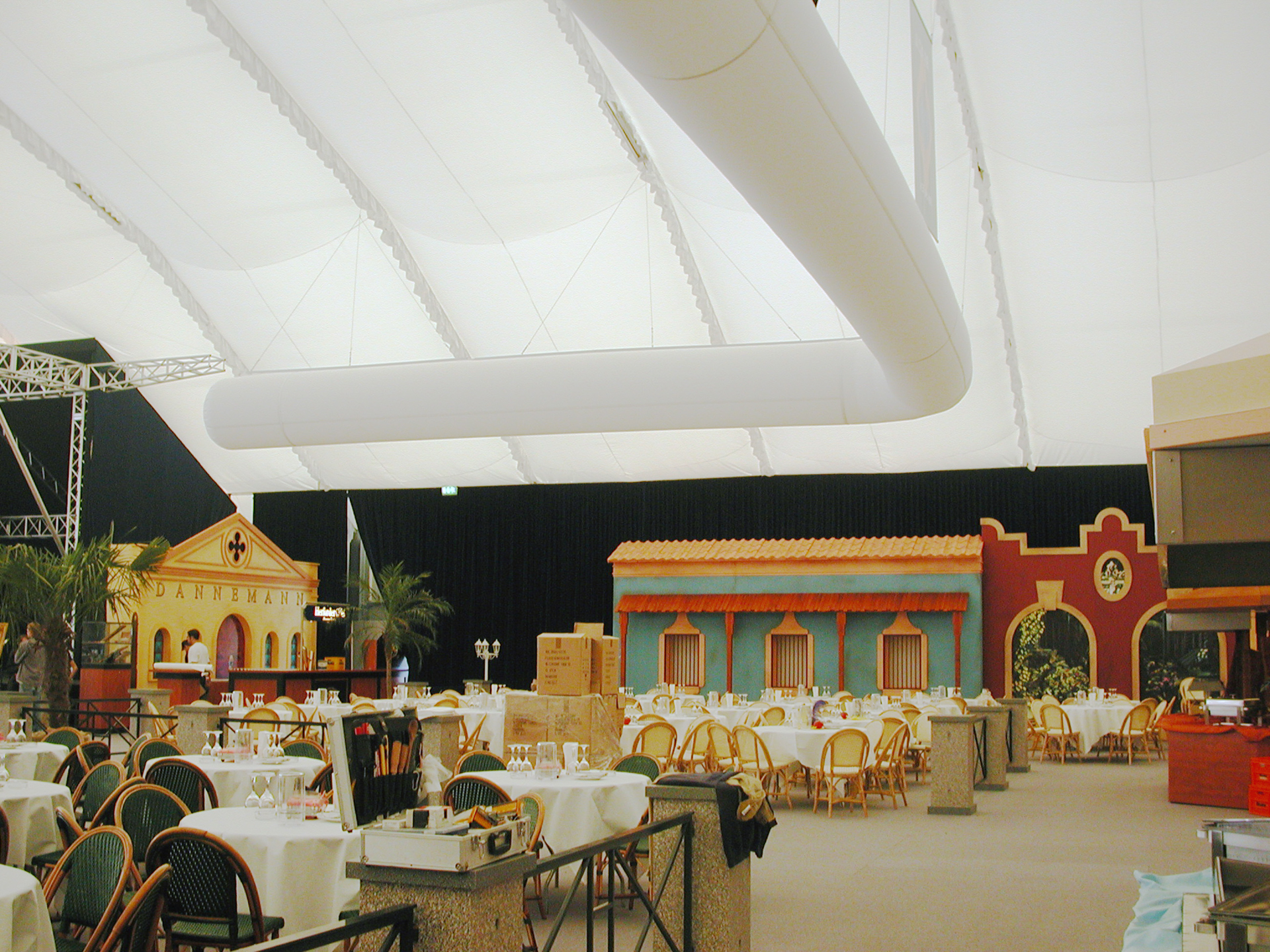
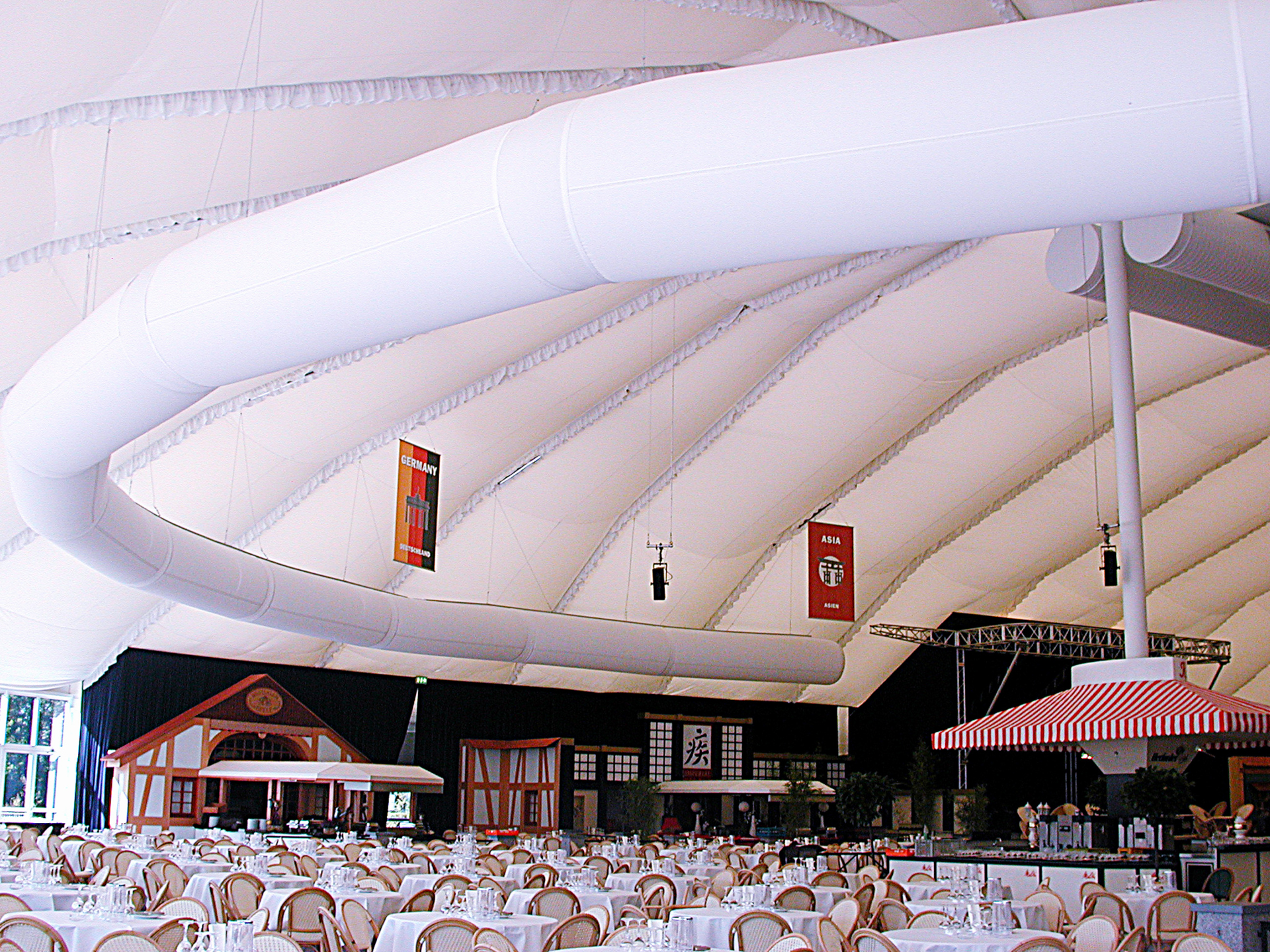
Designing Fabric Ducts for Temporary Structures
A fabric duct system for a temporary structure follows the same design process as a permanent building, with a few practical adjustments.
- Suspension. The anchoring method depends on what the structure offers. A tent with a continuous aluminum truss takes a track-mounted duct along the full run. A structure with only a few fixed points calls for cable suspension instead. Cable spans long distances between two anchors with little support in between. FabricAir picks the suspension system project by project for this reason. Thanks to its manufacturing flexibility, it can also develop special solutions ad hoc instead of relying only on standardized systems.
- Flow model and diffusion pattern. Tents usually have less headroom than a typical commercial building. The crowd also sits closer to the duct than office workers usually do, which raises the risk of uncomfortable drafts. A permeable flow model helps here, since it releases air at low velocity across the whole duct surface. When it is also matched to the tent height and the distance the air needs to travel, the air reaches people gently. This avoids aiming a direct jet at people seated right underneath. Large tents often combine two flow models on the same run: an impermeable one with nozzles to throw air across the main trunk, and a permeable one for the branches that reach closer to the crowd, where a softer diffusion works better. The duct is also flexible and holds its shape even after an accidental knock, which is common while a fair is being built and struck.
- Static pressure. Events and fairs rarely connect to a building’s central plant. Most run on rental air handling units or portable chillers, which offer less available static pressure than fixed equipment. That pressure also depends on how the external ducting can be routed. Fabric duct creates less pressure loss than spiral metal duct through bends and reductions. It performs well even with the modest static pressure a rental unit provides. These systems often connect to air handling units from rental providers such as Aggreko, which are designed to arrive and leave with the event itself.
- Custom geometry. Round pavilions, geodesic domes and curved tensile roofs rarely follow a standard rectangular floor plan. FabricAir makes the fabric duct to measure for each project. It can follow curves, transitions and branches that would call for expensive, hard-to-install special fittings in metal. In practice that shows up as solutions like a ring-shaped duct that follows the central oculus of a geodesic dome, or a run that mirrors the wave shape of a tensile roof instead of a straight line.
- A system set up for one event does not have to end there. Fabric duct folds down into a small volume for transport and storage. The same run can travel to the next stop on a tour or the next edition of a recurring fair.
Beyond reuse, the FabricAir team can build new systems from parts of systems that were already in service, recycling and reusing them.
Performance Across Temporary Projects of Every Size
FabricAir tailors the combination of profile, fabric, suspension and flow model to each project, whether it is a two-day tent or a production that tours several countries over months.
A few examples show FabricAir’s range in practice:
| Cirque du Soleil, São Paulo | Touring tent on a very large metal truss. The main trunk is Combi 90 fabric with SonicFlow nozzles, around Ø865-900 mm; the branches run in permeable Combi 80 fabric, at Ø800 mm. |
| El Olivar Alcalá | Tensile fabric roof shaped like a wave. Four runs of perforated duct, one along each eave, follow the roof’s own wave pattern. The space hosts dining and concerts. |
| Touring Tim Burton exhibition | Tent with a white exterior membrane and a black interior liner. A central cross duct feeds two symmetric rectangular layouts, mixing perforated diffusion with discrete nozzles on the same run. The design drew on systems already used at two earlier events. FabricAir also manufactured a second system in two weeks for the same exhibition, running simultaneously at another location. |
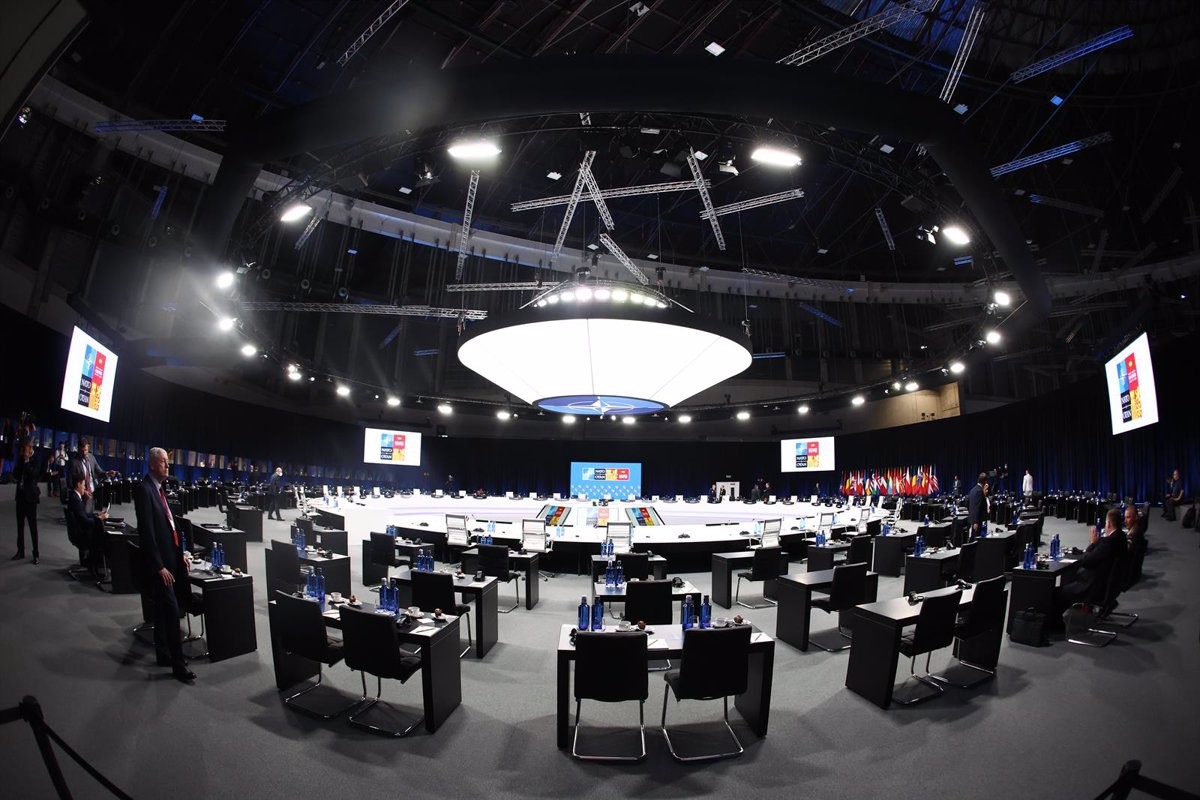
| NATO Summit | Held in Madrid in a circular plenary hall under a geodesic dome. Climate control ran through a FabricAir fabric duct installed as a ring following the central oculus, finished in black so it blends visually with the room’s dark ceiling. The setup was replicated in two halls. Installation took one day, and dismantling took another. |
Diameters, fabrics and suspension systems change from project to project. The season shapes the design too. In winter, the flow model directs warm air downward, which is the hardest direction to achieve. It usually relies on nozzles or orifices on the lower half of the duct. That way, the heat reaches the crowd instead of collecting under the roof.
Planning a winter event or a structure that runs all year? Request a consultation with our technical team and they will help you choose the right heating and cooling setup for your project.
FAQs
Yes. In winter, the flow model directs warm air downward through nozzles or orifices on the lower half of the duct. That way, the heat reaches people instead of collecting at the top of the tent.
Related terms: tent heating, flow models, winter events
Usually not. The fabric weighs around 300 grams per square meter, and a full duct comes in under 1 kg per linear meter. It can therefore hang directly from the aluminum truss.
Related terms: suspension systems, lightweight ducting, aluminum truss
Each section arrives cut and labeled from the factory, so the crew installs it with basic tools. At a fair, the climate system often goes up and comes down within hours.
Related terms: fabric duct installation, trade fairs, fast installation
No. Permeable fabric lets air pass through the whole duct surface and keeps it close to room temperature. This prevents drips over attendees or exhibits.
Related terms: permeable fabrics, condensation-free, guest comfort
Yes. Fabric duct creates less pressure loss than spiral metal duct through bends and reductions. As a result, it performs well with the modest static pressure of a rental air handling unit or portable chiller. Even so, a correct design of both the supply and return air is important.
Related terms: static pressure, rental equipment, portable chillers
A permeable flow model releases air at low velocity across the whole duct surface. Large tents also often combine two flow models: nozzles on the main trunk to throw air over long distances and permeable fabric on the branches closest to the crowd.
Related terms: flow models, draft-free comfort, low headroom
Yes. FabricAir makes each duct to measure, so it can follow curves, transitions, branches and changes in level. At the NATO Summit in Madrid, for example, a ring-shaped duct followed the central oculus of a geodesic dome at a varying height.
Related terms: duct profiles, custom geometry, geodesic domes
Yes. Fabric duct folds down into a small volume for transport and storage. The same run can travel to the next stop on a tour or the next edition of a recurring fair.
Proper handling is important: pack the duct dry in breathable packaging and never store it damp.
Fabric systems can also be washed, which keeps them perfectly hygienic.
Related terms: reuse, touring shows, sustainability
Get valuable content first
Enter your email and be among the first to get tips and articles from our experts about HVAC industry topics.