


Fabric vs metal ducting – 4 key differences for HVAC systems


Comprehensive Comparison Guide for HVAC Designers
When undertaking a new construction or renovation project, selecting the right air diffusion system is crucial for ensuring high indoor air quality (IAQ). For decades, traditional metal-based ducting dominated HVAC solutions, but today’s architects, engineers, and contractors increasingly recognize the significant advantages of fabric-based air diffusion systems, also known as a sock duct or air socks.

Michael G. Mortensen
Engineering Manager, Denmark
While both systems ultimately perform the same core function, understanding their fundamental differences can lead to substantial improvements in project efficiency, cost-effectiveness, and long-term performance. This comprehensive comparison examines the four key differences between fabric and metal ducting systems, supported by technical specifications, case studies, and sustainability metrics.
1. Material Properties and Performance Specifications
Michael G. Mortensen, Engineering Manager at FabricAir, explains: “The most obvious difference between metal and fabric-based ducts is in the materials themselves. Metal ducts typically use galvanized steel while fabric ducts are primarily made of engineered polyester materials. Though many people assume metal ducting offers superior durability and longevity, properly maintained fabric ducting systems regularly remain in service for decades.”
Condensation Management and Structural Considerations
A critical but often overlooked advantage of fabric ducting is condensation mitigation. In high-humidity environments, metal ductwork can develop condensation that accumulates into water droplets, leading to corrosion, and eventual structural degradation. This not only compromises the integrity of the ducts themselves but can compromise their support structures, potentially creating both safety hazards and maintenance challenges.
Permeable fabric ducting, by contrast, allows minimal amounts of air to pass through the material itself, effectively preventing surface condensation. This inherent quality ensures that the ducts maintain a consistent surface temperature above the dew point, eliminating the moisture problems that plague metal systems in humid environments like natatoriums. Additionally, fabric systems reduce the overall load on building structures due to their significantly lighter weight – often weighing just 5-10% of equivalent metal systems.
2. Installation Process and Logistical Considerations
The differences in transportation, installation requirements, and structural impacts between fabric and metal ducting systems result in substantial disparities in project timelines and labor costs.
Metal ducting requires specialized, scheduled transportation due to its bulk and weight, along with skilled teams and specialized tools and machinery for installation. The process typically includes cutting, fitting, sealing, and securing numerous heavy sections – a labor-intensive process that can extend over several weeks for larger projects. These systems may also require additional structural reinforcement to support their considerable weight.
Fabric ducting arrives in standard cardboard boxes that global delivery services can transport. Installation requires common tools and little training, as the pre-engineered sections simply zip together following labeled instructions. According to documented installation comparisons:
- Installation Speed: Fabric ducting can be installed up to 5 times faster than equivalent metal systems
- Labor Requirements: Fabric systems typically require 70% fewer labor hours for installation
- Special Equipment: Metal ducting can require heavy-duty lifts and specialized tools, while fabric systems need only standard equipment
3. Economic Considerations and Total Cost of Ownership
Material costs and supply chain challenges can have a significant impact on traditional metal ducting systems, making the economic advantages of fabric-based solutions increasingly compelling. Financial analysis of the available options must consider not just initial material costs, but total cost of ownership including transportation, installation, maintenance, and operational efficiency.
Engineering analyses demonstrate that properly designed fabric duct systems deliver equivalent or superior airflow performance while reducing overall system costs. Additionally, precision-engineered air dispersion of fabric systems often enables reduced fan sizes and lower operating energy requirements, further enhancing long-term cost benefits.
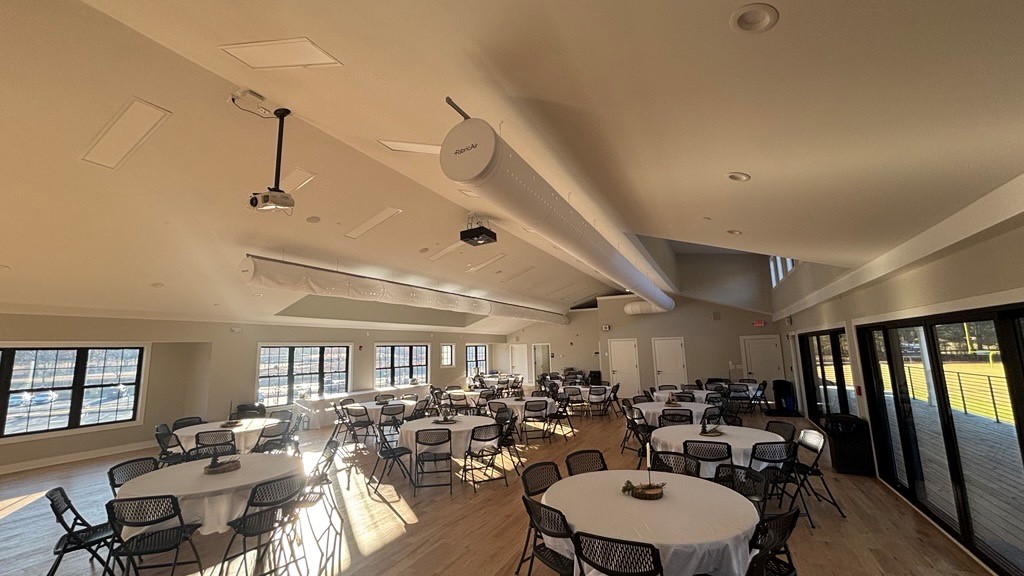
Case Study – Offices & Auditoriums, Panama: FabricAir ducts were installed in an office building with auditoriums to keep employees and guests comfortable even in extreme heat. And, FabricAir’s RapidSlider hanging system made installation fast and efficient.
4. Application Versatility and Environmental Sustainability
While metal ducting has historically dominated most open ceiling HVAC applications, continuous innovation in fabric ducting technology has expanded its suitability for a multitude of applications, from sports facilities and food processing plants to laboratories, hospitals, and retail spaces.
Optimal Applications
Fabric ducting is ideal for many types of applications and is especially well-suited for:
- Food Processing: Antimicrobial fabrics prevent contamination risks, while washable materials ensure hygiene compliance
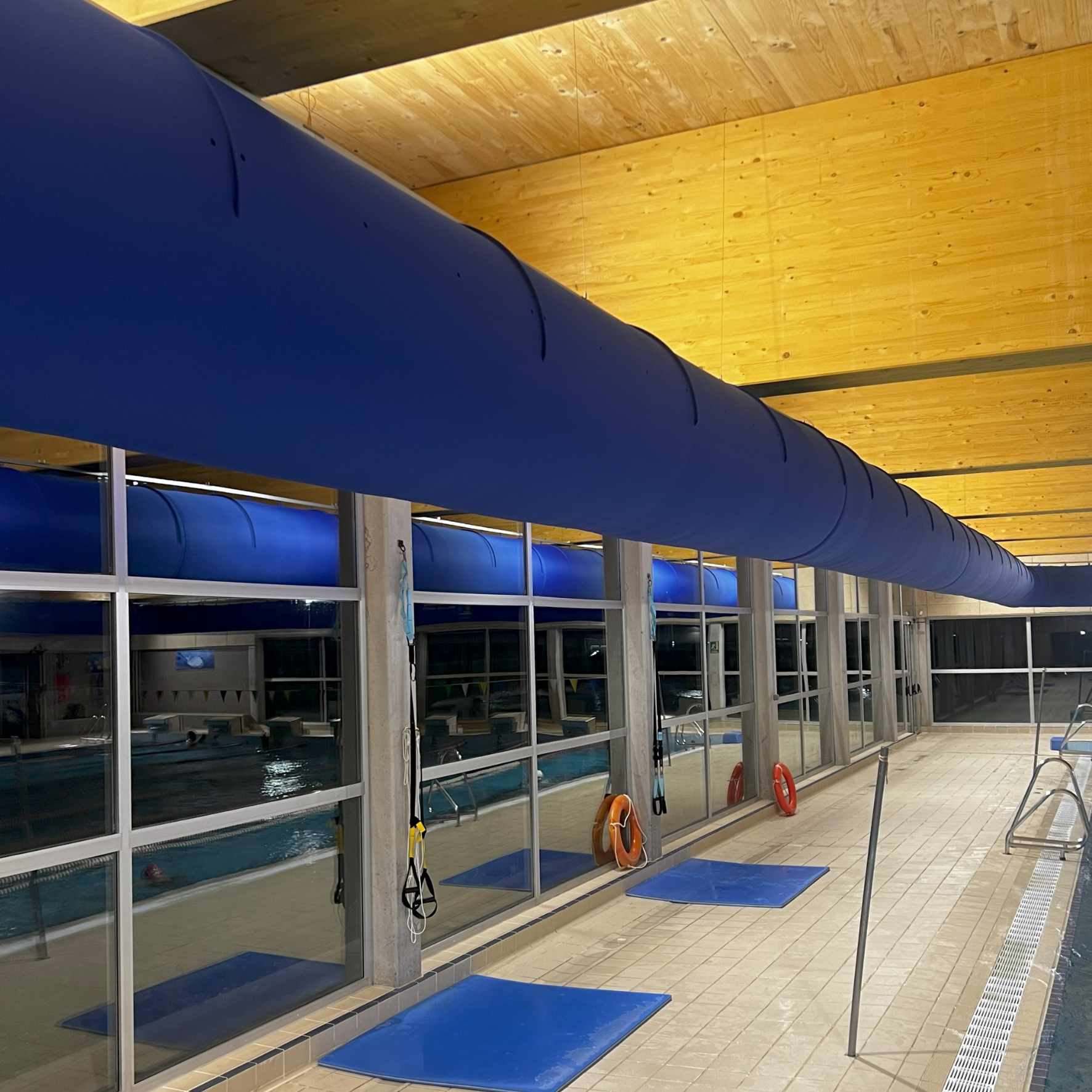
- Swimming Pools/Aquatic Centers: Condensation-resistant materials eliminate the corrosion issues common with metal in high-chlorine environments
- Healthcare Facilities: Antimicrobial properties and improved indoor air quality can reduce airborne infection risks
- Cleanrooms/Laboratories: Antistatic systems with specialized fabrics suitable for environments with complex attributes
Sustainability Advantages of Fabric Ducting
Fabric ducting offers significant sustainability benefits over traditional metal ductwork. Notably, fabric ducts can reduce energy consumption by up to 42.8% compared to conventional metal systems, owing to their efficient design that minimizes pressure loss and enhances thermal performance. Additionally, fabric ducting systems are lightweight, which not only eases installation but also lowers transportation emissions.
Environmental Certifications and Standards: Leading fabric ducting manufacturers now provide Environmental Product Declarations (EPDs) with their products that contribute to green building standards including LEED credits for energy performance and indoor air quality. Some systems have achieved or are working toward Cradle to Cradle certification, demonstrating their commitment to circular economy principles.
Making an Informed Decision
The choice between fabric and metal ducting ultimately depends on project-specific requirements, but understanding the fundamental differences provides a foundation for making informed decisions that balance performance, economics, and sustainability.
For architects, engineers, and HVAC designers familiar with metal systems, fabric ducting represents an evolution in HVAC design that worthy of consideration. Whether you’re designing a small retail space or a massive industrial facility, fabric ducting systems offer compelling advantages in installation efficiency, cost-effectiveness, performance, and sustainability.
While mechanical engineers who specify HVAC systems may initially hesitate to adopt unfamiliar solutions, the documented performance data, technical specifications, and successful case studies now available provide compelling evidence for considering fabric ducting in your next project.


Get valuable content first
Enter your email and be among the first to get tips and articles from our experts about HVAC industry topics.