


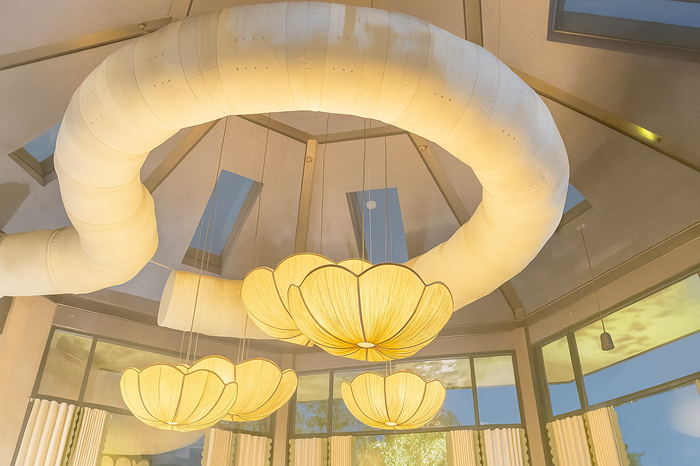
Rethinking Air Distribution


When we talk about air distribution systems in modern buildings, the image that usually pops up is a maze of sheet-metal ducts snaking through ceilings and walls, silently ferrying conditioned air from the mechanical room to every corner of the space. But what if this image is outdated? What if there’s a smarter, more efficient, and even more aesthetic alternative quietly gaining ground? Enter fabric duct technology – the game-changer rising to challenge traditional metal ductwork.
The Problem with the Status Quo
Traditional metal ductwork has served us well for decades, but it comes with limitations. Metal ducts are heavy, often require significant structural support, are prone to condensation and corrosion in humid or chemically aggressive environments, and sometimes deliver inconsistent airflow, meaning spots that are too cold, too warm, or too drafty. These issues impact comfort, air quality, energy use and maintenance costs.
Fabric Ducts: A Fresh Take on Air Distribution
Fabric duct systems (sometimes called “air socks” or textile ducts) bring a radically different mindset to the table. Rather than using rigid steel, they use engineered textile materials, custom-designed for specific airflow requirements. According to industry sources:
- They enable more even, ‘draft-free’ air distribution across a space, reducing hot and cold spots and improving occupant comfort.
- They are lighter and faster to install, which reduces installation labour, structural load and the time the space is out of service.
- They help lower energy consumption by reducing leakage, improving diffusion and often requiring smaller fans or shorter run times.
- They enhance indoor air quality by minimizing condensation, corrosion, dust collection and microbial growth – all factors that can compromise ventilation systems over time.
A New Angle: Air Distribution as Design Opportunity
Here’s the interesting twist: with fabric duct technology, air distribution isn’t just a mechanical necessity – it becomes part of the architectural and user-experience narrative. Because fabric ducts are lightweight and customizable (colour, shape, print), they can be integrated into open ceiling designs, public spaces, sports halls or retail settings where aesthetics matter as much as airflow. That means the air distribution system no longer hides away. It becomes visible (and even design-worthy) without compromising performance.
Practical Considerations & Where It Fits Best
Of course, metal ducts aren’t going away overnight. There are still scenarios where they remain the best fit (very high-pressure systems, extremely hot air, concealed spaces, certain fire codes). But for many commercial, industrial and public-space scenarios, fabric ducts offer compelling advantages. Key questions to ask when specifying include:
- What are the airflow and diffusion needs of the space (will fabric perforation or nozzle design deliver the desired pattern)?
- Will the building environment challenge metal ducts (humidity, chemicals, ease of access, maintenance)?
- Are aesthetics, structural load or installation timeline important factors?
- What are the service and maintenance requirements (e.g., can the fabric be removed and laundered)?
In essence, as buildings demand more from HVAC systems (better air quality, lower energy use, faster delivery, more aesthetic integration), fabric duct technology is emerging as a serious contender in the air distribution conversation. By re-imagining the duct not just as a metal conduit, but as a fabric-based air dispersion system, designed for the space it serves, engineers and designers can bring performance and design into harmony.
Get valuable content first
Enter your email and be among the first to get tips and articles from our experts about HVAC industry topics.
FAQs about Boosting Sustainability with Fabric Ducts
Fabric ducting supports ESG goals by offering a more sustainable alternative to traditional metal ducts. Environmentally, it reduces raw material use and energy consumption through lightweight design and efficient air dispersion. Socially, it contributes to improved occupant comfort, indoor air quality, and installer safety. From a governance perspective, fabric ducting manufacturers can provide verified data such as Environmental Product Declarations (EPDs), ISO certifications, and REACH/OEKO-TEX® compliance, helping building owners meet regulatory and reporting requirements.
Yes. Fabric ducting systems can contribute to credits under green building frameworks such as LEED, BREEAM, and DGNB. Their energy-efficient design helps reduce HVAC loads, supporting points under energy and atmosphere categories. Fabric ducts also support indoor environmental quality by minimizing drafts and improving air mixing, which enhances occupant comfort and IAQ. Additionally, product certifications and lifecycle documentation contribute to material transparency and process quality credits.
Fabric ducts are made from technical textiles that require less raw material and energy to produce than metal ductwork. Their lightweight nature reduces transportation emissions and structural load during installation. They also promote efficient airflow distribution, helping reduce fan energy use and operational emissions (Scope 2). Many systems are modular, washable, and reusable, which supports long-term durability and aligns with circular economy principles.