


Use Case: Improving Defrost Efficiency in Cold Storage with Defrost Duct
Background
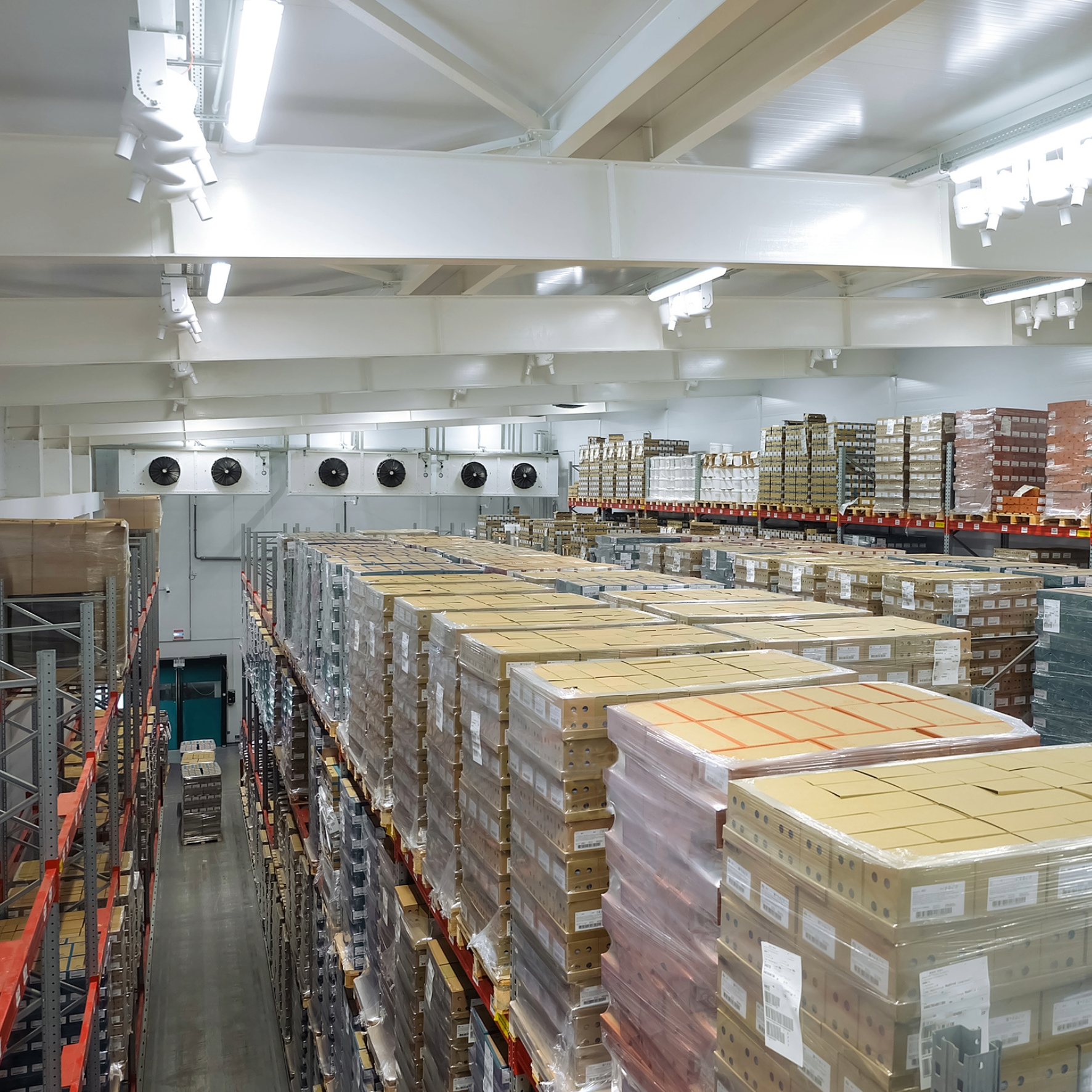
Cold storage facilities play a critical role in preserving perishable goods by maintaining consistent low temperatures. These facilities often operate around the clock and rely heavily on efficient refrigeration systems. A typical medium-sized cold storage warehouse utilizes two evaporator units, each with a cooling capacity of 46,000 BTU to help ensure optimal storage conditions. However, the ongoing need to defrost these units poses a significant energy and operational challenge.
Problem
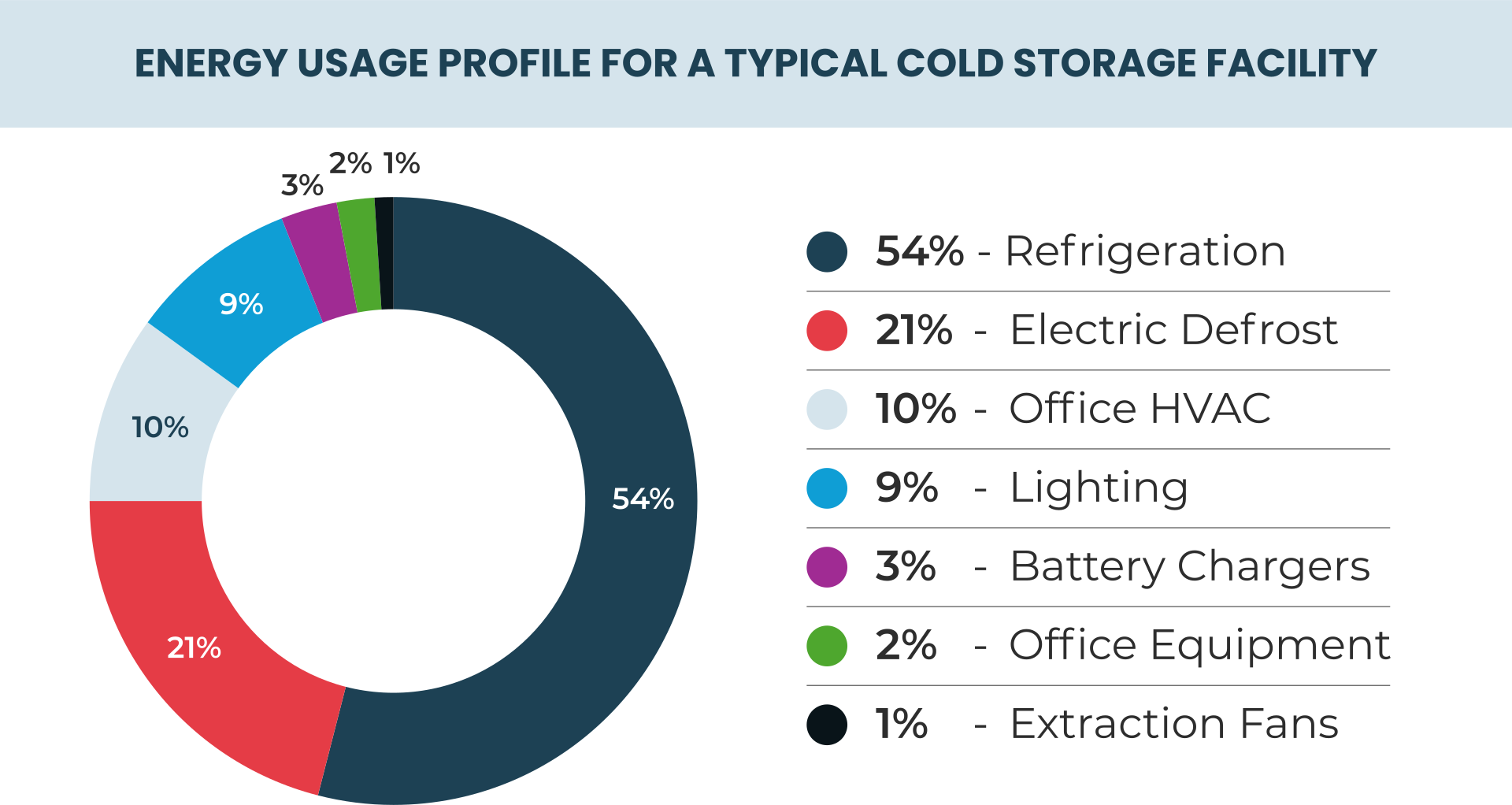
According to the Energy Trust of Oregon, electric defrost can account for 21% of the energy usage in a cold storage facility. These systems rely on high-wattage heaters – often around 11kW per unit – to melt ice buildup on evaporator coils multiple times per day. During the defrost cycle, not only is a large amount of electricity consumed, but some of that heat is inadvertently introduced into the conditioned space, undermining cooling efficiency. If each defrost cycle takes around 30 minutes, occurring four times a day, this results in an average of two hours per day where cooling is interrupted, reducing system efficiency and increasing energy demand for recovery.
Solution
The FabricAir Defrost Duct offers a simple, yet highly effective solution to this common problem. Custom-engineered specifically for cold storage environments, the Defrost Duct system is installed over the evaporator coil outlets. During the defrost cycle, the duct deflates to cover the fan outlets, preventing warm air from escaping into the cold room while still allowing air intake. Once defrosting is complete, the duct inflates and normal cooling resumes. This method not only contains the heat during defrost but also improves the overall defrost effectiveness and shortens recovery time.
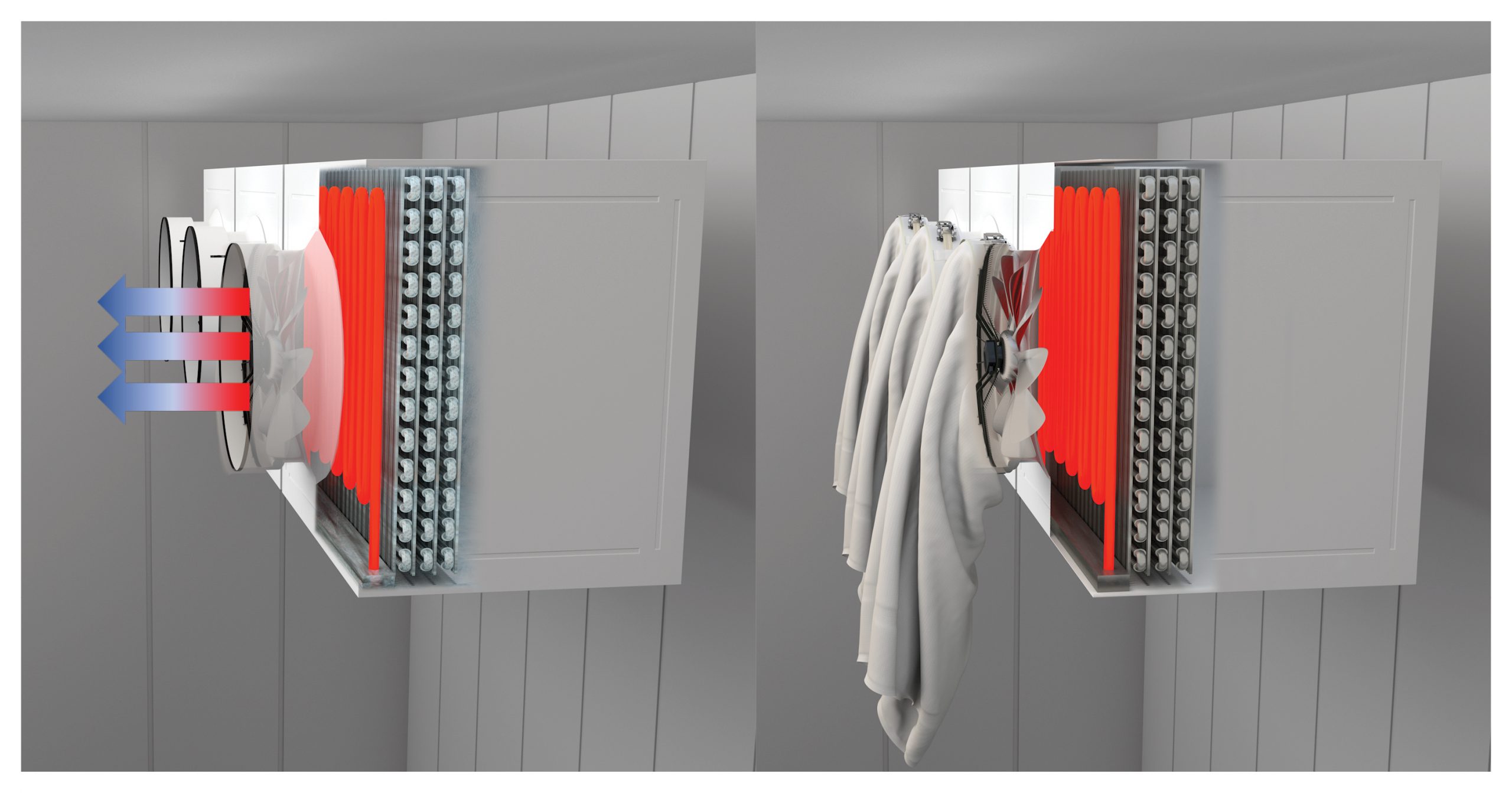
Left: Arrows show how warm air leaves the air cooling unit when the system is in the defrost cycle
Right: Fabric duct covers the unit when the system is in the defrost cycle preventing heat from escaping the unit
Results
In a typical medium-sized cold storage facility, implementing the Defrost Duct can reduce defrost durations by half – from 30 minutes to just 15 minutes per cycle. Over four daily cycles, this change reduces defrost operation to only one hour per day, enabling 23 hours of uninterrupted cooling.
In a typical application using two evaporator units with 11kW defrost heaters, the reduced defrost time translates into significant energy savings. Assuming an electricity cost of $0.17 USD / 0.15 € per kWh:
- Daily energy savings: 11kW x 1 hour x 2 units = 22 kWh saved per day
- Daily cost savings: 22 kWh x $0.17 USD / 0.15 € = $3.74 USD/ 3.23 € day
- Annual savings: $3.74 USD/ 3.23 € x 365 = $1,365 USD / 1179 € per unit/year
Additionally, by minimizing the amount of heat reintroduced into the cold space, the Defrost Duct reduces the workload on compressors and improves system stability. The recovery factor, typically 30% – also means faster coil cooldown and quicker return to optimal storage conditions.
Defrost Duct delivers measurable improvements in efficiency, energy savings, and temperature stability for cold storage operations. With reduced defrost durations, minimized heat intrusion, and simple installation, this solution offers a compelling return on investment and long-term performance benefits for facility owners and operators.
Additional Information
BLOG: Maximizing Energy Efficiency in Cold Storage Air Cooling


