


Best Practices for Designing HVAC Systems for Food Processing Facilities


Food processing facilities are complex environments with distinct zones that require precise HVAC control to support the different stages of production, from raw ingredient storage to processing, packaging, and distribution. The design of an HVAC system in these spaces has a direct impact on product quality, safety, and longevity, with optimized systems offering benefits like reduced spoilage, consistent product standards, and improved energy efficiency.

Fikret Sahin
Vice President & Director of Sales, MENA, Africa, India, & Asia
Improper HVAC design can lead to condensation, contamination, and microbial growth—posing serious risks that could result in regulatory fines, costly shutdowns, or even long-term damage to a brand’s reputation.
To prevent these issues, following best practices for HVAC design in food processing facilities creates safe, efficient environments that uphold the highest standards for food quality and safety.
Prioritize Condensation Control
Controlling condensation is critical in food processing facilities, where even minor moisture buildup creates ideal conditions for mold and bacterial growth. To prevent these risks, HVAC systems should be designed with precise airflow to meet the needs of each area and materials that inherently reduce condensation formation.
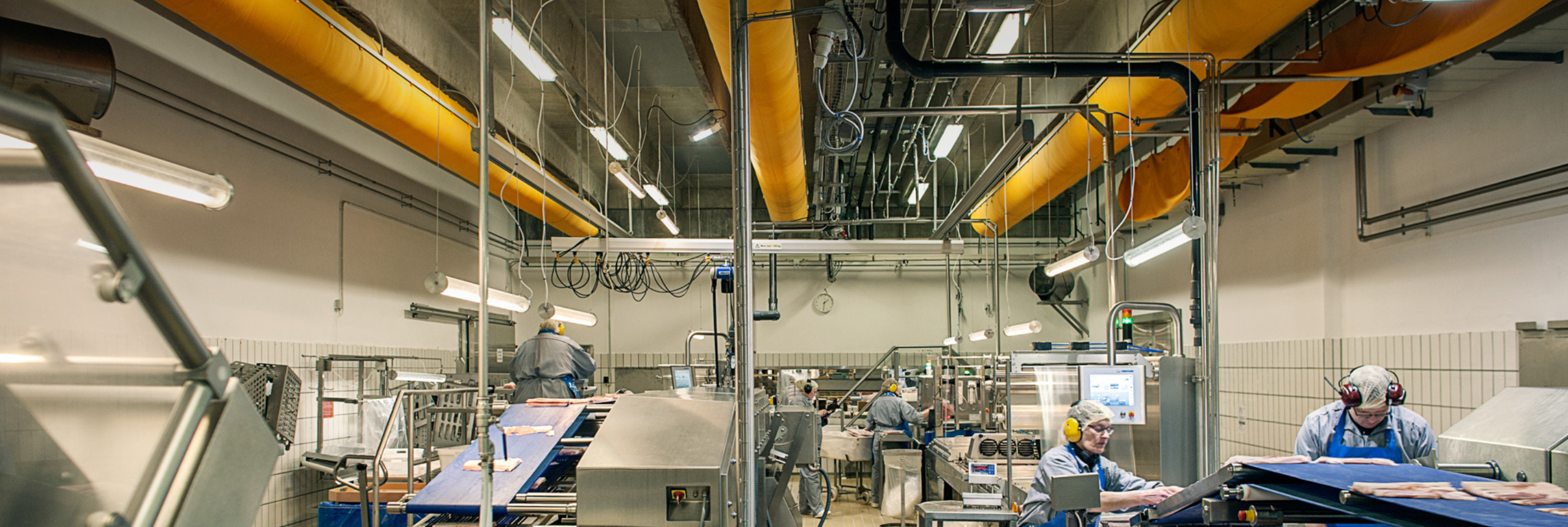
For example, fabric ducting (also known as ventilation air socks or fabric ductwork) is an ideal choice because it distributes air evenly, eliminating cold spots where moisture would typically accumulate. Additionally, materials like permeable and antimicrobial fabric resist moisture absorption and microbial growth compared to traditional metal ducts. A custom-engineered HVAC system will also address temperature variations between processing and storage areas, preventing the creation of condensation-prone zones where bacteria can thrive.
Design for Compliance with Industry Standards
HVAC systems in food processing facilities must meet stringent industry standards to ensure both product safety and compliance and reduce the risk of regulatory fines. Regulations from organizations like the FDA, HACCP, and ISO set rigorous guidelines on maintaining air quality, temperature, and humidity levels to prevent contamination.
For example, HACCP requires identifying and controlling potential contamination hazards, while ISO standards emphasize the importance of cleanable and durable materials in equipment design. Selecting certified materials, such as non-corrosive, antimicrobial fabrics helps create a system that withstands intensive cleaning protocols, reduces microbial growth, and complies with safety requirements. Additionally, HVAC systems can be optimized for easy access and visibility, allowing inspectors to confirm regulatory adherence quickly.
Optimize Temperature Control for Different Zones
Each area in a food processing facility requires specific conditions to support the various stages of production, from freezing and equalization to packaging. Custom-designed and engineered ductwork ensures even temperature distribution across the facility, helping prevent sharp gradients that could compromise product texture, flavor, and safety.
In areas requiring freezing, duct systems that deliver consistent, cold air minimize warm spots that can lead to spoilage. Additionally, in work zones where employees spend extended hours, ducting designed to provide gentle, uniform airflow improves comfort and productivity by reducing exposure to drafts. Fabric ducts offer an ideal solution by evenly diffusing air, eliminating drafts, and maintaining specific temperatures within each zone to optimize both product quality and employee well-being.
Design for Easy Maintenance
Designing HVAC systems for easy maintenance is essential in food processing facilities, where regular cleaning is critical for hygiene and safety. Systems with accessible, washable components reduce or eliminate production downtime by simplifying cleaning processes, minimizing disruptions, and enhancing safety for staff.
This ease of maintenance translates into financial benefits as well, with reduced labor costs and lower equipment downtime. For example, washable fabric ducts can be fully removed and laundered, ensuring a completely clean system—unlike metal ducts, which often require special equipment for partial cleaning. Facilities equipped with on-site washing machines can further cut laundering expenses and save time, allowing the HVAC system to maintain a pathogen-free environment efficiently and reliably.
Effective HVAC design is crucial for food processing facilities to ensure product safety, quality, and regulatory compliance. By prioritizing condensation control, adhering to industry standards, maintaining precise temperature zones, and simplifying maintenance, HVAC designers can address the unique challenges of these environments. Fabric ducting solutions, with their washable materials and ability to promote even airflow, offer a valuable option for enhancing hygiene and efficiency. Implementing these best practices supports a cleaner, safer facility, reduces the risk of contamination, and promotes operational efficiency—ultimately benefiting both facility operators and consumers by protecting product integrity and safety.
Additional Information
Clean Air Starts Here: How Fabric Ducts Support Healthier Buildings
Fabric ducts for food processing environments
Case Study: Bakery manufacturer in Turkey
Sources



Get valuable content first
Enter your email and be among the first to get tips and articles from our experts about HVAC industry topics.